
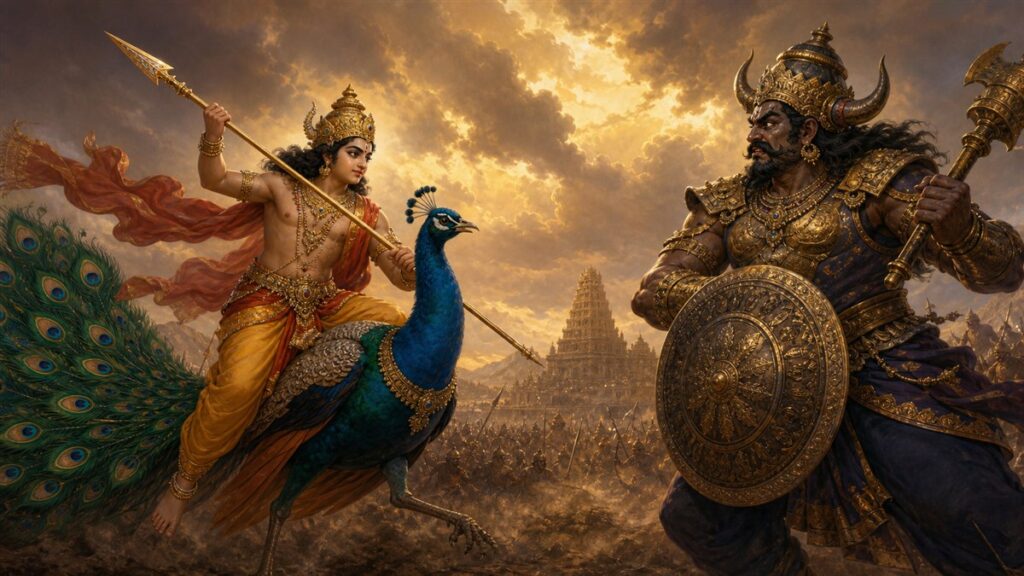
Accuracy note: Skanda, also called Karttikeya, Kumara, or Murugan in different traditions, is a South Asian war deity. His birth and battle with Taraka vary among the Mahabharata, Puranas, Tamil traditions, and later literature.
When Skanda wielded his vel against Tarakasura, it was more than a celestial battle, it embodied the hero’s quest to vanquish chaos and emerge victorious.
Each epic confrontation reveals a important pattern of spiritual awakening that continues to resonate today, and this is why these encounters remain significant.
Origins of the Divine Conflict
Lord Kartikeya’s Celestial Arsenal
Among the most effective symbols of divine warfare, Lord Kartikeya holds a powerful celestial arsenal. This features the legendary Vel spear gifted from Goddess Parvati herself. The Vel’s divine energy cuts through enemy defenses, embodying wisdom and righteousness in its unstoppable might. As commander-in-chief of the divine armies, his weapons strike with unparalleled precision.
| Weapon | Symbolic Power |
|---|---|
| Vel Spear | Wisdom & Divine Justice |
| Sword & Trident | Valor & Authority |
| Bow & Arrow | Strategic Mastery |
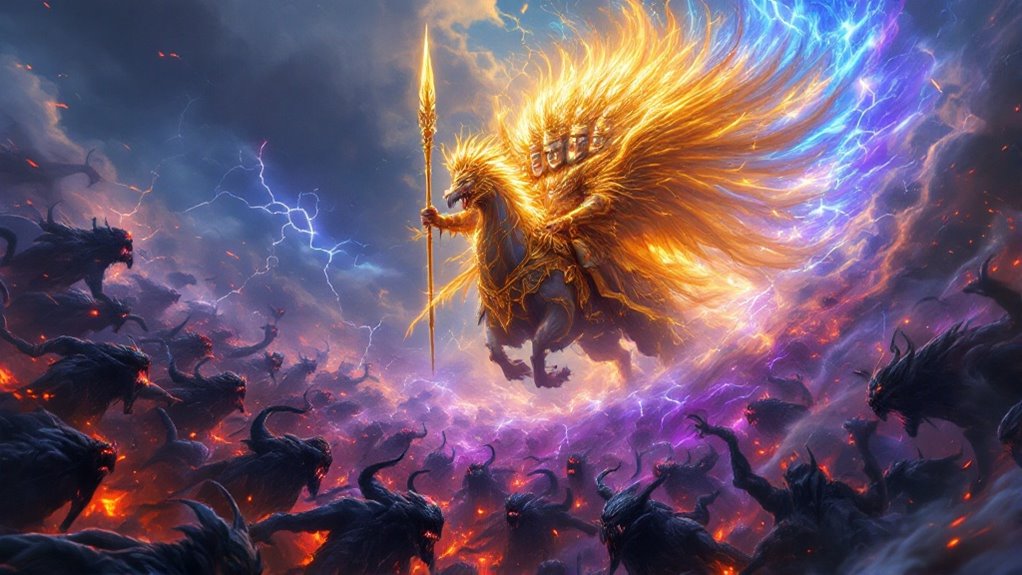
Kartikeya’s supernatural powers amplify his arsenal’s effectiveness. His heightened senses and lightning-fast reflexes, combined with his ability to fly, make him a force against evil. His six faces and twelve arms wielding divine weapons strike fear into demons. His peacock mount and rooster flag complete the image of a celestial warrior prepared for victory.
The Three Major Demon Battles
Transformation of Defeated Enemies
Unlike other mythologies, Skanda’s victories didn’t involve transforming enemies into servants. Instead, his battles focused on thoroughly defeating and dismantling demonic forces.
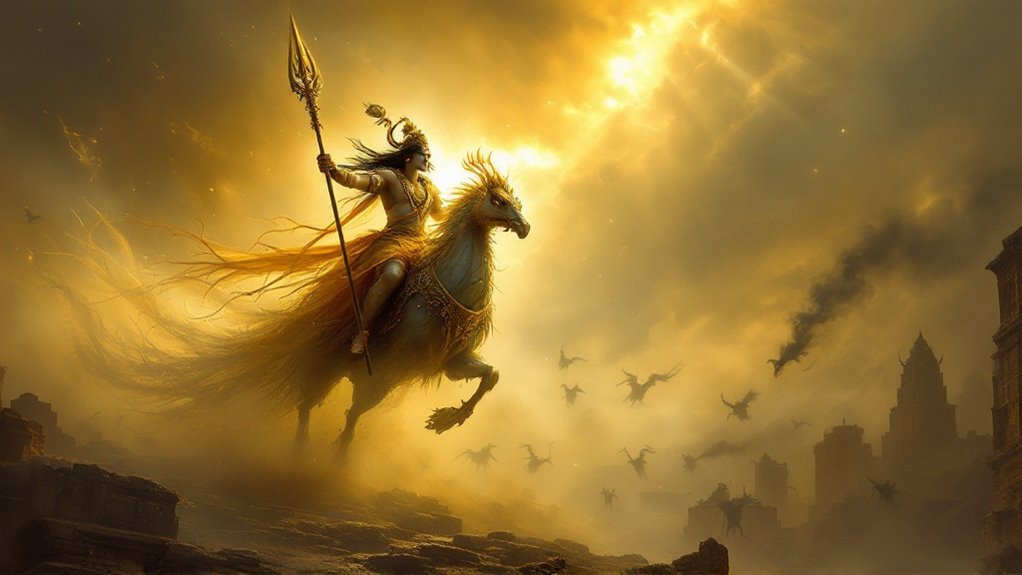
Victory Through Divine Intervention
Sources and related reading
- Churning of the Cosmic Ocean for Nectar on MythologyVault
- Sapta Rishis Safeguard Universal Order on MythologyVault
- The Metropolitan Museum of Art: Hinduism and Hindu art