
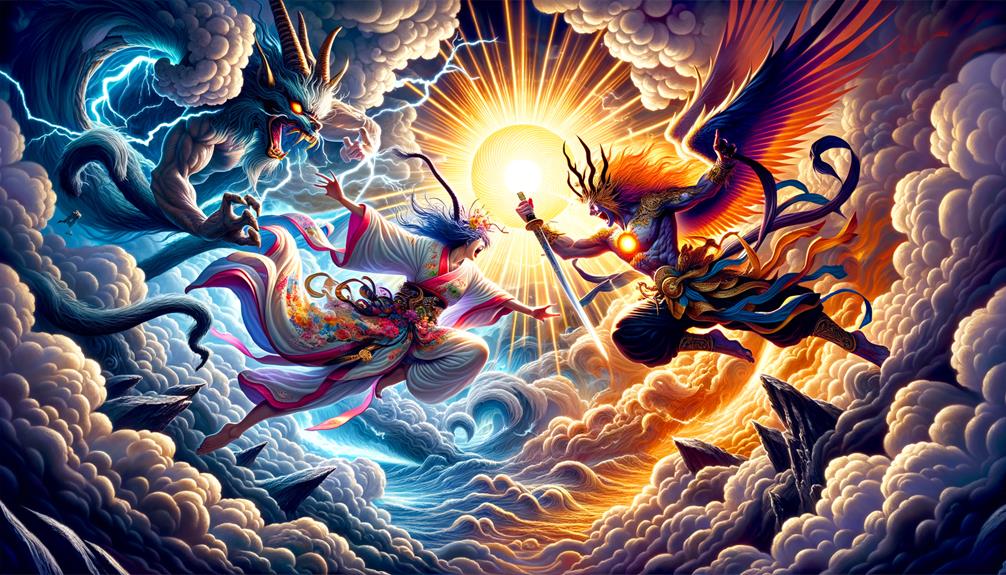
Accuracy note: The conflict between Susanoo and Amaterasu includes an oath, a contest over offspring, destructive acts, and Amaterasu's withdrawal into a cave. Details and responsibility are framed differently in the Kojiki and Nihon Shoki.
The clash between Susanoo and Amaterasu echoes an age-old tussle – chaos versus order. Across the mythic sequence, Susanoo’s tempestuous spirit leaves turmoil in its wake, while Amaterasu’s radiant presence seeks serenity. Their tumultuous bond, marked by Susanoo’s disruptive antics and Amaterasu’s retreat into darkness, reflects a important truth about the interplay of creation and destruction. One can’t help but contemplate the hidden lessons buried within their divine conflicts and resolutions.
Origins of the Rivalry

The rivalry between Susanoo and Amaterasu originated from their contrasting natures – Susanoo embodied wild, untamed storms while Amaterasu represented orderly light and life. Their clash mirrored the eternal struggle between chaos and harmony.
Susanoo’s impulsive actions disrupted Amaterasu’s efforts to maintain balance, highlighting their conflicting roles. However, their opposition underscored a important truth – chaos and order are interdependent forces necessary for existence.
Their mythic encounters showcased duality’s archetypal theme – light versus dark, calm versus tempest. While different, both deities were essential, their rivalry revealing harmony often emerges from opposing tensions. The cosmic conflict captured the delicate equilibrium sustaining the universe.
Susanoo’s Disruptive Actions
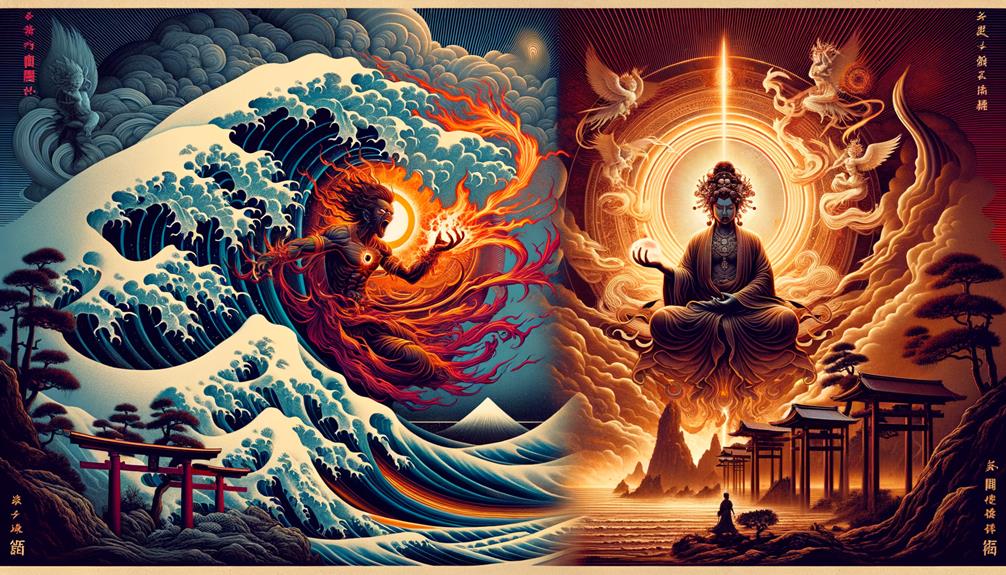
Susanoo’s rampage through the heavenly palace wreaked havoc. He decimated Amaterasu’s sacred rice fields, a brazen defiance of order and harmony. This rebellious chaos set the stage for an epic clash that would shift the balance of celestial power forever.
Storming the Heavenly Palace
In a shocking display of defiance, Susanoo went on an unrestrained rampage through the heavenly palace, disrupting the divine order and highlighting the volatile tensions between divine siblings. During his tirade, Susanoo flayed a prized horse and flung its carcass at Amaterasu’s loom – a direct insult to Amaterasu and her twin brother Tsukuyomi. This act shattered the tranquility of the Plain of High Heaven.
Susanoo’s chaotic actions:
| Action | Impact |
|---|---|
| Flaying a prized horse | Desecration of sacred property |
| Throwing horse at loom | Disruption of Amaterasu’s weaving |
| Defecating in weaving hall | Humiliation and polluting the sacred space |
| Hurling flayed pony at sister | Personal affront to Amaterasu |
Susanoo’s actions didn’t merely disrupt the physical space; they eroded the trust and balance among the deities. His audacious deeds prompted Amaterasu to retreat into a cave, plunging the world into important darkness. The celestial harmony, once maintained by Amaterasu and Tsukuyomi’s partnership, lay shattered due to Susanoo’s reckless behavior. This mythic conflict shows the archetypal themes of familial discord and the repercussions of unchecked power.
Desecrating Amaterasu’s Rice Fields
Susanoo’s rage knew no bounds, and he directed his destructive frenzy towards Amaterasu’s cherished rice fields. Flinging the flayed horse into the sacred harvest, he unleashed chaos, trampling the delicate balance that sustained life. These rice fields embodied fertility and abundance, nurtured by Amaterasu’s tender care. Susanoo’s rampage shattered these symbols, ripping apart the fabric that nourished the world.
Overcome with anguish and fury, Amaterasu retreated into the heavenly cave, enveloping the cosmos in darkness. Her absence extinguished the sun’s warmth, endangering all creation – a important illustration of the consequences wrought by Susanoo’s recklessness.
This clash between divine siblings shows the vital importance of harmony and reverence among the kami. Susanoo’s disruptive actions serve as a sobering reminder of the turmoil that arises when balance falters. In Shinto legends, rice fields transcend mere agricultural plots; they are hallowed grounds that sustain body and spirit. Susanoo’s desecration epitomizes the devastation caused by discord among celestial beings.
The Cave Incident
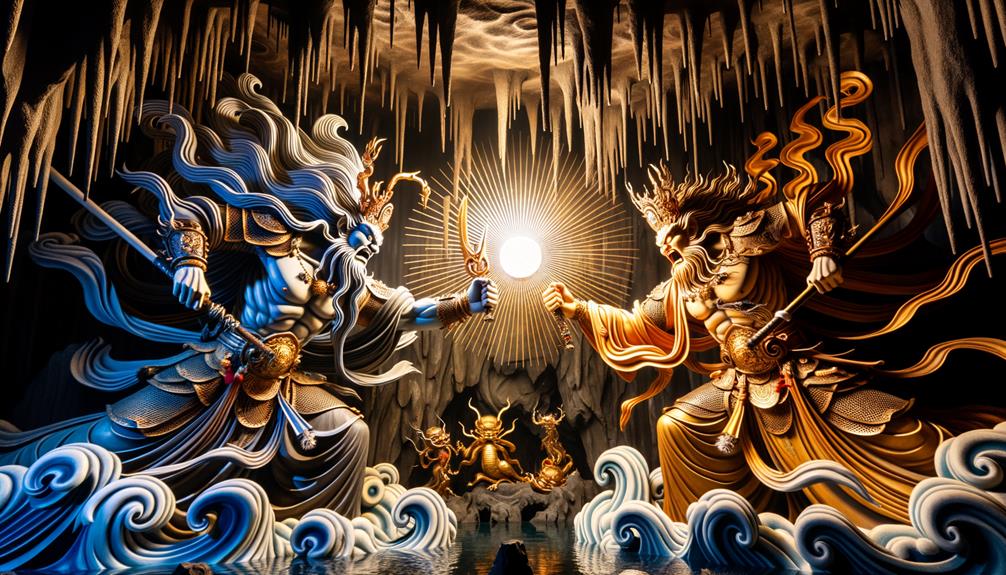
Long ago, Susanoo’s unrestrained rage pushed Amaterasu into hiding in a cave, casting the world into pitch darkness. This pivotal episode, the Cave Incident, highlighted the volatile dynamic between the storm god and the sun goddess. Susanoo’s unruly actions peaked when he hurled a deceased horse into Amaterasu’s sacred weaving room, deeply disturbing her and causing her retreat.
With Amaterasu concealed, her divine light vanished, leaving the world in disarray and shrouded in darkness. The Cave Incident starkly illustrated Susanoo’s unchecked behavior’s consequences and Amaterasu’s essential presence. Without her illumination, the equilibrium between order and chaos teetered perilously.
In an archetypal twist, the deities hatched a plan to entice Amaterasu out. They stationed a mirror outside the cave and staged a festive ruckus to pique her curiosity. Captivated by the commotion, Amaterasu peeked out and was mesmerized by her reflection, ultimately emerging and restoring radiance to the world.
The Cave Incident remains a potent portrayal of the dynamic interplay between light and dark, order and chaos, in Shinto mythology.
Divine Contests and Exchanges
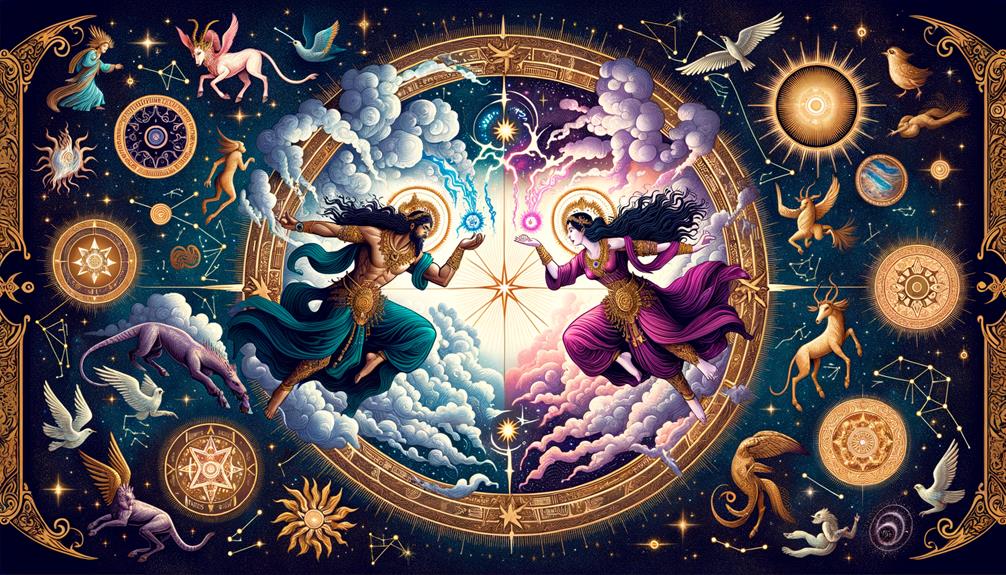
In their legendary feud, Susanoo and Amaterasu engaged in a important exchange, each gifting sacred objects that gave birth to new deities. As Amaterasu’s brother, Susanoo sought to prove his might by presenting her with his sword, while she offered her necklace in return. From these celestial items emerged gods and goddesses, symbolizing their divine creativity and the delicate balance they upheld.
However, harmony evaded the siblings. Susanoo’s impulsive nature often led him on rampages, disrupting the heavens, destroying rice fields, and defiling sacred spaces. His reckless behavior drove Amaterasu to retreat into a cave, plunging the world into darkness as the gods despaired without her radiant light. This marked a pivotal moment in their mythic journey.
Despite the chaos, their exchange highlighted their complex relationship, one not merely defined by rivalry but by creation and destruction, light and shadow intertwined. The birth of new deities from their gifts underscored the cyclical nature of their saga, setting the stage for further trials and transformations to unfold.
Themes of Conflict and Reconciliation
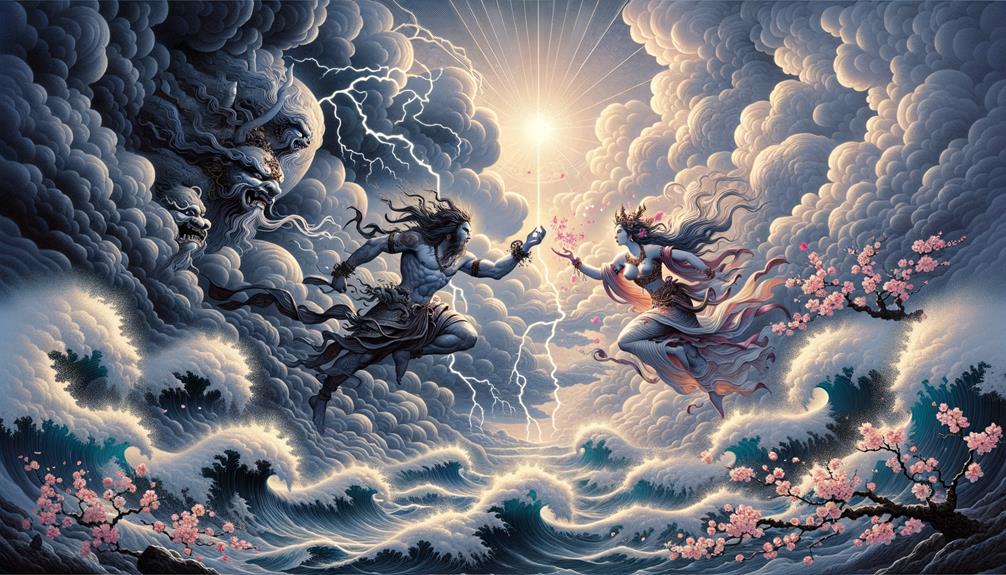
Their mythical clash seemed never-ending, but Susanoo and Amaterasu‘s tale eventually weaves threads of important turmoil and ultimate reunion, mirroring humanity’s ageless tussle between disorder and harmony. Susanoo’s exile by their father, Izanagi, sparked this epic journey. His unruly behavior, fueled by rage and defiance, shrouded the world in darkness as Amaterasu, the sun goddess, retreated into a cave, concealing her radiant warmth.
As the world withered without sunshine, symbolizing the disastrous impacts of divine discord, a pivotal moment arrived when Susanoo, remorseful, presented the sacred Ame-no-Murakumo-no-Tsurugi sword to Amaterasu, a heartfelt apology and gesture of reverence. This humble act of atonement paved the path to reconciliation, restoring equilibrium to their bond and the natural order.
Their narrative illuminates the complex dynamics of sibling relationships and the divine clashes embedded in mythology. It suggests that even the mightiest conflicts can find resolution through genuine remorse and mutual understanding. Ultimately, Susanoo and Amaterasu’s tale shows the enduring themes of turmoil and reunion that resonate across the human experience.
Symbolism in Japanese Folklore
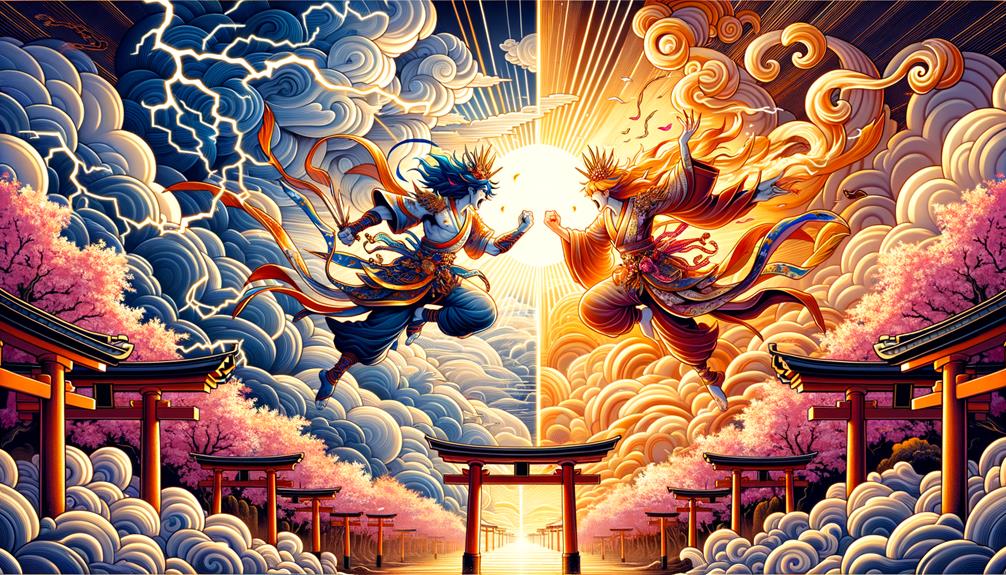
In Japanese mythology, the clash between Susanoo and Amaterasu symbolizes the eternal tug-of-war between chaos and order. Susanoo, the rambunctious storm deity, embodies disruption and unpredictability. Contrasting him is Amaterasu, the radiant sun goddess, representing light, clarity, and stability – the fundamental balance of natural elements.
Their conflict extends beyond sibling rivalry; it’s a important tale of harmony’s necessity. When Susanoo’s recklessness plunged the heavens into turmoil, Amaterasu retreating into a cave engulfed the world in darkness – highlighting that without the sun’s light, chaos reigns supreme. The gods’ efforts to coax Amaterasu out reflect the collective yearning for equilibrium and order’s restoration.
Additionally, Susanoo’s banishment and redemptive journey underscore the cyclical nature of relationships and the possibility of reconciliation. This mythic quest mirrors the dynamic forces at play in nature, where periods of discord and harmony continually alternate. Thus, the Susanoo-Amaterasu rivalry serves as a potent reminder of the delicate equilibrium underpinning existence.
Sources and related reading
- Hachiman War God Legends on MythologyVault
- Izanagi Izanami Creation Deities on MythologyVault
- Kokugakuin University: Encyclopedia of Shinto