King Arthur is the central ruler of a large medieval story tradition. The earliest material is Welsh and Latin, while the familiar Round Table, Lancelot, Grail quest, and courtly romances were built by later authors. Evidence for a single historical Arthur remains disputed.
King Arthur in the surviving tradition
Early Welsh poems and tales refer to Arthur as a warrior and leader, though dating individual passages is difficult. The ninth-century Historia Brittonum lists battles attributed to him, and the Annales Cambriae later links him with Badon and Camlann. These works were written well after the period in which a historical Arthur would have lived, so they cannot be read as direct eyewitness records.
Texts, objects, and evidence
Geoffrey of Monmouth’s History of the Kings of Britain, completed in the twelfth century, gave Arthur a long royal biography and spread the story across Europe. French romance writers changed it again. Chrétien de Troyes introduced major forms of Lancelot’s love for Guinevere and the Grail story. The prose Lancelot-Grail cycle expanded the court, while Thomas Malory’s fifteenth-century Le Morte Darthur brought many strands together for English readers.
Key points
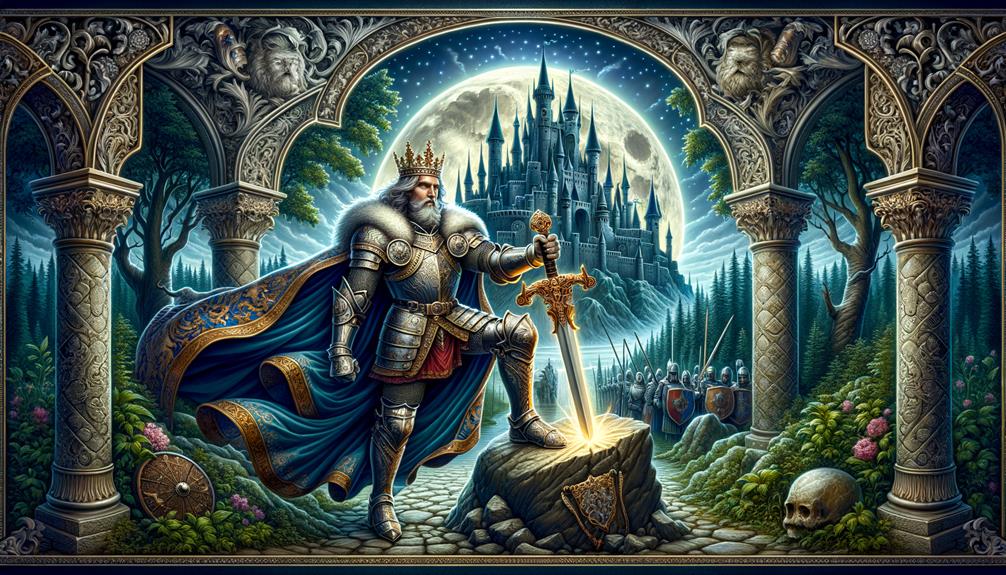
- Sword traditions: Excalibur is sometimes the sword drawn from the stone and sometimes a separate sword received from the Lady of the Lake. The texts do not all agree.
- The Round Table: It represents Arthur’s fellowship in later romance, not a securely documented historical institution.
- Camlann: Medieval accounts place Arthur’s final battle there and often connect it with Mordred. Details vary, including whether Arthur dies or is taken away.
- Historical caution: Possible links to post-Roman British commanders are hypotheses. No contemporary inscription or chronicle identifies the later legendary king.
How to read the material
Arthurian legend is best understood as a library of related works rather than one official tale. Each writer reshaped the material for a new language, audience, and political setting.