
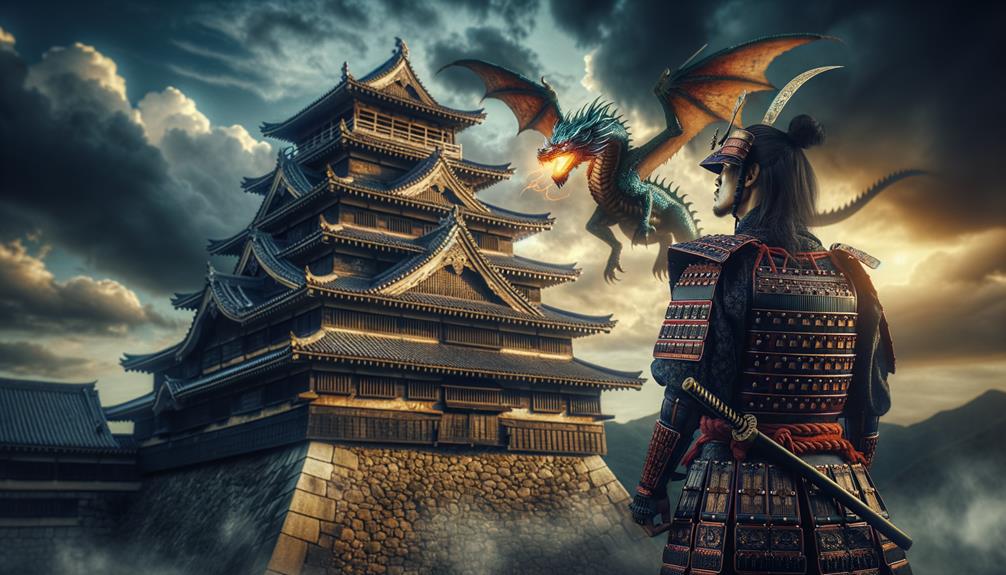
Samurai were members of Japan’s warrior class, not one unchanging type of swordsman. Warriors first become clearly visible in written records during the tenth century. Their institutions, weapons, work, and ideals then changed across the late Heian, Kamakura, Muromachi, Sengoku, and Edo periods.
What the Words Samurai and Bushi Mean
Samurai comes from a verb meaning “to serve” and initially referred to attendants. Bushi means warrior and is often the broader historical term. Usage shifted over time, so a provincial mounted fighter of the twelfth century and an Edo-period stipendiary official could both belong to the warrior order while leading very different lives.
How Warriors Gained Power
Early warrior groups formed through provincial landholding, family networks, service to the court, and the need to enforce claims. The wars between the Taira and Minamoto in the late twelfth century helped establish a military government at Kamakura. Later shogunates governed through changing alliances among shoguns, regional lords, vassals, temples, court institutions, and village communities.
Samurai were not simply private guards promoted into one national corps. Rank, income, and allegiance varied, and military houses often competed with each other.
Weapons Beyond the Katana
The katana became the best-known samurai weapon, especially as the paired long and short swords marked status in the Edo period. Earlier elite warfare emphasized mounted archery. Spears, long-bladed naginata, bows, and later firearms could be more important on actual battlefields.
Portuguese matchlocks reached Japan in the sixteenth century. Japanese makers copied and improved them quickly, and major armies deployed guns in large numbers. The claim that honorable samurai rejected firearms is false.
Armor Changed with Warfare
Large o-yoroi armor suited mounted archers and used lacquered iron and leather scales laced with silk. As fighting shifted toward larger infantry forces, lighter and more flexible armor developed. Sixteenth-century armor increasingly used solid plates and designs suited to spears and gunfire.
Peace under the Tokugawa shogunate encouraged highly decorated armor for ceremony and display, though martial training continued. Samurai armor was never one standard black metal suit.
Warriors Also Governed and Made Art
Military skill alone could not maintain a domain or household. Warriors managed land, finance, law, diplomacy, and records. Elite samurai patronized poetry, calligraphy, painting, Noh theater, gardens, tea, Buddhism, and Confucian scholarship.
This cultural work does not make warfare gentle. Samurai armies raided, burned settlements, took heads, changed sides, and fought for land and survival. The historical record contains loyalty and courage alongside ambition, coercion, and brutality.
Women in Warrior Households
Women of warrior families managed estates, arranged alliances, defended homes, transmitted property in some periods, and sometimes fought. Tomoe Gozen is celebrated in the Tale of the Heike, though the literary account cannot verify every detail of her life. The modern label onna-bugeisha can be useful, but it should not imply one formal female military class across all centuries.
Seppuku and the Myth of Constant Suicide
Ritual suicide existed, but its purpose and procedure changed. A warrior might die to avoid capture, protest a lord’s decision, follow a dead lord, or carry out a sentence. In the Edo period, formal seppuku could be a punishment that preserved some status for a warrior household. Samurai did not automatically kill themselves after every defeat or mistake.
Samurai, Ninja, and Black Clothing
Shinobi performed scouting, infiltration, sabotage, and intelligence work. These were activities, not a separate supernatural species opposed to all samurai. People of samurai status could conduct covert operations. The head-to-toe black ninja costume developed largely from theater and later entertainment.
The End of the Samurai Class
The Meiji Restoration dismantled the hereditary status order. Stipends were commuted, domains abolished, and public sword-wearing restricted in the 1870s. Former samurai took many paths as officials, soldiers, teachers, businesspeople, farmers, or rebels. The Satsuma Rebellion of 1877 was a major armed resistance, not the instant disappearance of every warrior family.
Sources
- The Metropolitan Museum of Art, “Samurai”
- The Metropolitan Museum of Art, Art of the Samurai
- Cambridge University Press, Warrior Rule in Japan