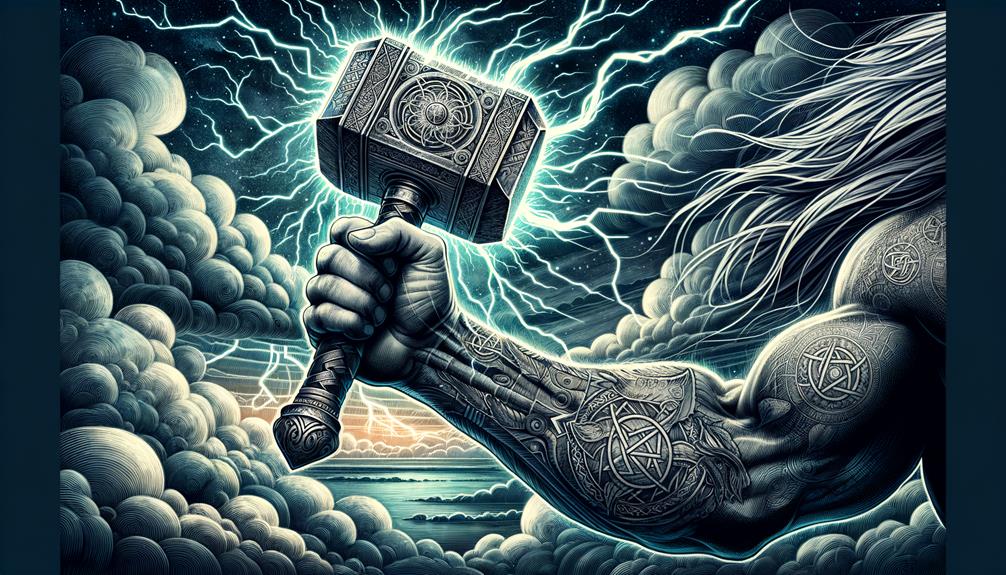
Mjölnir is Thor’s hammer in Old Norse myth. It protects the gods against the jötnar, appears in stories of cosmic conflict, and has a role in hallowing. Modern comics and films add features such as uru metal, a dying star, a worthiness enchantment, nanotechnology, and graviton emitters. None of those details comes from the medieval Norse sources.
How Mjölnir was made
Snorri Sturluson’s Skáldskaparmál connects the hammer’s creation with Loki cutting off Sif’s hair. Loki obtains golden hair for Sif, the ship Skíðblaðnir, and Odin’s spear Gungnir from the sons of Ivaldi. He then wagers his head that the dwarf Brokkr and Brokkr’s brother, called Sindri or Eitri in different manuscripts and translations, cannot make objects as fine.
While the dwarfs work, a fly stings Brokkr as he operates the bellows. During the forging of the hammer, the fly bites his eyelid and blood obstructs his sight. He stops briefly, and the hammer comes from the forge with a short handle. Despite that flaw, the gods judge Mjölnir the finest of the new treasures because it offers protection against the jötnar.
Mjölnir in the medieval texts
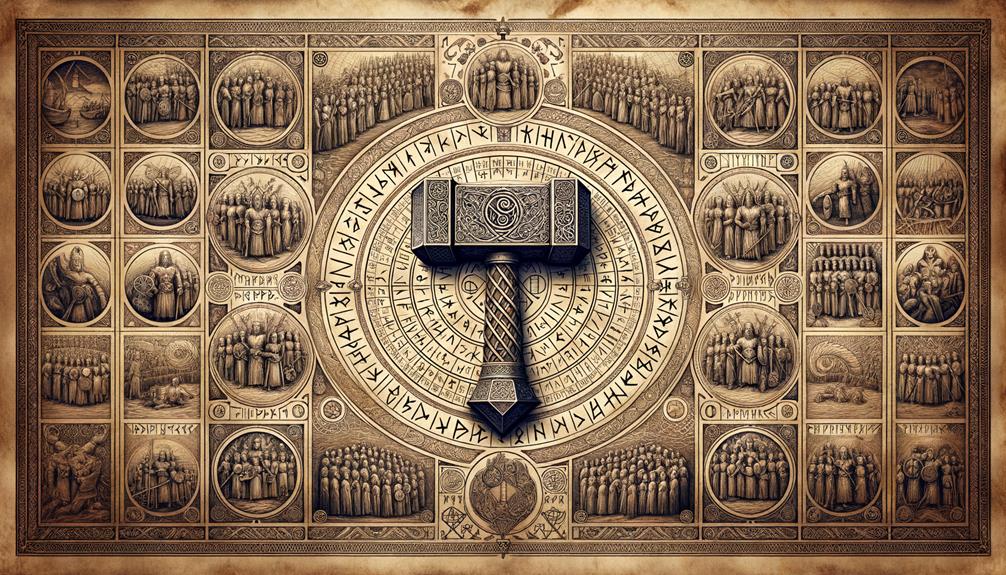
Snorri says Thor can strike whatever he wishes with the hammer, that it will not miss when thrown, and that it will return to his hand. He can also make it small enough to carry beneath his clothing. These are literary properties of the mythic weapon, not explanations based on fictional metals or modern physics.
Thor also uses iron gloves to grip the hammer in Snorri’s account. Mjölnir is central to his battles with jötnar and with Jörmungandr, the world serpent. Its force protects the divine community, but the sources do not say it judges the moral worth of anyone who tries to lift it.
The theft of Thor’s hammer
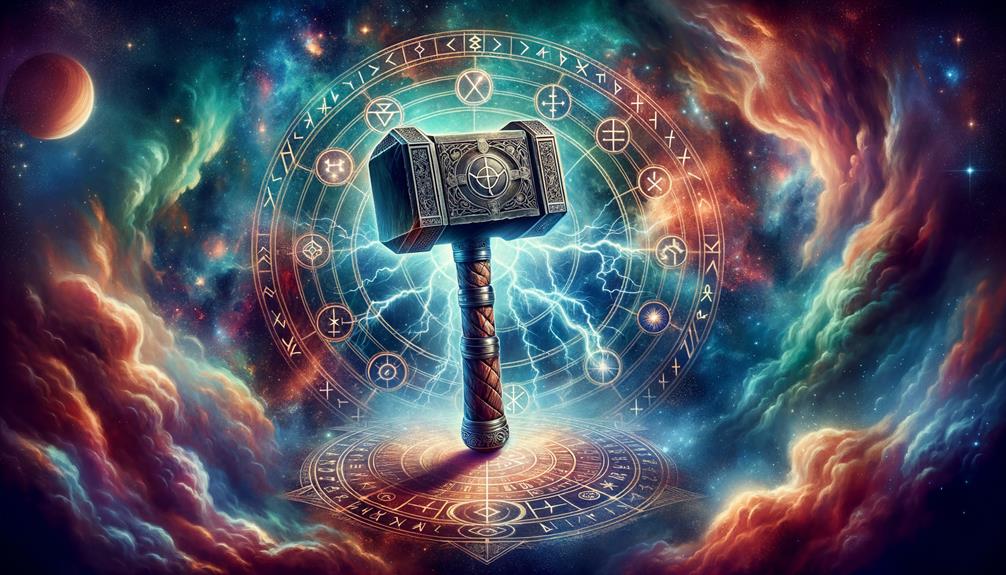
The Eddic poem Þrymskviða begins when Thor wakes and finds Mjölnir missing. The jötunn Þrymr has hidden it and demands Freyja as his bride in exchange for its return. Freyja refuses. Heimdall proposes that Thor disguise himself as the bride, and Loki accompanies him as a servant.
At the wedding feast, Thor’s appetite and fierce eyes nearly expose the disguise, but Loki provides explanations. Þrymr then orders Mjölnir placed on the bride’s lap to hallow the marriage. Thor seizes the hammer and kills Þrymr and his household. The poem makes the hammer both a weapon and an instrument of consecration.
Protection and ritual meaning
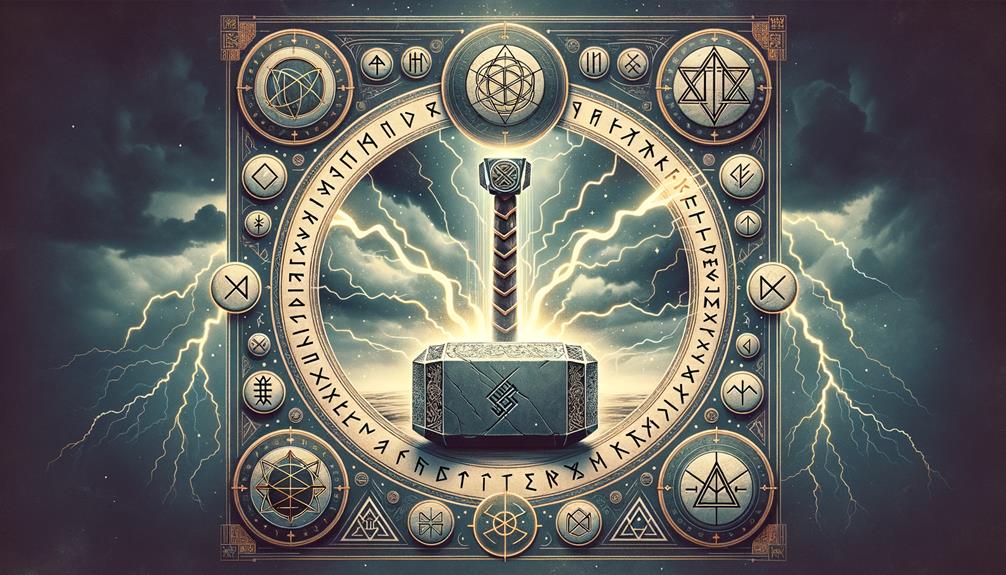
Hammer-shaped pendants are known from Viking Age archaeological contexts across Scandinavia and beyond. Their exact meanings cannot always be recovered, but the literary association between Thor, protection, and hallowing provides useful context. Some examples were worn during periods of contact and competition with Christianity.
The Kvinneby amulet is a small copper object bearing a runic protective inscription that invokes Thor and his hammer. It does not show Thor holding Mjölnir. It is evidence for an appeal to Thor’s protective force, not a portrait of the god.
Ancient myth and Marvel’s Mjolnir
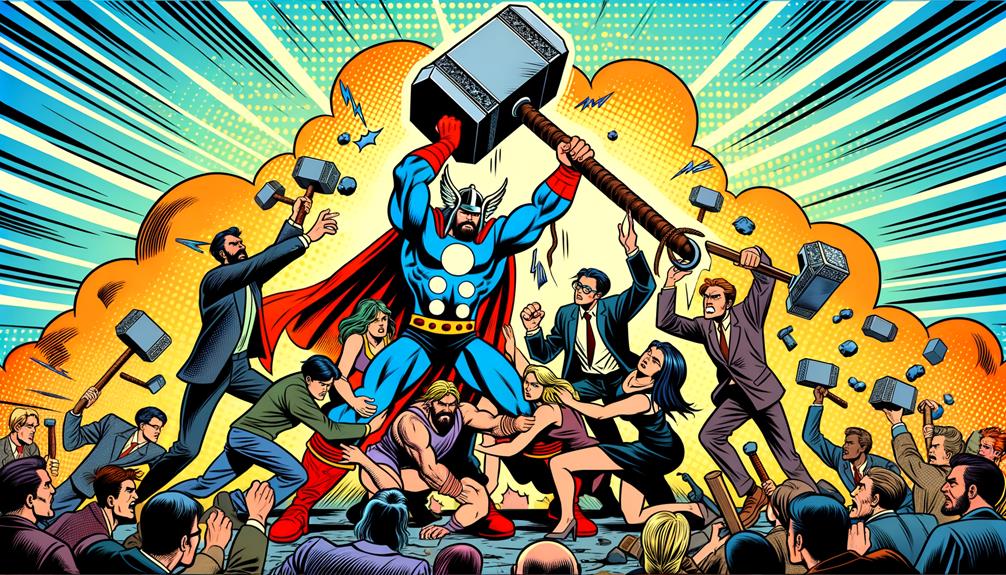
Marvel’s Mjolnir is a modern adaptation with its own rules. Uru metal, forging in a dying star, Odin’s inscription about worthiness, and scientific explanations involving mass or nanotechnology belong to that fictional setting. They should not be presented as Norse mythology.
The distinction does not lessen the modern version. It simply allows readers to understand which features come from Eddic poetry and Snorri, and which were created for comics and screen stories.
Frequently asked questions
Could only Thor lift Mjölnir in Norse myth?
The medieval sources do not describe a worthiness enchantment. Þrymr steals the hammer, servants carry it into the wedding feast, and the gods treat it as Thor’s weapon without the modern moral test.
Was Mjölnir made from uru in a dying star?
No. Those details belong to Marvel. In Skáldskaparmál, dwarfs forge the hammer, and interference by Loki leads to its short handle.
What did Mjölnir symbolize?
Its strongest source-based associations are Thor’s defense of gods and humans, destructive power against jötnar, and hallowing or protection.
Why was the handle short?
Loki, in the form of a fly, disrupts Brokkr’s work at the bellows. Brokkr stops briefly after being bitten near the eye, and the handle is not completed as intended.