
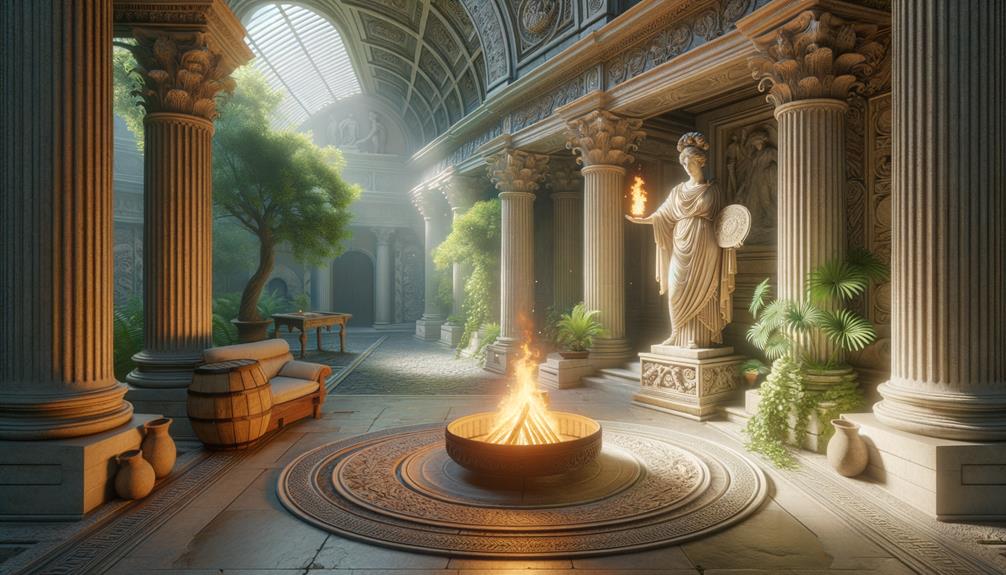
Accuracy note: Vesta was central to Roman hearth cult in homes and in the civic worship maintained by the Vestal Virgins. Greek Hestia offers a close comparison, but Roman practice had its own institutions.
Origins of Vesta

In the chronicles of Roman mythology, Vesta emerged as Saturn and Ops’ firstborn child, heralding a new era amid her father’s downfall. Born into chaos, the Roman goddess symbolized the hearth and sacred fire of the home. Her birth marked continuity; amidst upheaval, order and sanctity prevailed.
As Jupiter, Neptune, Pluto, Juno, and Ceres’ eldest sibling, Vesta stood at the vanguard of a divine lineage. Her presence proved pivotal during Jupiter’s overthrow of Saturn, signifying a power shift and new dawn. Unlike her Greek counterpart Hestia, Vesta’s identity deeply intertwined with the household, embodying the sacred flame uniting families.
Her steadfast chastity and purity, with no offspring, underscored her divine status. Vesta guarded the hearth, the eternal flame symbolizing domestic stability and sacred duty, ensuring Saturn and Ops’ legacy endured.
Symbols and Depictions
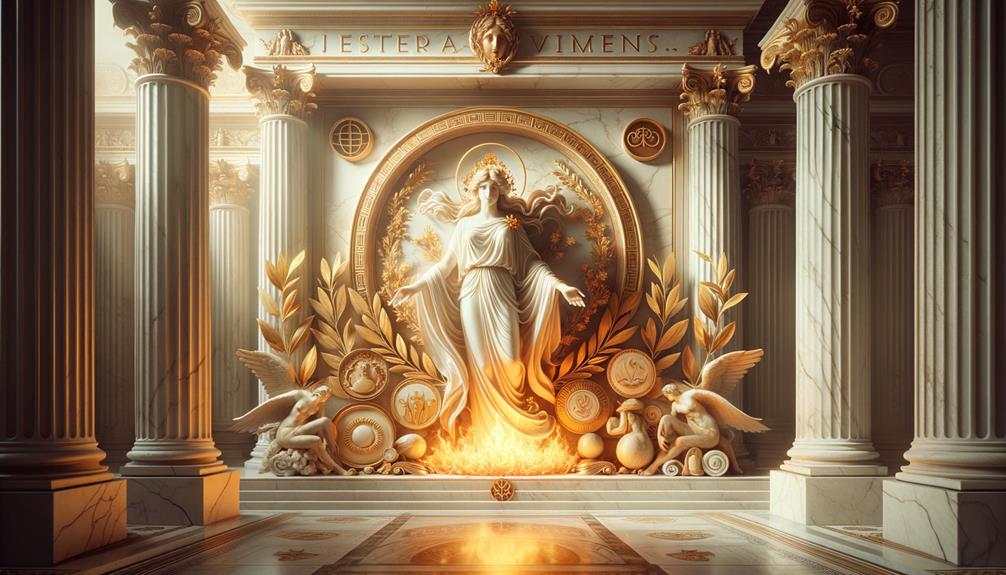
As the Roman goddess of the hearth, Vesta’s presence radiates through the warmth of the fireplace. Her imagery and depictions reveal her role as guardian of the sacred flame and protector of the home. Roman art portrays Vesta as a modestly dressed woman, embodying purity and domestic tranquility. She is often accompanied by her sacred animal, the donkey, representing the humble labor required to maintain a household.
Vesta holds a special status as the patron of bakers. Her association with ovens and millstones, frequently turned by donkeys, highlights her connection to sustaining the home with nourishment. This imagery shows her pivotal role in the kitchen and her broader influence over the hearth as a life-giving source of warmth.
Linked to fire deities like Cacus and Caca, Vesta’s paramount duty is preserving the sacred flame. The eternal flame she guards symbolizes the continuity and stability of Roman society and family life. Artistic representations depict her as a serene custodian, embodying the essence of devotion and worship in daily Roman life, both physically and spiritually protecting the home.
Worship and Rituals
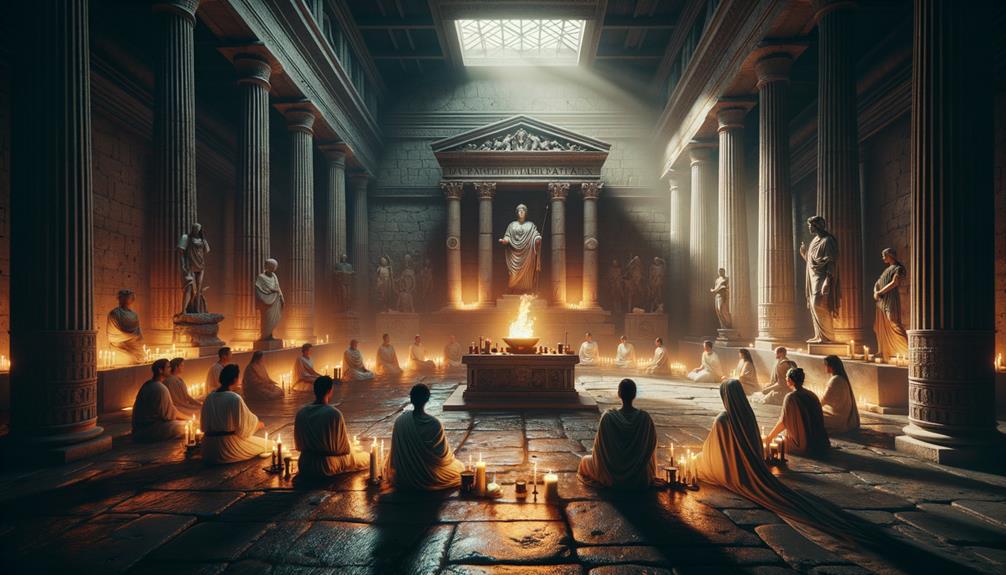
On the final day, a sweeping ritual cleanses the Temple of Vesta of any lingering negativity. The sweepings aren’t discarded carelessly; they’re meticulously disposed along the Clivus Capitolinus or into the Tiber, ensuring ill omens disperse from the holy space.
The Vestal Virgins
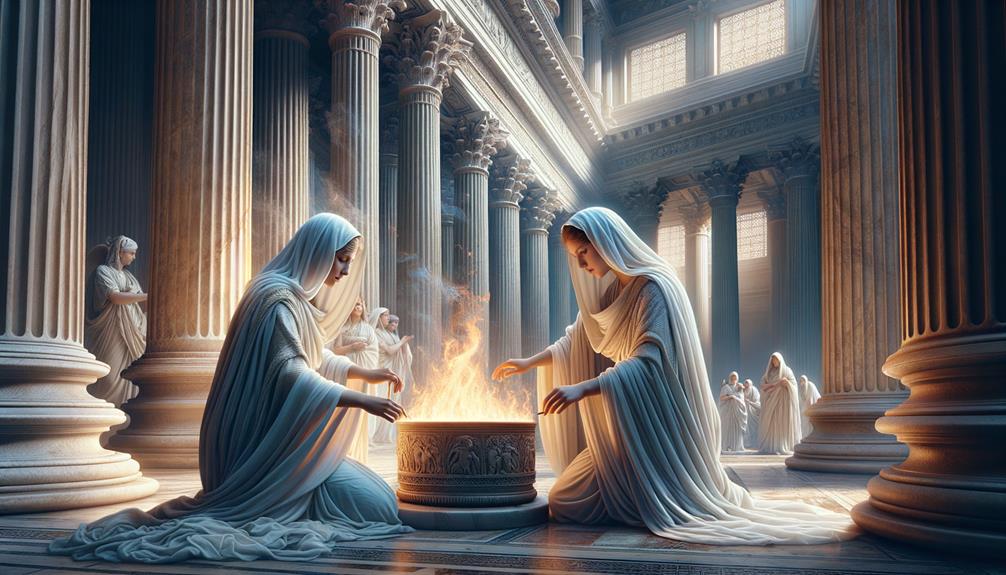
The sacred Vestal Virgins, chosen from noble Roman families, committed three decades of their lives to safeguarding an eternal flame within the Temple of Vesta. Their task symbolized Rome’s enduring strength and stability. These priestesses took binding vows of chastity, their pure virtue guarded by severe consequences should they falter. Under the Pontifex Maximus‘ watchful eye, their ritualistic duties unfolded with precision.
From innocent maidens to wise women, the Vestals transformed through sacrifice and ceremony. Maintaining the sacred fire demanded meticulous rituals to ensure its perpetual burn. Within the Atrium Vestae’s hallowed walls, mortal and divine worlds converged.
Embodying Rome’s heart, the Vestal Virgins stood as living emblems of steadfast dedication. Their mythical legacy endures as a powerful representation of purity and sacred guardianship.
Vesta’s Myths and Legends

Vesta’s myths intertwine purity and sacred flames – she eternally shields hearths and homes. In Roman lore, Vesta oversaw altars and communal hearths, ensuring the eternal flame, symbolizing society’s core, persisted.
Stories depict Vesta’s devotion to sacred duties. Her presence in households alongside household gods promised protection and prosperity. Vesta’s worship pervaded daily domestic rituals. Through her, the hearth became a revered focal point.
Vesta’s purity and chastity narratives parallel Rome’s enduring unity and strength. Her eternal flame represents collective well-being and the divine-mortal connection.
Sources and related reading
- Mars War God Legends on MythologyVault
- Janus Two-Faced God Transitions on MythologyVault
- British Museum: Greek and Roman gods and goddesses