
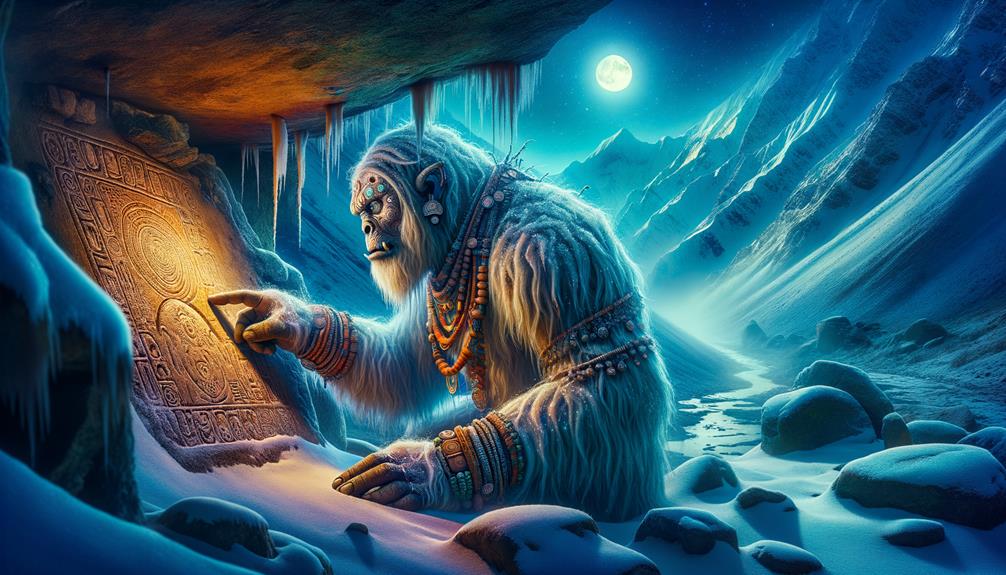
The yeti is a figure in Himalayan and Tibetan Plateau traditions and a subject of twentieth-century mountaineering, journalism, and cryptozoology. It is often presented in English as one standard ape-like animal, but local names and accounts describe more than one kind of being. Western popular culture simplified that variety into the “Abominable Snowman.”
Local traditions and outside labels
Words translated as yeti occur in several Himalayan languages, and reported beings differ in size, behavior, and habitat. Some accounts describe dangerous wild beings, while others concern tracks, calls, or animal-like figures associated with remote mountains. It is misleading to claim that Nepal, Tibet, Bhutan, and the whole Himalayan region share one fixed story.
The English label “Abominable Snowman” became popular through newspaper coverage in the early twentieth century. It encouraged an image of a white, human-like monster living on permanent snow. Many local descriptions are darker in color and are not limited to glaciers. The English phrase therefore reflects a history of translation and media promotion as much as local folklore.
Expeditions and famous footprints
Mountaineers brought international attention to unusual tracks. Photographs taken by Eric Shipton’s expedition near the Menlung Glacier in 1951 became especially influential. The prints looked large and human-like in the photographs, but tracks in snow can expand, melt, overlap, or lose details. A photograph without a specimen or an observed track-maker cannot establish a new species.
Later expeditions collected hair, skin, bone, and alleged relics. Many objects had cultural or religious value in their local settings before outsiders treated them as zoological evidence. Scientific testing needs both respectful provenance and controls against contamination or misidentification.
What genetic tests found
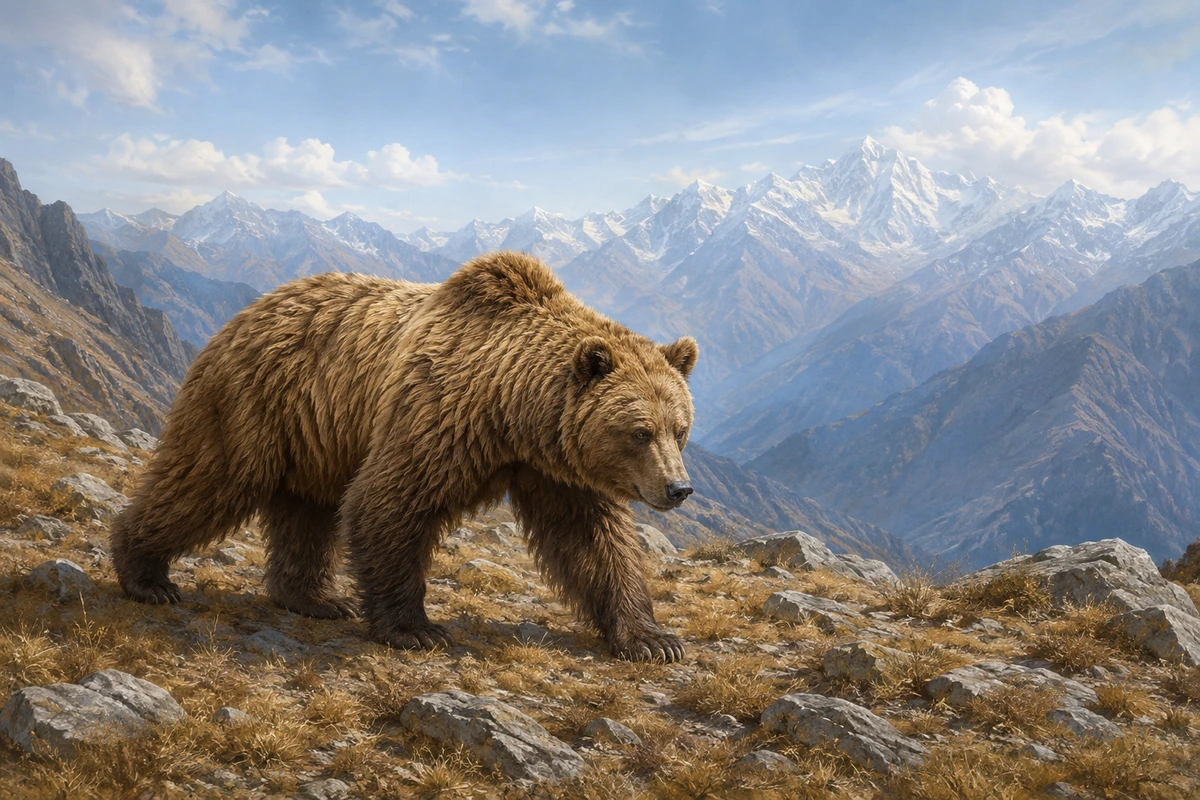
A 2017 study in Proceedings of the Royal Society B analyzed material presented as yeti remains together with samples from Himalayan and Tibetan bears. Eight of nine alleged yeti specimens came from local bears, including Himalayan brown, Tibetan brown, and Asian black bears. The ninth came from a dog. The research team’s university announcement gives the breakdown: six Tibetan brown bears, one Himalayan brown bear, one Asian black bear, and one dog.
The study also clarified the evolutionary history of rare regional bear populations. Its results support the view that bears contributed to reported yeti evidence. A bear standing on its hind legs, leaving distorted prints, or seen briefly in difficult terrain can appear unusually human-like.
The tests do not prove that every story arose from a bear. Folklore can incorporate animals, dangerous landscapes, religious ideas, memories, and storytelling. The narrower scientific conclusion is that tested biological samples have not demonstrated an unknown ape or hominin.
How a new-species claim would be evaluated
A persuasive case for an unknown mammal needs verifiable evidence that distinguishes it from known animals. Documented collection history, diagnostic anatomy, informative DNA sequences, and independent examination can all matter. A single ambiguous genetic match or a distorted track is not enough to settle the question. The 2017 paper illustrates why comparisons with a wider range of known bears and more informative genetic data are important.
Neither of the genetic studies cited here establishes an unknown Himalayan primate. That is a conclusion about the evidence examined, not a claim that researchers have tested every story or every object ever associated with the yeti. An unexplained observation remains unexplained until evidence supports a particular identification.
Cultural importance is not a biological claim
The lack of zoological confirmation does not make local traditions meaningless. Yeti narratives belong to the cultural history of Himalayan communities, while the international yeti belongs partly to exploration history and global media. Treating the subject responsibly means distinguishing those histories instead of reducing them to a contest between belief and ridicule.
Sources
- Royal Society, genetic research on alleged yeti remains
- Lan and colleagues, Evolutionary history of enigmatic bears in the Tibetan Plateau-Himalaya region and the identity of the yeti
- Nature, summary of the 2017 yeti sample study
- Sykes and colleagues, genetic analysis of alleged anomalous-primate hair