
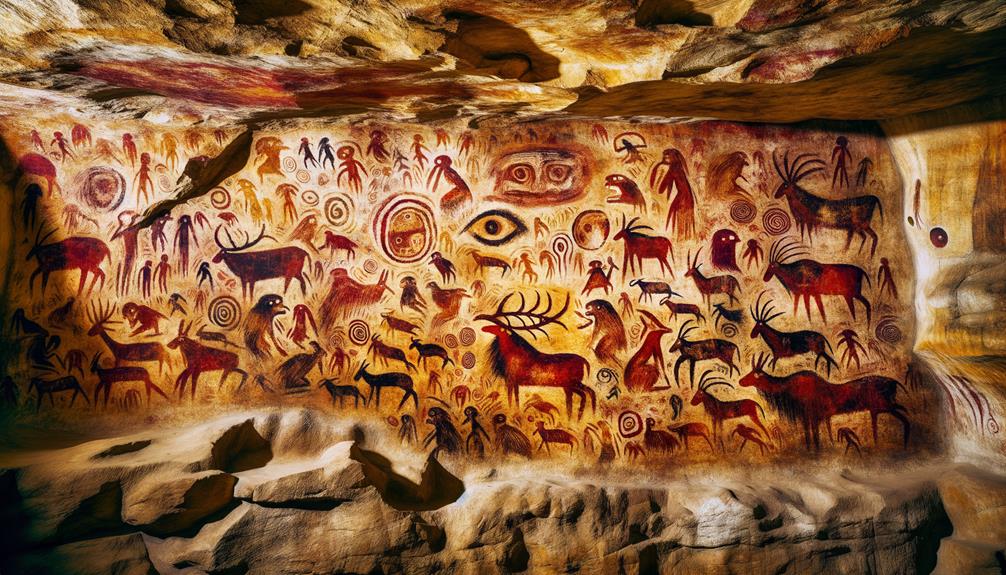
Lascaux is a cave complex in southwestern France known for Upper Paleolithic paintings and engravings. Its walls and ceilings preserve hundreds of animals, signs, and other figures made by people more than fifteen thousand years ago.
Discovery and dating
Four teenagers entered the cave in 1940 after following a shaft near the village of Montignac. Archaeological study places most of the art in the Upper Paleolithic, commonly around seventeen thousand years ago, though the cave’s use and individual images may not all belong to one moment.
Horses, aurochs, deer, bison, ibex, and felines dominate the imagery. Human figures are rare. Artists used mineral pigments, engraving, spraying, brushes, and the natural shape of the rock to create form and movement.
Meaning and conservation
No written explanation survives. Hunting magic, ritual performance, teaching, social memory, and cosmology have all been proposed, but no single theory explains every chamber and sign.
The original cave closed to the public in 1963 after changes in air, moisture, microorganisms, and visitor pressure threatened the paintings. Replicas and digital displays now allow access while conservation teams monitor the original site.