
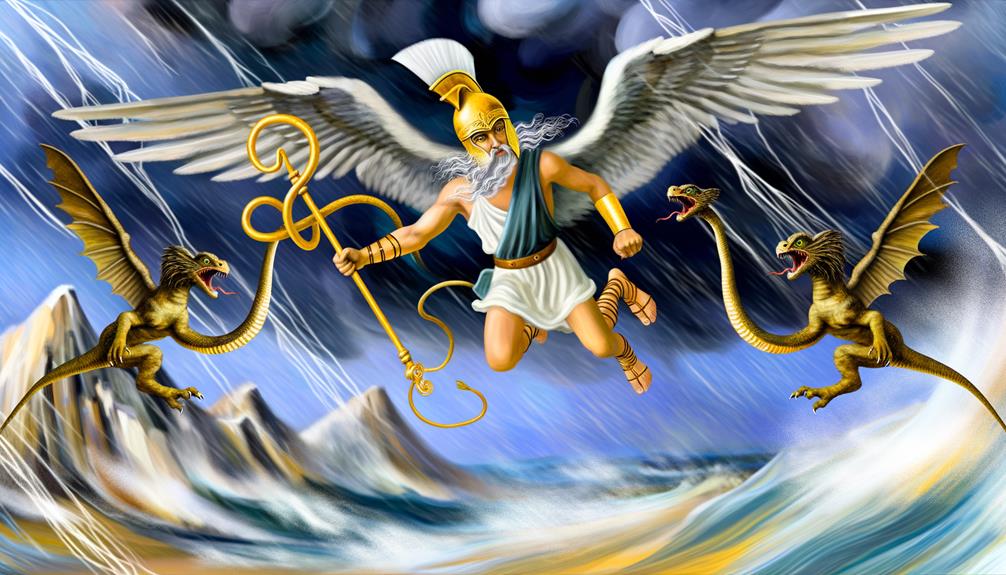
Hermes is the Greek god of messengers, travel, trade, herding, boundaries, thieves, language, and cunning exchange. He moves between gods, humans, and the dead with unusual freedom.
Hermes in the surviving tradition
The Homeric Hymn to Hermes tells how the newborn god leaves his cradle, steals Apollo’s cattle, reverses their tracks, and hides the herd. He invents the lyre from a tortoise shell. When Apollo confronts him, Hermes negotiates, gives the lyre, and receives authority over herds and other gifts. The story makes deception part of a settlement that creates social bonds.
Texts, objects, and evidence
Hermes carries the kerykeion, a herald’s staff later confused with the medical staff of Asclepius. Travelers marked roads and boundaries with herms, stone pillars bearing a head and often an erect phallus. The mutilation of Athenian herms in 415 BCE became a major political and religious scandal before the Sicilian Expedition.
Key points
- Messenger: Hermes carries Zeus’s commands and guides figures such as Priam through danger.
- Psychopomp: He leads souls of the dead, but he does not judge or rule them.
- Argus: Hermes kills the many-eyed guard Argus in the story of Io and gains the title Argeiphontes.
- Roman Mercury: Mercury shares many features but has a distinct Roman history, especially in commerce.
How to read the material
Winged helmet and sandals are common in later art. Ancient identification can depend on staff, boots, traveler clothing, purse, or context.