
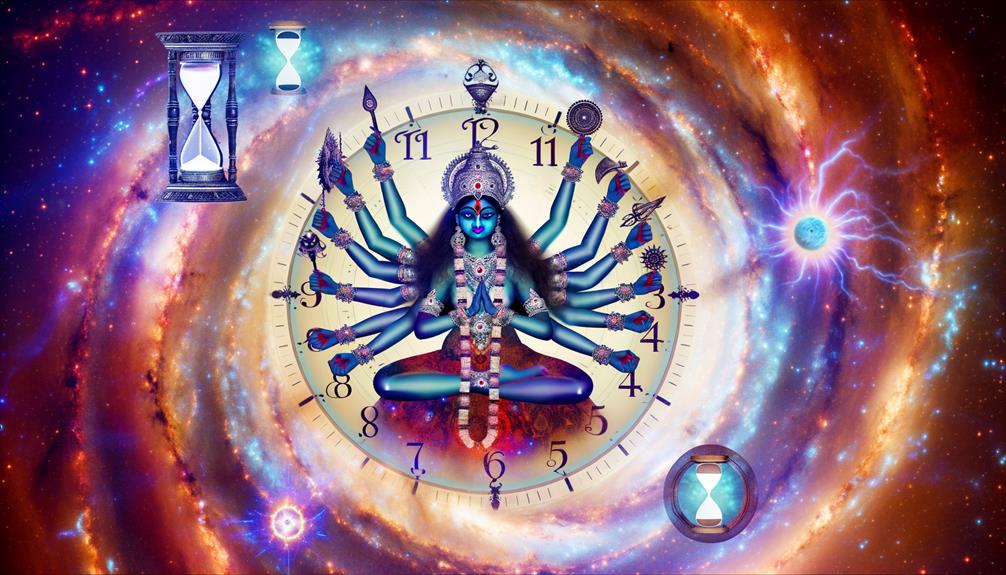
Kali’s name and imagery connect her with time, death, radical transformation, and power beyond ordinary social control. In many devotional traditions she is also a compassionate mother who frees devotees from fear.
Kali and the power of time in the surviving tradition
The Devi Mahatmya presents Kali in battle against forces that multiply and overwhelm. Later Shakta texts and Bengali devotional traditions place her in wider theological settings. She may be understood as a form of the supreme Goddess, a manifestation of Parvati or Durga, or a deity with her own central identity.
Texts, objects, and evidence
Her garland of heads, skirt of arms, sword, severed head, and cremation-ground setting confront the impermanence of the body and the destruction of ego. Interpretations vary. Standing on Shiva can mark the moment fierce action becomes conscious, a relation of Shakti and stillness, or a narrative check on destructive momentum.
Key points
- Blackness: Dark color can signify the power that absorbs all distinctions and the unknowable ground of existence.
- Tongue: The extended tongue has several readings, including blood-drinking in battle and shame at stepping on Shiva.
- Dakshineswar: The temple near Kolkata became closely associated with Ramakrishna’s devotion to Kali.
- Colonial distortion: British accounts often isolated violent imagery from worship, poetry, philosophy, and maternal devotion.
How to read the material
Kali should not be sensationalized or equated with evil. Fierce divine imagery has theological and ritual contexts that popular horror ignores.