
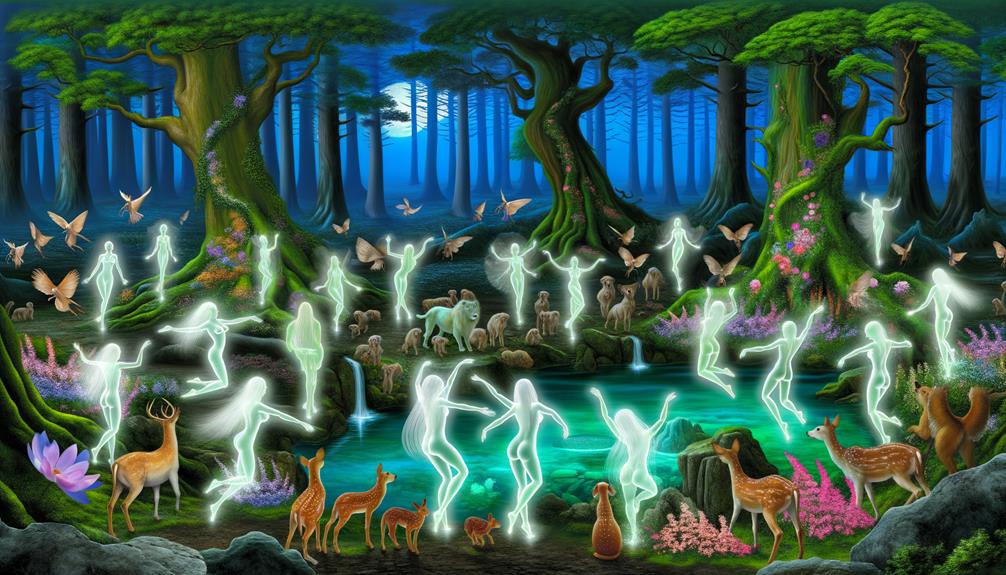
Nymphs were female divinities of the natural world in Greek religion and mythology. They could be connected with springs, rivers, trees, mountains, caves, meadows, or particular local places. They were divine, but ancient sources did not always treat every nymph as immortal.
Many kinds of nymph
Naiads belonged to fresh water, Oreads to mountains, and Dryads or Hamadryads to trees and woodland. Sea nymphs include the Nereids and Oceanids, although ancient classifications overlap and later handbooks often make the groups look more fixed than the sources do.
Nymphs appear as nurses of gods and heroes, companions of major deities, mothers of local ancestors, objects of pursuit, and powers who protect a landscape. Some receive cult offerings at springs, caves, and rural sanctuaries.
More than romantic figures
Later art often emphasizes beauty and courtship, but Greek stories also present nymphs as dangerous, grieving, prophetic, or fiercely tied to their places. A spring nymph could give water and healing while also punishing violation of a sacred site.
The word nymph should not be used as a generic label for every female nature spirit in world mythology. Greek nymph traditions have their own texts, cult settings, and regional histories.