
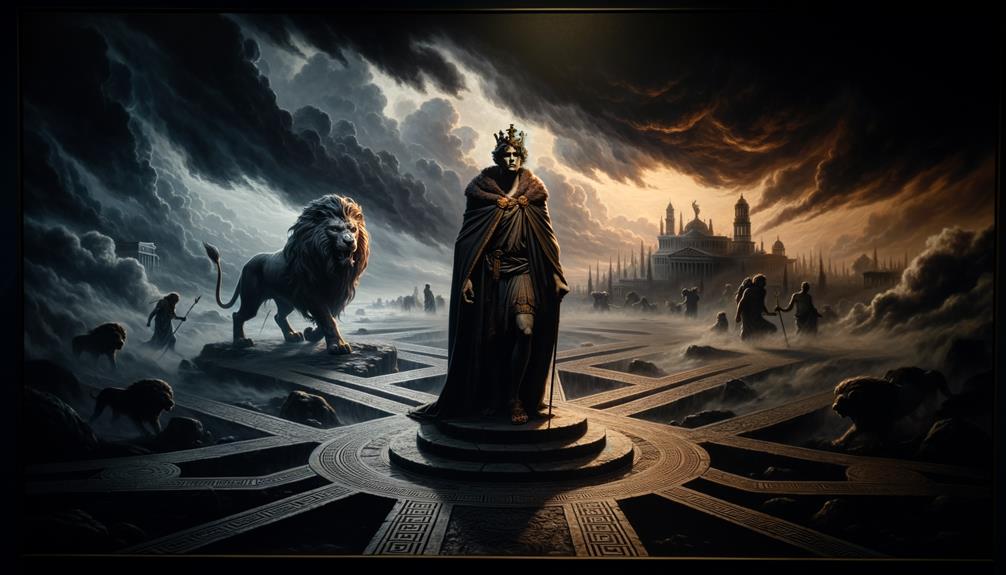
Oedipus is the king at the center of a Theban myth best known through Sophocles’ tragedies. An oracle says he will kill his father and marry his mother. Attempts by two generations to evade that prophecy become the means by which it is fulfilled.
From Corinth to Thebes
Raised in Corinth, Oedipus leaves after hearing the oracle because he believes the Corinthian rulers are his parents. On the road he kills an older man during a violent encounter, not knowing the man is Laius, king of Thebes and his biological father. He then solves the Sphinx’s riddle and receives the Theban throne and Queen Jocasta.
Recognition and ruin
Years later, a plague drives Oedipus to investigate Laius’s murder. Testimony from a prophet, messenger, and shepherd reveals his parentage and crimes. In Sophocles’ Oedipus the King, Jocasta dies and Oedipus blinds himself. Other ancient sources vary in details, including what happens to Jocasta and when Oedipus leaves Thebes.
Fate, knowledge, and responsibility
The play does not reduce neatly to a warning against curiosity. Oedipus seeks the truth needed to save his city, yet he is proud, quick to accuse, and unable to recognize his own history. The tragedy holds divine prediction, human choice, incomplete knowledge, and political responsibility in tension.