Accuracy note: Xolotl is linked with lightning, twins, deformity, the evening star, and the dead in different central Mexican sources. He is not simply a dog guide in every narrative.
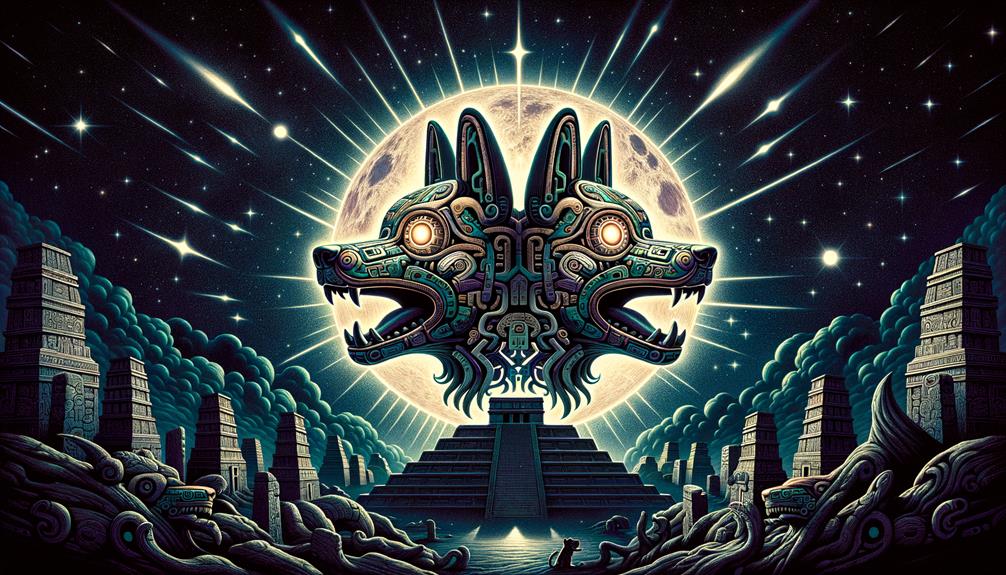
Xolotl, the twin dog god, possesses a duality that encapsulates life’s cycle within Aztec mythology. His skeletal form, with reversed feet, portrays his authority over the underworld and his role as a psychopomp – guiding souls through the perilous afterlife. As Quetzalcoatl‘s twin, Xolotl symbolizes the complex balance between creation and destruction. This archetype’s cultural significance and associated rituals shed light on deeper mythological interconnections.
Origins and Background

Mesoamerican myths paint Xolotl as Quetzalcoatl’s twin, an notable figure representing existence’s darker, mysterious side. Pre-Aztec traditions birthed Xolotl’s narrative, a dog-headed deity tasked with guiding souls into the afterlife. Dogs were sacred, linked to the underworld – Xolotl’s canine form highlighted his gatekeeper role between life and death.
Beyond ferrying souls, Xolotl shielded them from underworld perils, his protective nature reflecting duality’s harmonious balance personified alongside Quetzalcoatl. The twins embodied contrasting yet interconnected energies mirrored throughout Aztec cosmology. Through Xolotl, practitioners grappled with archetypal themes like guardianship, unseen worlds, and the interplay of opposing forces shaping the cosmos.
Role in Aztec Mythology
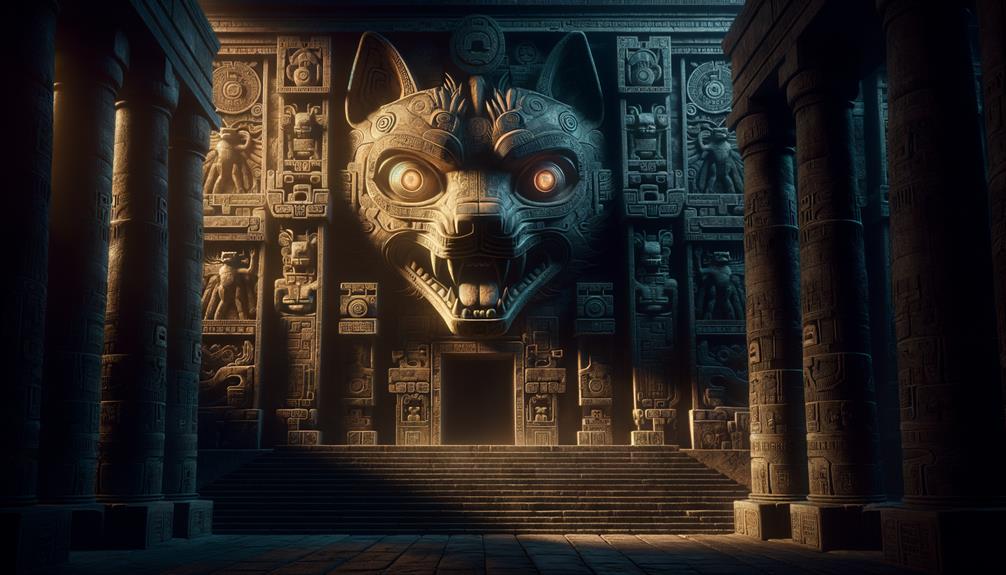
Xolotl’s versatile role in Aztec mythology transcended his duties as Quetzalcoatl’s twin, establishing him as the guide for the Sun’s nightly journey through the underworld. This canine god, with his skeletal features and reversed feet, embodied themes of death and transformation central to Mesoamerican beliefs. As the evening star, Xolotl personified the intertwined nature of life and death.
One pivotal duty involved leading souls to the afterlife, a nod to the ancient human-canine bond. His connection to the Mesoamerican ballgame highlighted Aztec cultural values – the game symbolized the cosmic clash between life and death, order and chaos.
| Role | Symbolism | Cultural Significance |
|---|---|---|
| Quetzalcoatl’s twin | Duality | Reflected mythology’s interconnectedness |
| Underworld guide | Death and rebirth | Emphasized life’s transitions |
| Evening star | Link between worlds | Connected celestial and earthly domains |
| God of monsters | Protection | Relationship with the unknown |
| Ballgame patron | Cosmic struggle | Represented life-death cycles |
Through these archetypal themes, Xolotl’s mythology role illuminated Mesoamerican cosmology’s important depths.
Xolotl and Quetzalcoatl
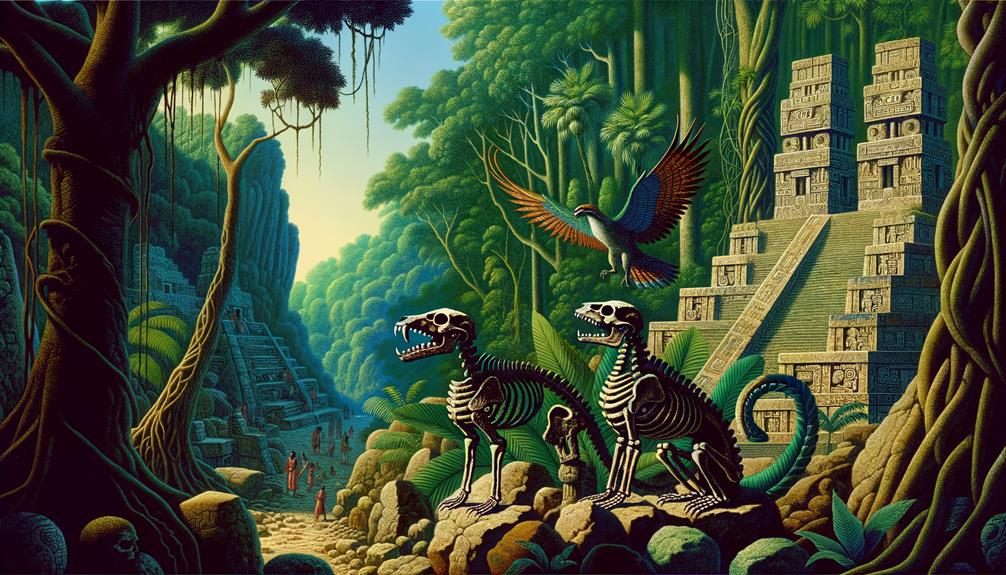
Xolotl and Quetzalcoatl, twin deities in Aztec mythology, embody the important dualities of existence. Quetzalcoatl, the majestic feathered serpent, symbolizes enlightenment and vitality, while Xolotl, with distinctive canine features, represents death and transformation. Their contrasting natures illustrate the cyclical balance between life and demise – an integral tenet of Aztec beliefs.
Quetzalcoatl personifies wisdom and the animating forces of nature. His association with wind shows the importance of spiritual growth. Conversely, Xolotl guides souls to the underworld, highlighting the inevitability of death for all beings. This interplay between the feathered serpent and dog-faced deity reflects the cosmic cycle: creation and destruction in perpetual motion.
The complementary roles of Xolotl and Quetzalcoatl reinforce the Aztec understanding of equilibrium. Life and death aren’t opposing forces but two facets of the same cosmic dance. True harmony emerges not from denying either, but by embracing the totality of the human experience – a important lesson embodied by these mythological twins.
Symbols and Depictions
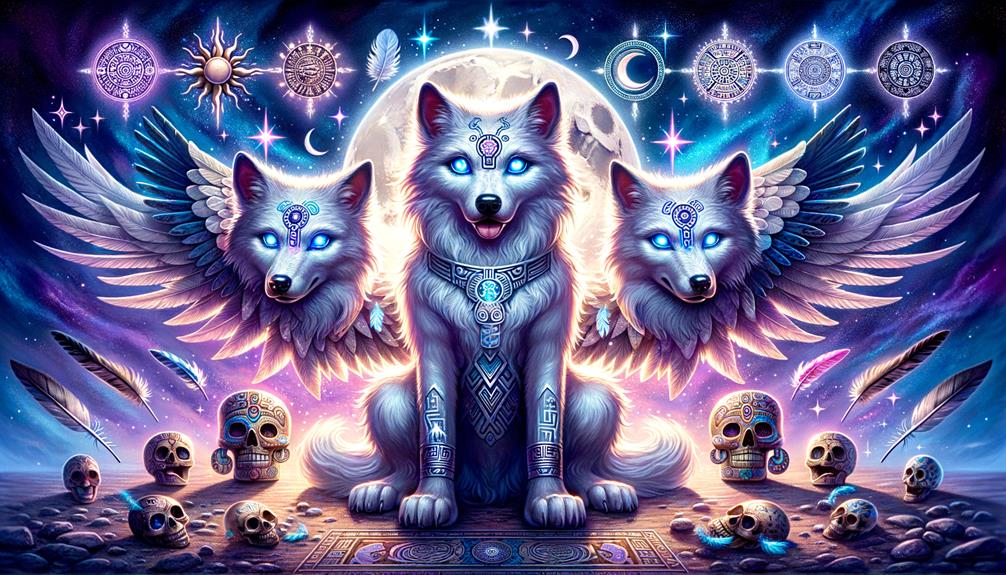
Xolotl, the uncertaintytic Aztec deity with a distinctive canine visage, unveils important insights into the darker worlds of the ancient cosmology. This deity’s skeletal form and reversed feet symbolize his reign over death and transformation, guiding souls through the underworld. The Xoloitzcuintli breed, revered as sacred animals, reinforces Xolotl‘s important connection to the canine world.
Portrayed as a deformed monster, Xolotl embodies the fears and mysteries that pervaded the Aztec psyche. His role as the god of monsters and deformities shows this embodiment. Unlike his radiant twin Quetzalcoatl, Xolotl represents the balance of light and dark, life and death, within comparative mythology.
Symbols and depictions of Xolotl offer a memorable window into the complex interplay of reverence, fear, and transformation that defined Aztec belief systems. This uncertaintytic deity’s imagery and representations illuminate a world often overshadowed by his luminous counterpart, unveiling the important depths of this ancient culture’s relationship with the unknown.
Cultural Significance
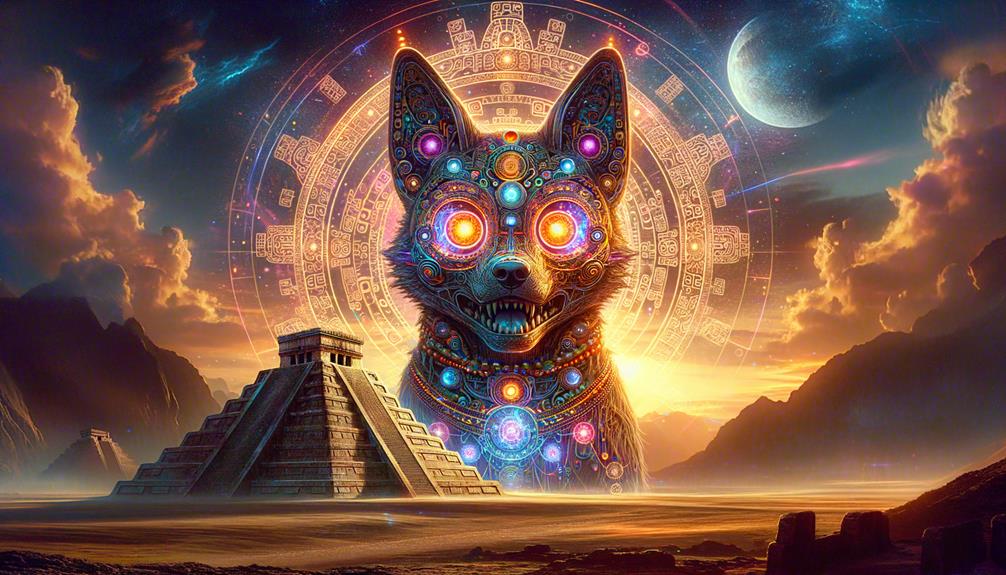
Exploring Xolotl’s cultural relevance unveils how the twin dog deity personifies duality and cosmic equilibrium, pivotal themes in Aztec mythology. Xolotl’s dynamic with his twin Quetzalcoatl symbolizes life and death, light and darkness, creation and destruction intertwined. This duality formed the bedrock of the Aztec worldview, where complementary forces shaped the cosmos.
The revered Xoloitzcuintli breed, closely tied to Xolotl, accentuated his role as a protective guide. These dogs were cherished not just as earthly companions but spiritual advocates in the afterlife. They guided souls through Mictlan’s treacherous underworld, ensuring safe passage to eternal rest.
Xolotl’s twin nature embodied the Aztec belief in harmonizing opposites. Feared yet revered, his ability to traverse worlds highlighted existence’s interconnectedness and opposing forces’ essential harmony. As sacred companions, the Xoloitzcuintli breed mirrored this duality, symbolizing loyalty and guardianship in life and death alike. Through Xolotl, the Aztecs witnessed the eternal dance of complementary forces underpinning their spiritual and cultural ethos.
Sources and related reading
- Ehecatl Wind God Legends on MythologyVault
- Tlaltecuhtli Earth Monster Deity on MythologyVault
- The Metropolitan Museum of Art: Aztec stone sculpture