
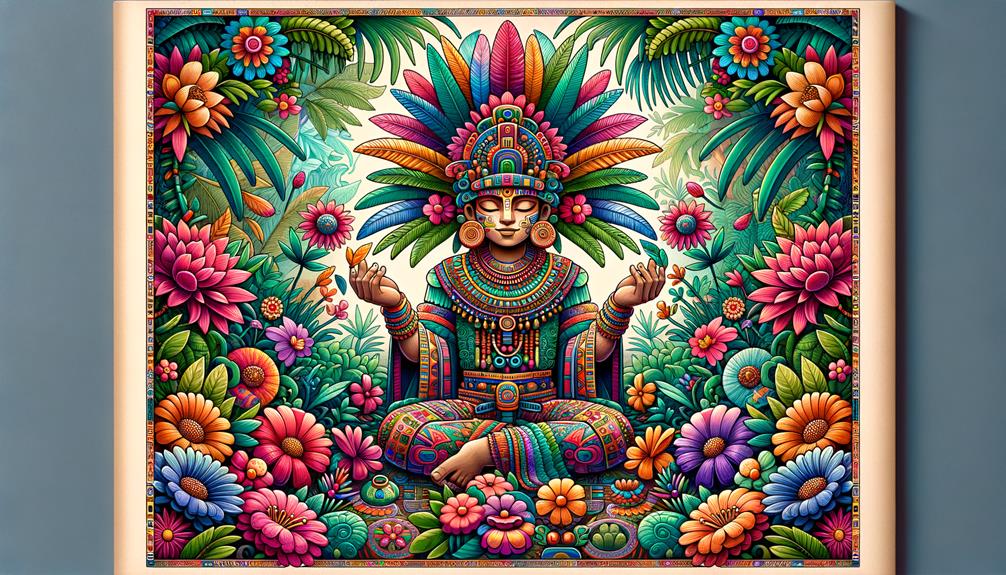
Xochipilli means “Flower Prince” in Nahuatl. The Mexica deity is associated with flowers, song, dance, music, games, pleasure, and the dangerous excess that can accompany delight. His traditions reveal that “flower” in Nahua culture was not just decoration: it could connect beauty, poetry, sacred experience, sexuality, status, and the brevity of life.
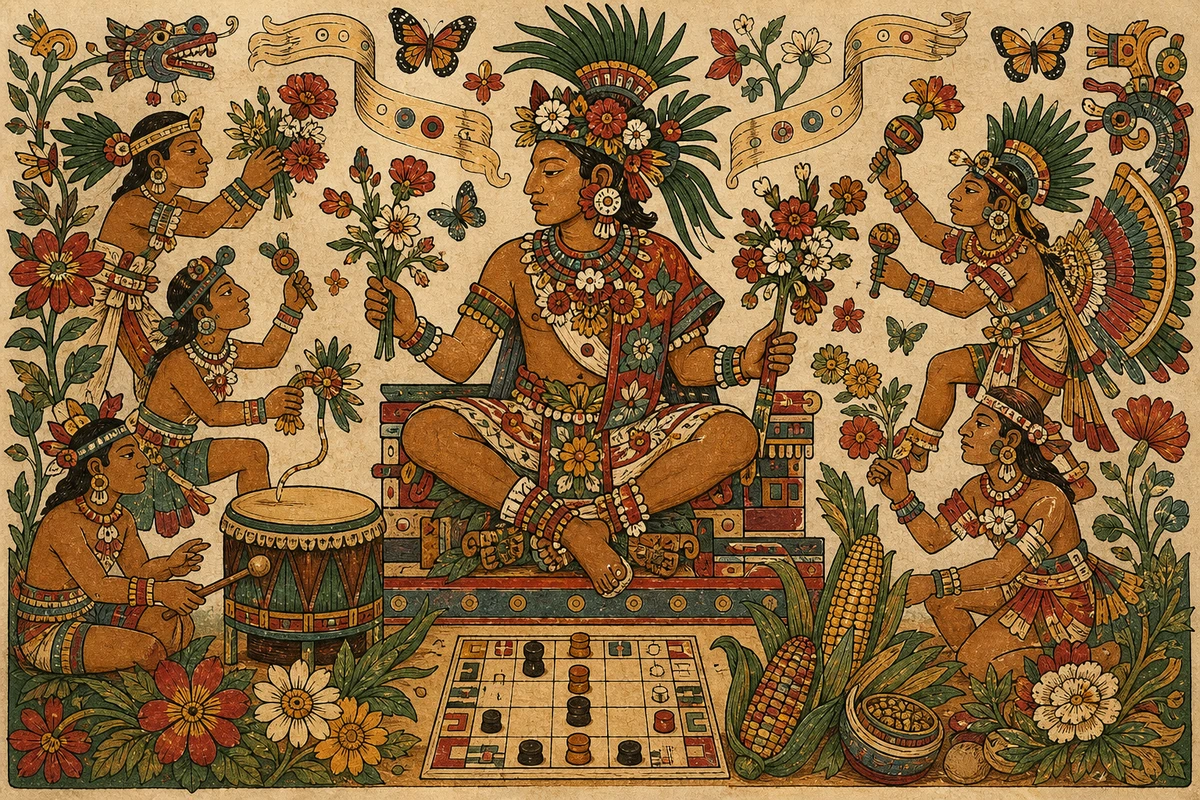
Flower and song
The paired expression “flower and song” evokes poetry, performance, and refined speech in Nahua thought. Flowers could be offerings, metaphors, costume elements, and signs of beauty that fades. Xochipilli’s domain therefore includes artistic creation but should not be reduced to a modern patron of “artists.”
He overlaps with Macuilxochitl, “Five Flower,” a calendrical name associated with music, dance, games, and pleasure. Some scholarship treats the names as forms of the same deity; sources and images can emphasize different aspects.
Games, pleasure, and consequence
Patolli, music, dancing, feasting, and sexuality brought joy and social connection, but excess carried risk. The Cleveland Museum of Art describes Macuilxochitl as a god of excessive pleasure and its punishment. This duality is more precise than presenting Xochipilli as a harmless god of happiness.
The Tlalmanalco sculpture
A celebrated stone figure from Tlalmanalco, now in Mexico’s National Museum of Anthropology, sits on a flower-covered base. Researchers have proposed identifications for the carved plants and interpreted the figure’s posture as sacred ecstasy. Several plant identifications—especially claims that every motif is a psychoactive species—remain debated.
The safest conclusion is that plants, flowers, song, and altered ritual experience were important to the sculpture’s interpretation. It should not be advertised as settled proof that Xochipilli was simply an “Aztec god of drugs.” INAH’s research emphasizes the plants’ natural, medicinal, ornamental, symbolic, ritual, and divine dimensions.
A richer understanding of art
Xochipilli belongs to a world where art, religion, agriculture, courtly performance, and bodily pleasure were not isolated categories. Flowers can nourish, heal, intoxicate, decorate, and die. Their prince holds those possibilities together.