
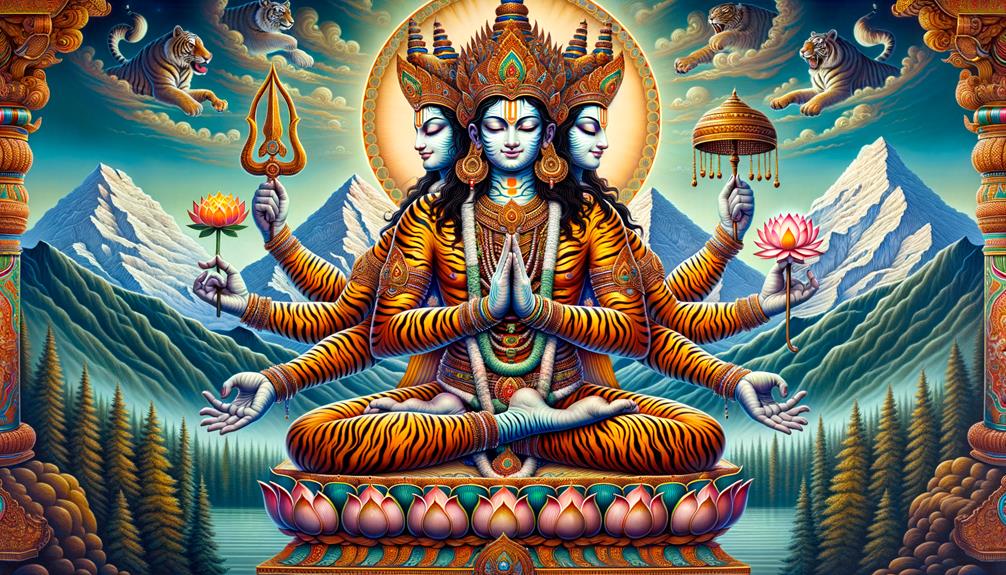
Shiva is one of the most widely worshipped deities in Hindu traditions. He can be the supreme God, a great yogi, a householder, a dancer, a teacher, a fierce destroyer, and a source of grace. These forms are not pieces of one simple biography. Texts, temples, regions, and schools of thought emphasize different aspects of Shiva.
Shiva and Rudra
The Vedas address Rudra as a dangerous and healing god whose arrows bring disease and whose remedies remove it. Later literature increasingly connects the names Rudra and Shiva. This history is complex. It is safer to speak of transformation and identification across centuries than to claim that Shiva began as one clearly defined prehistoric deity.
A famous seal from the Indus civilization has sometimes been called a “proto-Shiva” or “Pashupati.” That identification remains disputed because the script is undeciphered and the image has no readable name. It is not firm evidence for a complete pre-Vedic Shiva cult.
Is Shiva Only the Destroyer?
Popular summaries place Brahma, Vishnu, and Shiva in a Trimurti of creation, preservation, and destruction. This is one influential theological scheme, not a structure accepted in the same way by every Hindu tradition. In Shaiva traditions, Shiva may encompass creation, preservation, dissolution, concealment, and grace rather than occupy only the third function.
Destruction also means the ending that makes transformation possible. Shiva burns the three demon cities as Tripurantaka, dissolves the cosmos at the end of a cycle, and burns desire when Kama interrupts his meditation. The same god restores, teaches, protects, and grants liberation.
The Yogi and the Householder
Shiva is the ascetic who meditates in the mountains, wears matted hair, and covers himself with ash. He is also the husband of Parvati and father of Ganesha and Skanda in many traditions. Stories about this household examine tension between renunciation and social life rather than forcing the god into only one role.
His attributes often include a trident, a small hourglass drum, a serpent, a crescent moon, and a third eye. The river Ganga descends through his hair so that her force does not shatter the earth. Nandi the bull serves as his vehicle and devoted attendant.
Shiva Linga
The linga is the most common focus of Shiva worship. It is an aniconic emblem of the god, often set in a base associated with the goddess or Shakti. Some texts connect the linga with generative power. Others describe it as an endless pillar of light that neither Brahma nor Vishnu can measure. Reducing every linga to a literal anatomical object ignores its ritual and theological meanings.
Worship commonly includes water, milk, leaves of the bilva tree, flowers, light, and recitation. Actual practice varies by temple, community, and household.
Nataraja, Lord of Dance
In South Indian bronze images of Nataraja, Shiva dances within a ring of flame. One hand holds a drum associated with creation, another holds fire, and a raised hand offers reassurance. His lifted foot promises refuge while the other presses down the dwarf Apasmara, linked with forgetfulness or ignorance.
The image brings several acts together: creation, destruction, protection, concealment, and release. It should not be read as a picture of destruction alone.
Major Shaiva Traditions
Shaivism includes many traditions rather than one church or creed. Shaiva Siddhanta, Kashmir Shaivism, Pashupata traditions, Virashaiva or Lingayat communities, and regional devotional movements differ in philosophy and ritual. Shiva is also honored by Hindus who do not identify exclusively as Shaiva.
Frequently Asked Questions
Are Shiva and Shankara the same?
Shankara is one of Shiva’s names. It can mean a beneficent or auspicious maker. The name can also refer to the philosopher Adi Shankara, who is a different figure.
Why does Shiva have a third eye?
The third eye represents extraordinary sight and power. In myth it can emit fire, as when Shiva burns Kama.
Is Shiva male or beyond gender?
Shiva is commonly addressed as male, but several traditions portray divine reality as exceeding gender. Ardhanarishvara joins Shiva and Parvati in one body, expressing their inseparability.