
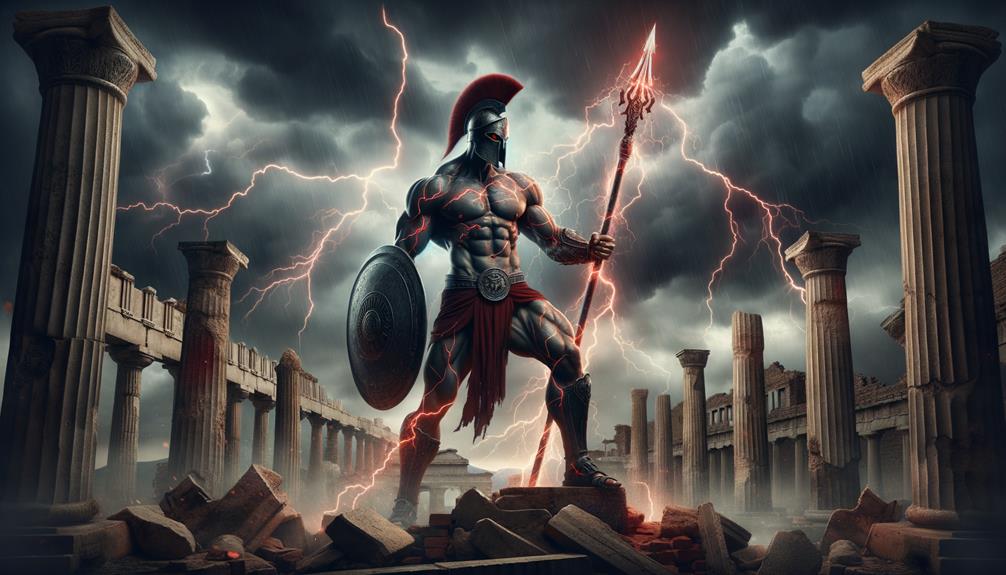
Ares is the ancient Greek god of violent battle, battle fury, and the physical danger of war. He is an Olympian son of Zeus and Hera, but Greek literature often treats him with suspicion rather than making him the ideal commander.
Ares in the surviving tradition
In the Iliad, Ares changes sides, joins combat directly, and is wounded by Diomedes with Athena’s help. Zeus rebukes him for loving conflict. This literary hostility differs from the disciplined strategy and civic defense often associated with Athena. It does not mean Ares is weak or universally hated; it marks a contrast within epic values.
Texts, objects, and evidence
Ares appears in the story of his affair with Aphrodite, where Hephaestus traps the pair in an invisible net. He also fathers several figures, including Phobos and Deimos, names meaning fear and terror. Cult and art identify him as an armed warrior, but the evidence for major independent sanctuaries is more limited than for gods such as Apollo or Athena.
Key points
- Not mortal: Ares is wounded and humiliated in myth but is not killed. Greek gods can suffer pain without losing immortality.
- Athens: The Areopagus, or hill of Ares, was associated with homicide trials and mythic judgments.
- Mars: Roman Mars absorbed Greek stories about Ares, yet Mars had stronger ties to Roman civic identity, agriculture, and fatherhood.
- Gender: Ares is male in Greek sources. Modern search questions that treat the name as a job title misunderstand the figure.
How to read the material
Ares should not be judged by a game-style ranking of power. His purpose in poetry includes showing the cost, disorder, and emotional force of battle.