
Accuracy note: Centeotl is a maize deity whose gender and relationships vary among Nahua sources. The figure should not be presented as one fixed male biography.
Historical Significance

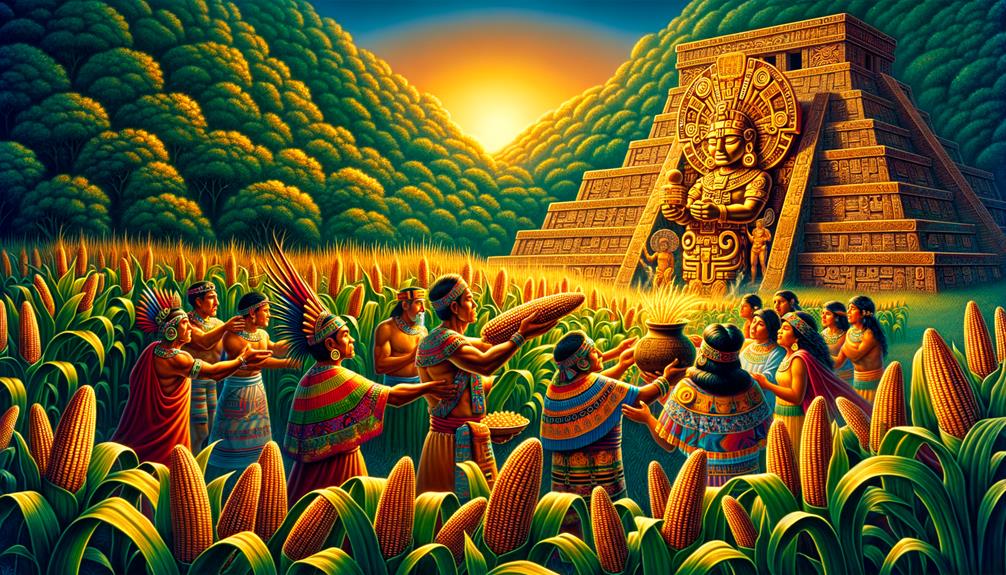
In the Aztec civilization, Centeotl’s worship played a pivotal role, symbolizing life’s cycles through agriculture. As the deity of maize, Centeotl was essential for daily life and farming prosperity. Maize was a divine gift, and Centeotl controlled crop fates. His influence transcended sustenance, intertwining with Aztec spirituality and community.
Honoring Centeotl involved elaborate rituals and ceremonies, highlighting his significance. Priests oversaw planting and harvesting, interpreting nature’s signs for ideal timing and bountiful yields. The devotion showed to Centeotl directly impacted agricultural abundance, reflecting the important reverence the Aztecs held.
Sacrifices expressed gratitude and ensured prosperity, not just appeasement. This cyclical veneration symbolized an eternal bond between Centeotl, the earth, and the people, underscoring his important historical importance.
Rituals and Sacrifices
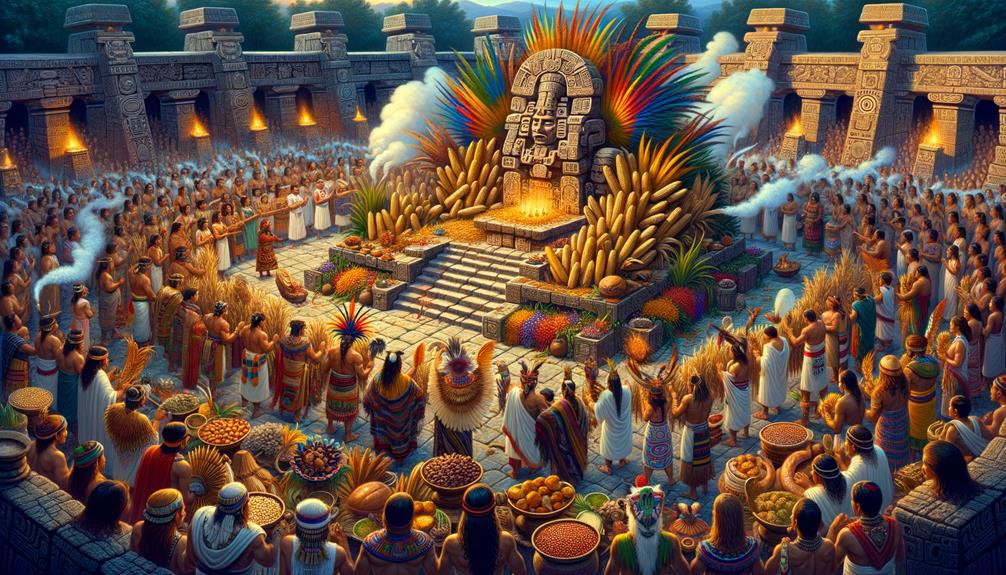
In Aztec culture, rituals and sacrifices dedicated to Centeotl, the maize god, carried immense significance. These practices were more than just customs – they linked the community’s sustenance to divine favor. Ritual dances in maize fields expressed gratitude, aiming to ensure continued prosperity. Priests interpreted natural signs to determine optimal planting times, combining divine wisdom with practical agriculture.
When maize fields failed, and famine loomed, the rituals took a solemn turn. Documented Aztec maize rites involved blood offerings, the sacrifice of captives, and the use of ixiptla (god-personators) who represented the deity, rather than routine priestly self-sacrifice. These offerings were understood to renew the earth’s fertility and renew the relationship between the community and Centeotl.
These rituals and sacrifices reflected a deep cyclical understanding of life. They highlighted the belief that prosperity, famine, life, and death were complexly tied together in the sacred dance of existence.
Festivals and Celebrations

Centeotl festivals extend beyond rituals into grand celebrations marking planting and harvesting seasons, reflecting the community’s gratitude and hopes for agricultural bounty. During these times, priests interpret nature signs, guiding planting periods to align community efforts with divine favor.
These rich affairs feature complex rituals and dances, each movement and chant symbolically invoking blessings for a bountiful harvest. More than acts of devotion, they foster unity and shared purpose.
At their core lay offerings, bloodletting, and the sacrifice of captives representing the maize, including ixiptla who stood in for the deity. These rites pleaded for Centeotl’s mercy and intervention. The celebrations mirror planting and harvesting cycles, representing the constant renewal and sustenance provided by the maize god.
Through these festivals, the community expresses its interconnectedness with the divine, nature, and life’s cycles, ensuring Centeotl’s grace continues to nourish and sustain them.
Role of Priests
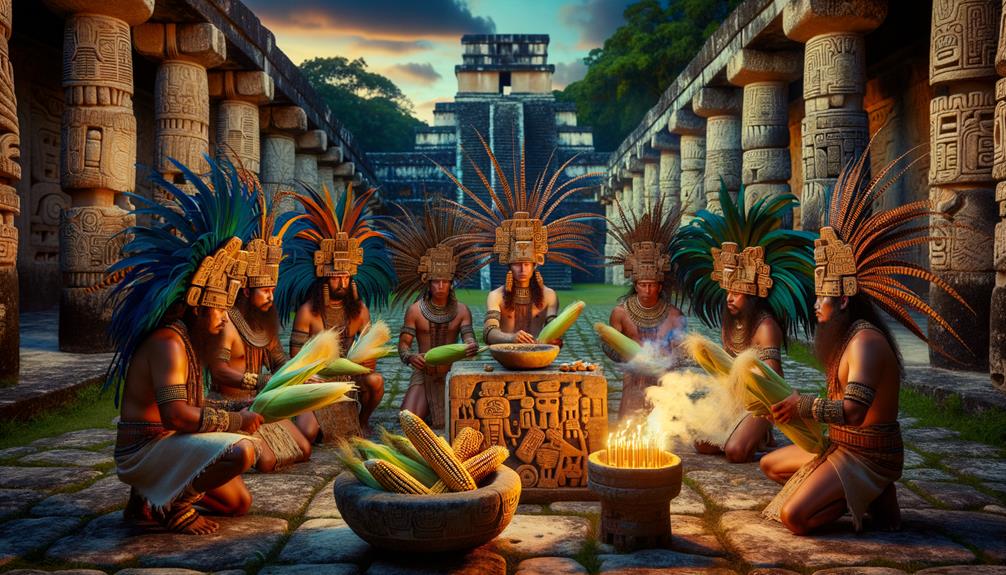
Priests of Centeotl, the maize god, hold tremendous sway over the agricultural cycles vital to the Aztec people’s subsistence. They interpret natural signs to determine the optimal sowing periods, ensuring Centeotl’s favor for a bountiful harvest. This sacred responsibility places them at the heart of community survival, as their interpretations directly impact crop yields.
To honor Centeotl and secure abundant harvests, these priests perform complex rituals and ceremonies. These aren’t mere formalities but acts of devotion aimed at appeasing the maize deity. During times of scarcity like famine, the rites intensified with offerings of food, blood, and captives – the standard Aztec pattern of maize sacrifice, rather than routine priestly self-sacrifice – reaffirming their commitment to maintaining divine-human balance.
These priests not only oversee planting and harvesting but embody the spiritual essence of the agricultural cycle itself. Their guidance and rituals ensure the community remains in Centeotl’s good graces, securing the crucial food crops needed for survival. As such, they serve as both earthly stewards and spiritual guardians of agricultural prosperity.
Symbolism and Depictions
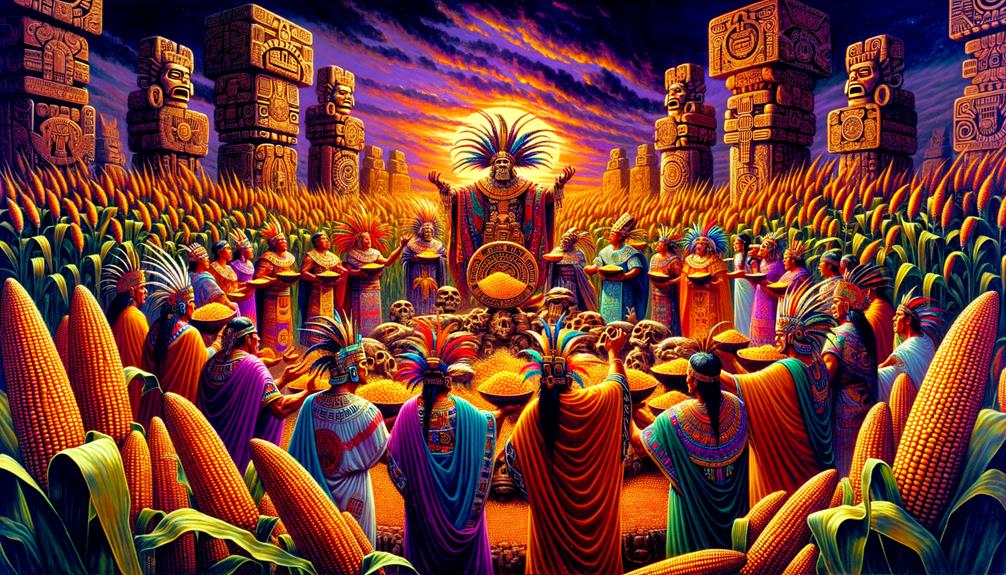
Centeotl, the Aztec maize god, was depicted as a youthful man adorned with a maize headdress and golden skin, a vivid representation of fertility and abundance central to Aztec beliefs. His portrayal, with maize sprouts and ears emerging from his head, highlighted his deep connection to agriculture and the life-sustaining qualities of maize. Radiant golden skin symbolized the nourishment from the sun and the prosperity brought by a bountiful harvest.
The slightly effeminate features emphasized Centeotl’s nurturing, life-giving role. Surrounding him were maize plants, potent symbols of the cyclical nature of life, reinforcing his pivotal role in ensuring plentiful harvests. While other cultures had agricultural deities embodying growth and sustenance, Centeotl’s unique youthful visage with golden skin positioned him as central to both spiritual and practical aspects of Aztec society.
Sources and related reading
- Tlaltecuhtli Earth Monster Deity on MythologyVault
- Mayahuel Maguey Goddess Myth on MythologyVault
- The Metropolitan Museum of Art: Aztec stone sculpture