
Cihuacoatl, “Snake Woman,” was both the name of a powerful Mexica deity and the title of a senior political official in Tenochtitlan. Keeping those two meanings distinct explains why sources connect the name with childbirth, warfare, omens, justice, and government. Cihuacoatl is not simply an Aztec version of the modern ghost La Llorona.
What the name means
Cihuātl means “woman” and cōātl means “snake” or “serpent.” The compound names a female deity prominent in central Mexican religion. “Snake Woman” does not mean that every image shows a literal woman with a serpent body. Mexica divine identities were recognized through clothing, regalia, paint, calendrical names, and ritual roles as much as through animal anatomy.
The deity in the Florentine Codex
Book 1 of the Florentine Codex, compiled by Bernardino de Sahagún and Nahua collaborators, describes Cihuacoatl with frightening and protective qualities. She could bring adversity and appear as an omen, yet she was also invoked in relation to women enduring childbirth. Other passages call her a high-ranking goddess.
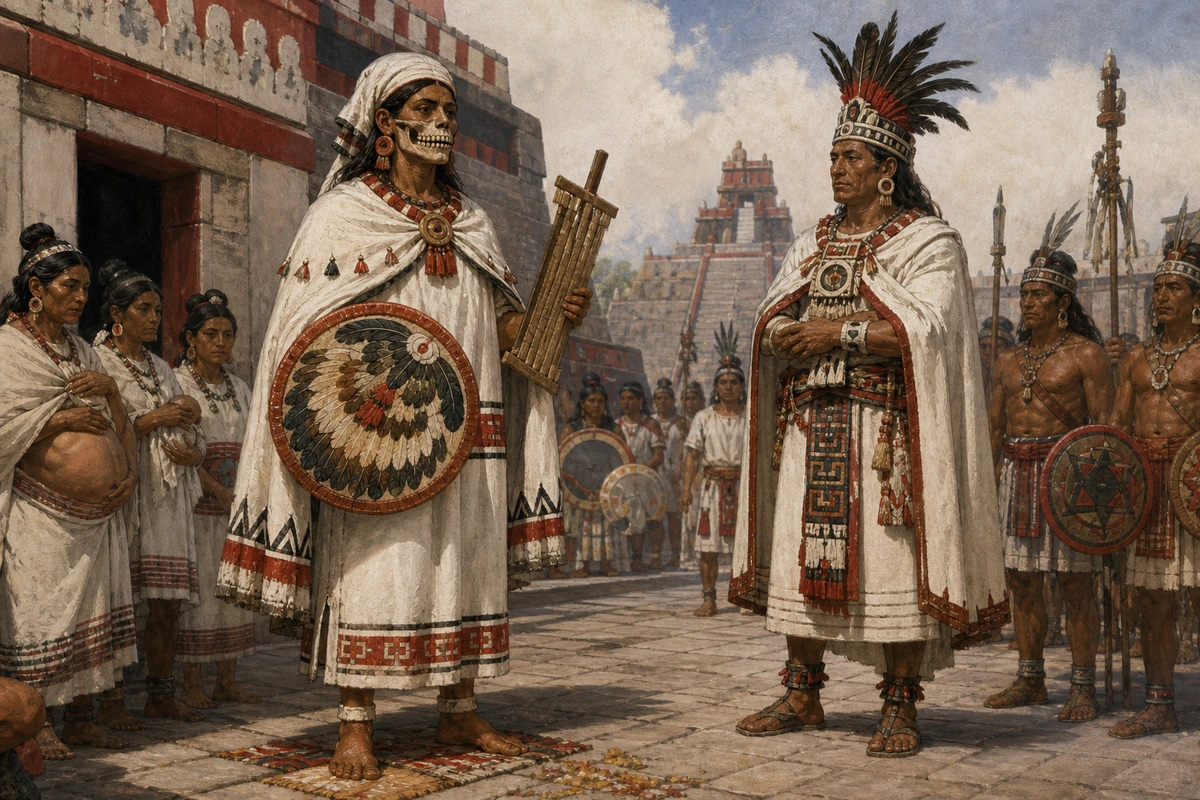
Her described attributes include a skeletal or fleshless jaw, white clothing, an eagle-feather shield, and a weaving batten. The batten connects women’s textile labour to the language of weapons; the shield connects maternity and warfare. These are not random contradictions. Mexica ritual thought compared childbirth to battle, and a woman who died in her first labour could receive the honour—and danger—associated with a fallen warrior.
Motherhood, war, and earth
Cihuacoatl overlaps with other maternal and earth-associated names, including Quilaztli and Tonantzin, but colonial sources do not give one tidy family tree for these identities. She is sometimes a creator or ancestral mother, sometimes a patron of childbirth, and sometimes a fierce presence linked with sacrifice and victory.
Calling her only a fertility goddess removes the martial force of her imagery. Calling her only a death goddess removes her protection of labouring women and her maternal titles. Her importance lies partly in holding these domains together.
The cihuacoatl as a political office
In Tenochtitlan, cihuacoatl was also the title of a male official second in authority to the tlatoani, the ruler. The best-known holder was Tlacaelel, who served during the expansion of Mexica power in the fifteenth century. The office combined high judicial, administrative, military, and ceremonial responsibilities.
While the tlatoani campaigned outside the capital, the cihuacoatl could oversee internal government. The official could also act as a ritual counterpart to the ruler. The feminine title did not mean that the officeholder impersonated a modern “queen”; it drew political authority into a sacred vocabulary already associated with the deity.
Cihuacoatl and the conquest omens
Sahagún’s conquest narrative includes an omen in which a female voice cries at night that her children must flee or face destruction. Later readers have often identified this mourning figure with Cihuacoatl. Colonial descriptions elsewhere do say that the goddess wandered weeping or crying at night, so the association is understandable.
It is still important to distinguish the sixteenth-century omen tradition from the many later forms of La Llorona. The colonial Mexican ghost legend developed through Indigenous, Spanish, Christian, and local storytelling. Cihuacoatl is one possible strand, not a simple earlier name for one unchanged modern character.
How she was represented
Surviving stone figures and manuscript images are identified through combinations of attributes rather than through one universal portrait. Scholars look for the skeletal jaw, warrior shield, weaving implement, white dress, and related insignia. Some identifications remain debated because several Mexica goddesses share earth, death, and fertility imagery.
That complexity is preferable to a generic serpent queen. Cihuacoatl joined domestic production, dangerous maternity, warfare, omens, and the machinery of state in a name that operated in both temple and palace.