Accuracy note: Quetzalcoatl had different forms and associations across Mesoamerican places and periods. Colonial stories that portray a single pacifist god or predict a conqueror's return require careful source criticism.
Origins and Etymology

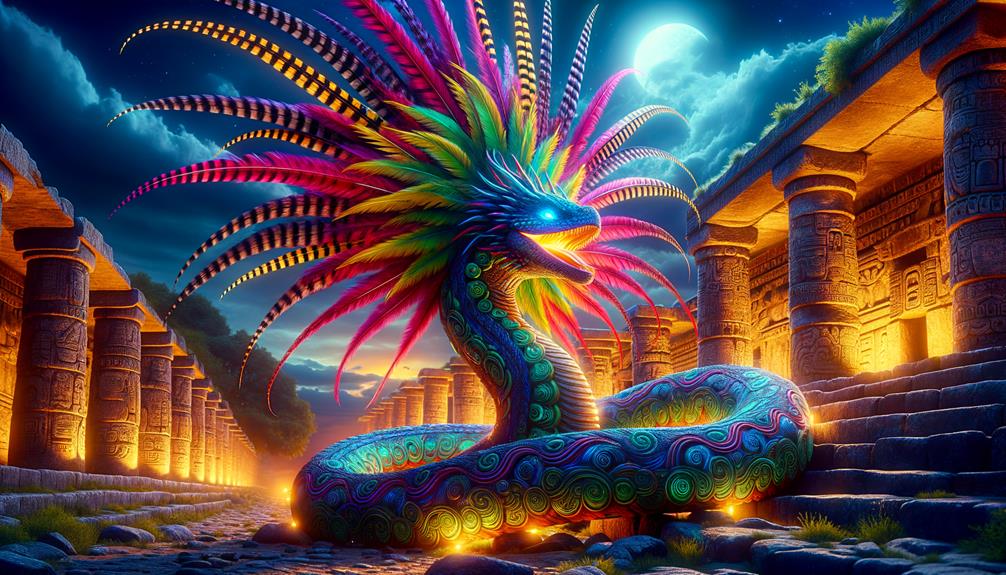
Quetzalcoatl’s name originates from Nahuatl, the language of the Aztecs, combining ‘quetzal’ – the rich bird representing the heavens – and ‘coatl’ – the serpent symbolizing the earth. In Aztec mythology, this feathered serpent deity embodied the cosmic interplay between celestial and terrestrial worlds.
Quetzalcoatl appears in several myths across Mesoamerica, often associated with creation and the dawn. The birth of the Fifth Sun is associated with Nanahuatzin and Tonatiuh rather than with Quetzalcoatl, though Quetzalcoatl had a major creation role of his own. In one well-known story, he travels to the underworld Mictlan to retrieve the bones of previous beings and, with his own blood, helps bring humanity into being.
Quetzalcoatl appears in some maize-origin stories, but the principal Aztec maize deities are Centeotl and Chicomecoatl. Quetzalcoatl’s significance for the Aztecs lay more broadly in creation, learning, and the calendar, making this deity central to their culture and way of life.
Myths and Legends
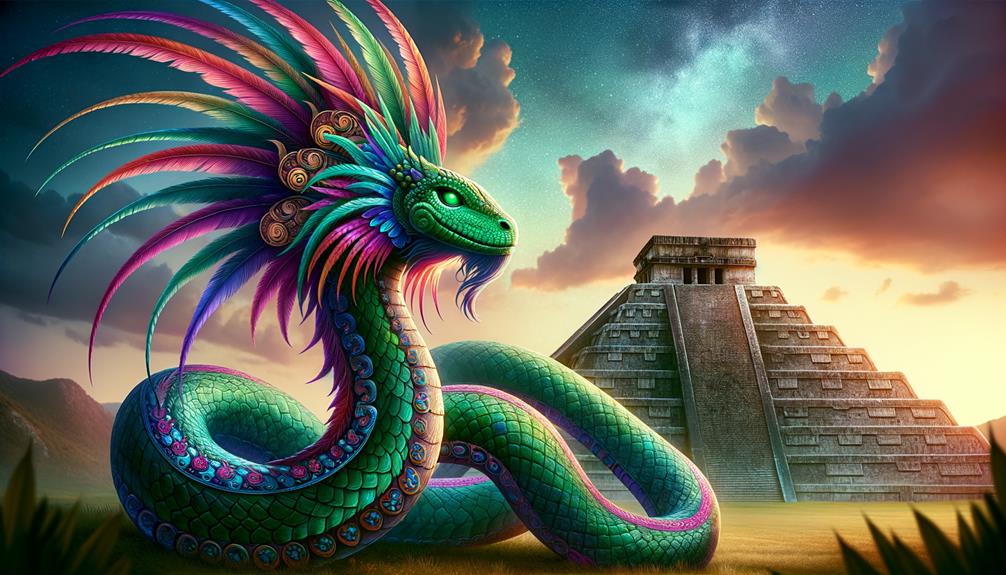
Quetzalcoatl’s legend interweaves Aztec mythology, portraying him as both creator and savior – the manifestation of perpetual rebirth. Known as the Feathered Serpent, he symbolizes important transformation, representing the archetypal hero’s odyssey. In Mesoamerican folklore, Quetzalcoatl stands as a benevolent deity dedicated to shaping humanity and imparting wisdom.
One memorable tale recounts Quetzalcoatl’s role in human creation. He journeys to the underworld, Mictlan, retrieving bones from previous beings. Sacrificing his blood, he breathes life into these remains, birthing a new human race. This narrative encapsulates the interplay of death and rebirth.
Quetzalcoatl’s self-imposed exile and prophesied return hold great significance. His departure and eventual homecoming signify his cosmic role as a deity presiding over cyclical time and metamorphosis. Stories of his teachings, sacrifices, and ultimate journey embody the essence of renewal, making Quetzalcoatl an enduring symbol of hope and continuity in Mesoamerican cultures.
Cultural Significance
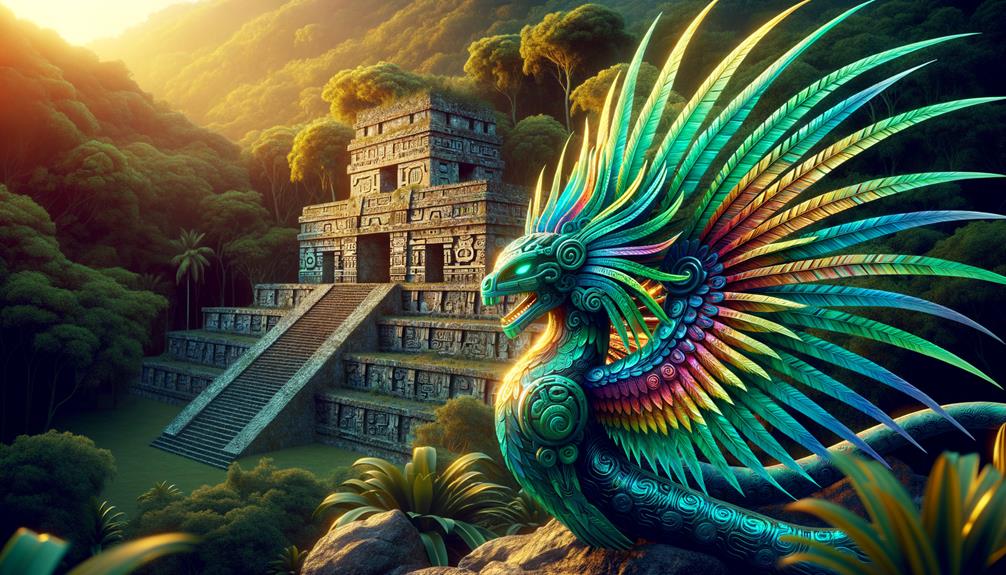
At the heart of Aztec society, Quetzalcoatl’s presence permeated ceremonies and rituals, a symbolic representation of the eternal cycle of life, death, and rebirth. As a revered figure, his influence was important, embodying the duality of existence through serpent imagery. The Templo Mayor in Tenochtitlan was principally dedicated to Huitzilopochtli and Tlaloc, not to Quetzalcoatl; Quetzalcoatl / Ehecatl had separate cult spaces within the sacred precinct, engaging in rites that echoed their deepest beliefs and aspirations.
- The heartbeat of ancient ceremonies
- The aspirations woven into prophecies
- The interplay of life and death
- Separate temple precincts for Quetzalcoatl / Ehecatl
- The shared reverence with the Maya
In this way, Quetzalcoatl remains an integral thread in the rich tradition of Mesoamerican cultural heritage.
Iconography and Symbols
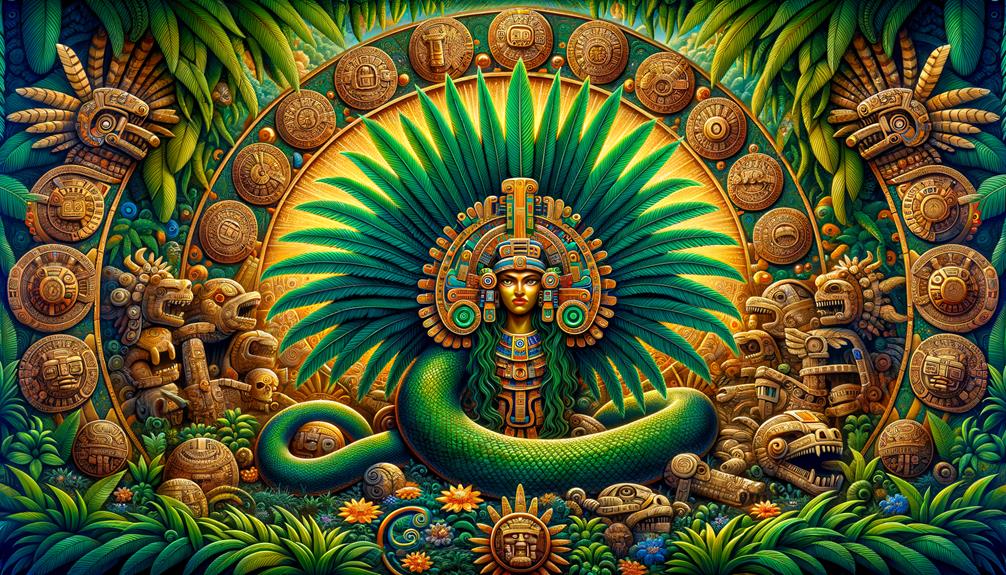
Quetzalcoatl’s imagery in Mesoamerican art highlights the deep connection between the heavens and earth through his feathered serpent form. The bird and snake fusion symbolizes Quetzalcoatl as a link joining the divine and mortal worlds.
In Teotihuacan artwork, Quetzalcoatl often represents fertility, intertwined with serpents signifying life, growth, and renewal – tying him to the earth’s abundance and life-giving rains from above. The Aztecs embraced similar powerful iconography, depicting his serpent form adorned with feathers representing the terrestrial and celestial planes.
Over time, Quetzalcoatl’s image evolved to a more human-like portrayal, often elaborately adorned, reflecting his divine status. However, his worship declined with the arrival of colonizers and Christianity, gradually diminishing this potent symbolism from the cultural landscape.
Nevertheless, Quetzalcoatl’s enduring legacy as the feathered serpent continues inspiring, embodying the eternal link between heaven and earth through these iconic symbols.
Legacy and Influence
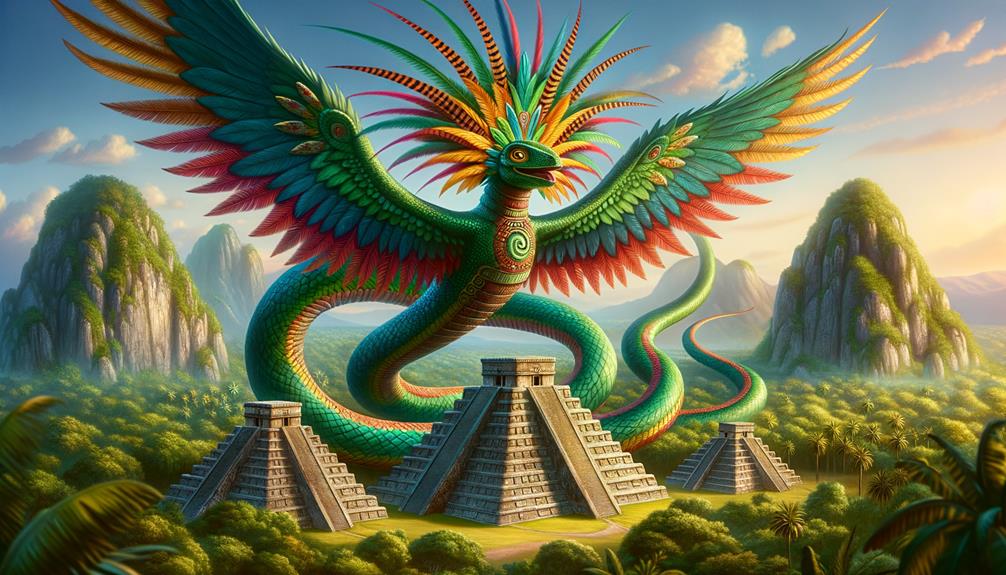
Throughout ancient Mesoamerica, the Feathered Serpent deity Quetzalcoatl stood as a important archetype symbolizing wisdom, creation, and renewal. This mythological figure transcended mere imagery, becoming deeply woven into the belief systems of civilizations like the Aztecs, Maya, and Toltecs. Quetzalcoatl’s presence is undeniable in the art, rituals, and stories passed down through generations.
Serpent symbolism found in Maya art and Aztec depictions underscore Quetzalcoatl’s widespread veneration across cultures. While the Spanish conquest diminished open worship, the essence of this creation deity echoes through time.
Ancient murals and complex carvings immortalize the majestic Feathered Serpent. Mythological tales recount Quetzalcoatl’s heroic journeys. Cultural practices centered on renewal reflect the deity’s symbolism. Spiritual traditions carried remnants of this revered figure. Even today, modern interpretations give new life to Quetzalcoatl’s enduring legacy across former Mesoamerican societies.
Sources and related reading
- Tezcatlipoca Omnipotent Trickster God on MythologyVault
- Huitzilopochtli Aztec Sun God on MythologyVault
- The Metropolitan Museum of Art: Aztec stone sculpture