
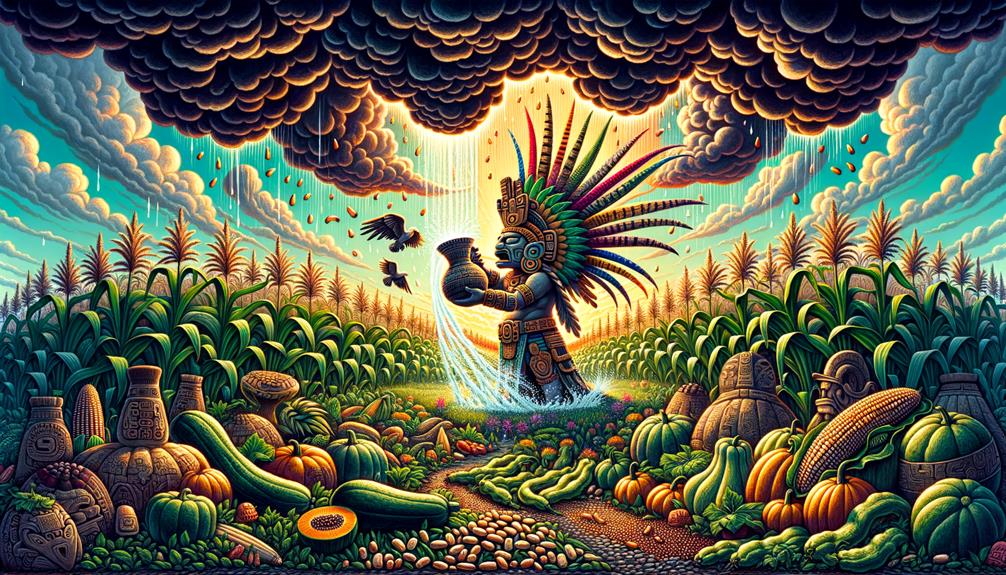
Tlaloc was the powerful Mesoamerican deity of rain, storm, and water whose worship long predated the Mexica Empire. In Tenochtitlan, his shrine occupied the northern half of the Templo Mayor beside the shrine of Huitzilopochtli. That placement made a fundamental political point: military power and agricultural sustenance were both necessary to the capital.
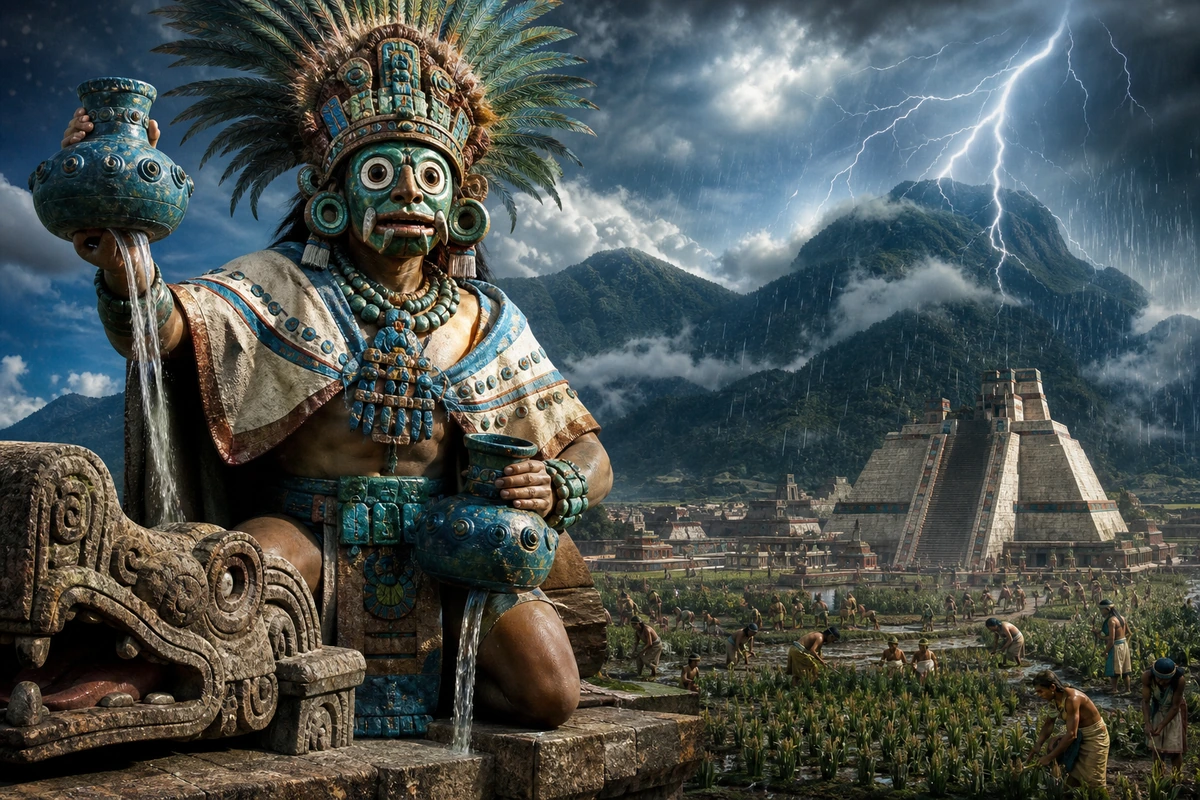
Tlaloc’s powers
Tlaloc governed the water that arrived from mountains and clouds. Rain made maize agriculture possible, but storms could also bring lightning, hail, frost, flooding, and crop failure. Mexica religion did not divide those outcomes between a benevolent rain god and a separate evil storm god. Tlaloc encompassed both abundance and danger.
His name is often explained as “the one who makes things sprout,” though Nahuatl etymologies can be debated. More securely, archaeology and colonial descriptions consistently connect him with rain, mountains, agricultural fertility, and the watery destination called Tlalocan.
How Tlaloc was recognized
Tlaloc images commonly feature circular or goggle-like eyes, a curled upper-lip band, and prominent fangs. These traits appear on sculpture, painted vessels, incense burners, and architectural decoration. Offerings on the Tlaloc side of the Templo Mayor included shells, coral, fish, frogs, greenstone, and water-related objects gathered from many parts of the empire.
Those materials did more than illustrate a list of divine symbols. Deposited together, they created miniature aquatic and fertile environments inside the ceremonial precinct. Their distant origins also reveal the reach of Mexica tribute and exchange networks.
Mountains, helpers, and Tlalocan
Tlaloc was believed to dwell in high mountains where clouds gathered. Smaller rain beings called the Tlaloque assisted him and were imagined as releasing different kinds of rain from vessels. Mountain shrines and seasonal journeys connected the urban ceremonies of Tenochtitlan with the wider landscape of the Basin of Mexico.
Tlalocan was a verdant otherworld associated with Tlaloc. Colonial accounts say that people whose deaths were linked to water or certain illnesses could go there, rather than following the fate assigned to most of the dead. It is misleading to call Tlalocan simply an Aztec “heaven”: it belonged to a different geography of death, not a universal reward for moral behavior.
Ritual and sacrifice
Ceremonies for rain took place at several points in the agricultural year. Some involved the sacrifice of children. Sources connect their tears with desired rainfall, although details vary and must be read in the context of colonial recording. Archaeological discoveries at mountain and temple sites confirm that child sacrifice formed part of rain ritual; it should neither be omitted nor turned into spectacle.
Tlaloc’s importance is visible in the Templo Mayor itself. The earliest excavated stage already included a northern shrine dedicated to him, and later rebuilding repeatedly preserved the temple’s paired design. Even in the capital of a militarized empire, sustenance remained architecturally equal to conquest.
A deity older than the Mexica
Rain beings with Tlaloc-like features appear at Teotihuacan and elsewhere centuries before the rise of Tenochtitlan. Scholars debate how directly those traditions connect to the later Mexica deity. The evidence supports a long Mesoamerican history of storm and mountain worship, but not the claim that one unchanging god was worshipped identically everywhere.