
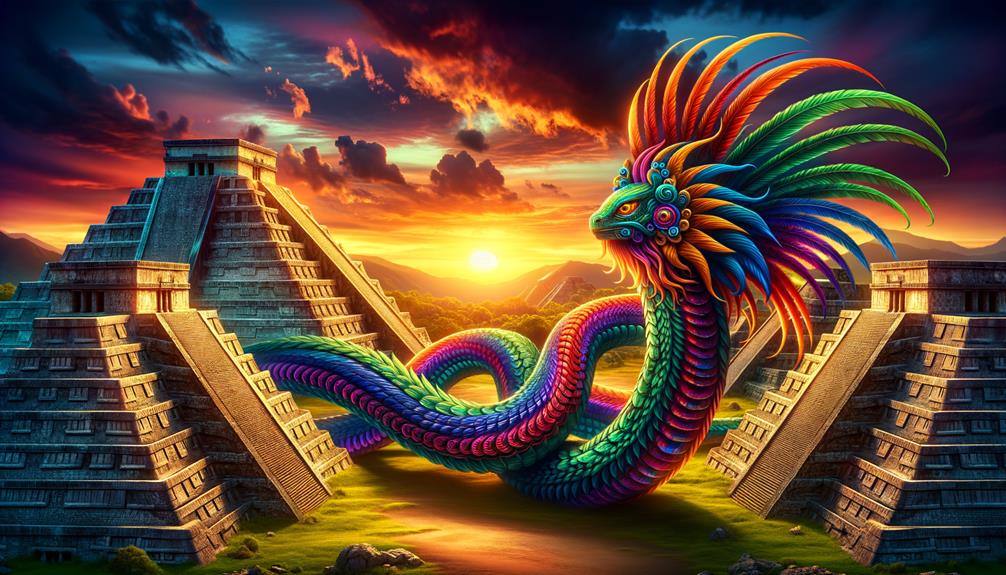
Quetzalcoatl is the Nahuatl name meaning Feathered Serpent. Among the Mexica he is a major deity associated with wind, priesthood, learning, creation, and authority, but feathered-serpent traditions long predate the Mexica and differ across Mesoamerica.
Quetzalcoatl in the surviving tradition
Feathered serpents appear in monumental art at Teotihuacan centuries before the rise of the Mexica state. Maya traditions include related figures known by names such as Kukulkan and Q’uq’umatz. Similar imagery does not prove that every culture told the same story. Each city and language shaped its own divine identities and political meanings.
Texts, objects, and evidence
Mexica sources connect Quetzalcoatl with Ehécatl, the wind god, who is often shown with a beak-like mask. In creation accounts, Quetzalcoatl travels to the land of the dead to recover bones from an earlier age, from which new humans are formed. The name also belongs to Topiltzin Quetzalcoatl, a legendary ruler and priest associated with Tollan. Deity and culture hero should be distinguished even when later accounts connect them.
Key points
- Name: Quetzalli refers to prized quetzal feathers and coatl to serpent. The union joins sky, earth, preciousness, and living motion.
- Venus: Some traditions connect Quetzalcoatl with the morning star, often through the name Tlahuizcalpantecuhtli.
- Wind temples: Circular temples are associated with Ehécatl-Quetzalcoatl because their form reduces resistance to the wind.
- Cortés story: The claim that Moctezuma simply believed Hernán Cortés was the returning Quetzalcoatl is a disputed colonial narrative, not a secure explanation of the conquest.
How to read the material
Mesoamerica included many languages and states. Using Aztec, Maya, Toltec, and Teotihuacan material as though it came from one culture produces false certainty.