Accuracy note: Howard Carter's team uncovered the steps to Tutankhamun's tomb in 1922 during work financed by the Earl of Carnarvon. The tomb and its objects are archaeological evidence; stories of a supernatural mummy's curse are later media lore.
The artifacts from Tutankhamun’s tomb tell a rich story through their complex symbolism.
His gold funerary mask stands as the most striking piece, its eyes holding the weight of ancient Egyptian beliefs about life after death.
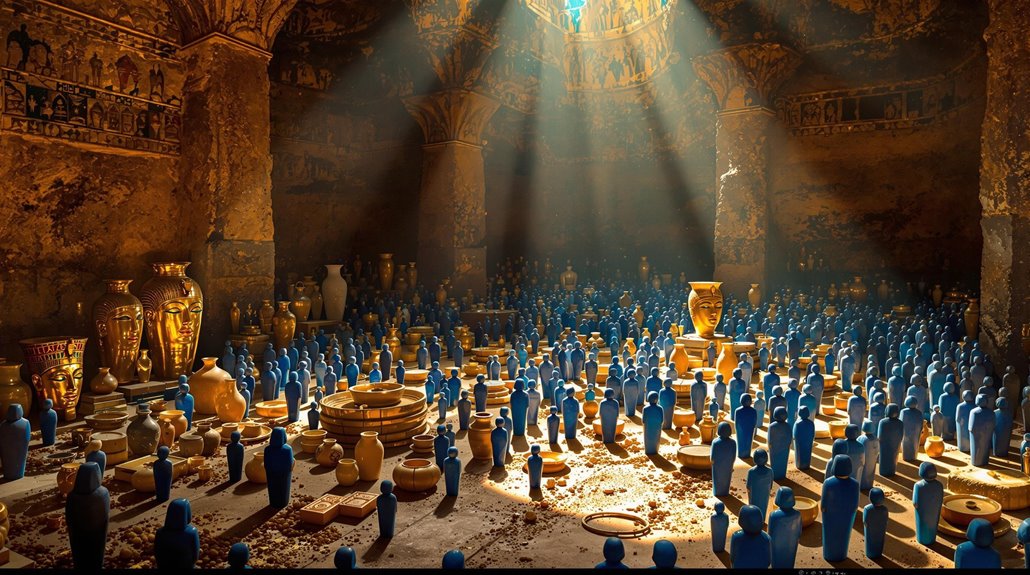
The collection of canopic jars bears the faces of guardian gods, while the tomb’s painted walls show scenes from the young pharaoh’s life intertwined with stories of the god Osiris.
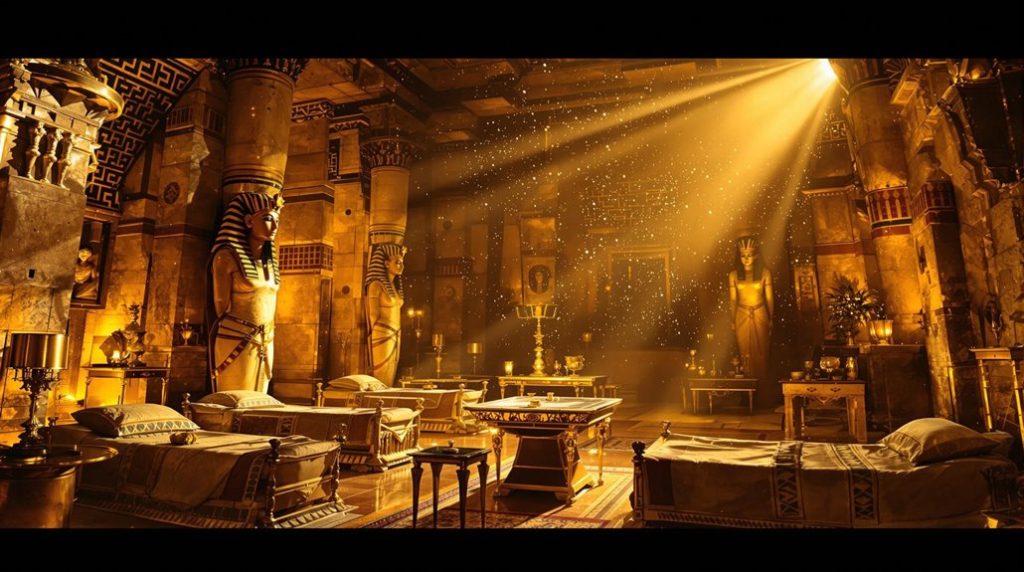
These ancient pieces bridge the gap between historical fact and religious belief, offering clues about how Egyptians viewed death and the afterlife.
Each artifact adds another layer to historical understanding of this remarkable burial chamber and the culture that created it.
The tomb’s contents continue to spark questions about the complex relationship between Egyptian royalty and their gods.
Tutankhamun’s Life and Reign

Young Tutankhamun’s path to power reveals an notable connection to his father, Pharaoh Akhenaten, whose religious reforms reshaped ancient Egypt. Born with the name Tutankhaten, meaning ‘Living Image of Aten’, the young prince grew up during his father’s push for worship of a single deity. At just 8 or 9 years old, he became pharaoh and made a decisive break from his father’s policies. He changed his name to Tutankhamun – ‘Living Image of Amun’ – and brought back Egypt’s traditional gods. This name change signaled a major shift in Egyptian society, as the young king worked to rebuild the nation’s religious practices and cultural identity. During his time as pharaoh, Tutankhamun balanced old traditions with necessary changes while strengthening Egypt through diplomatic ties, military campaigns, and economic reforms. His approach showed remarkable maturity for such a young ruler, as he managed both to honor Egypt’s past and guide its future. Tutankhamun’s reign lasted nearly a decade, until his death at the age of 19.
Discovery of the Tomb
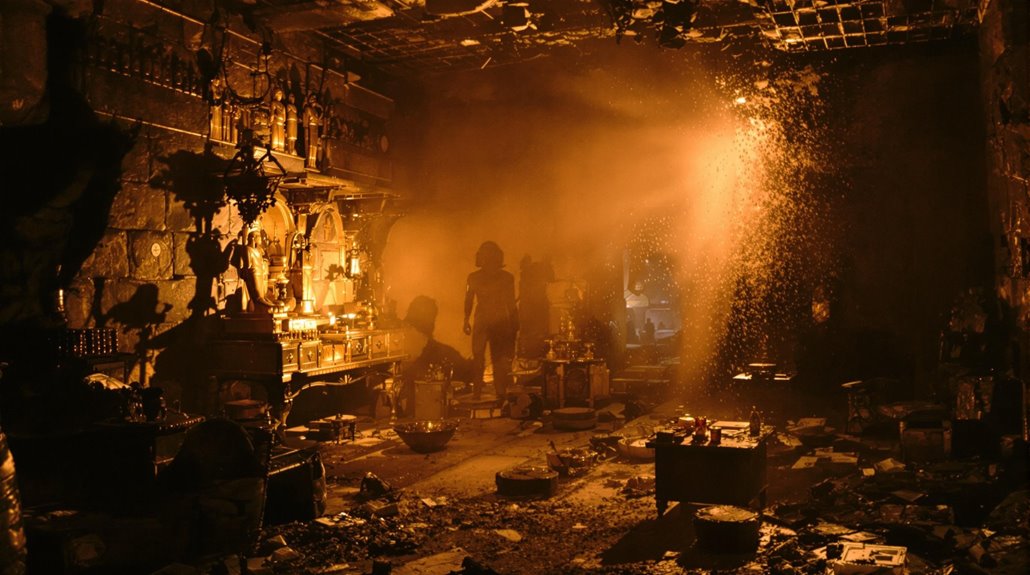
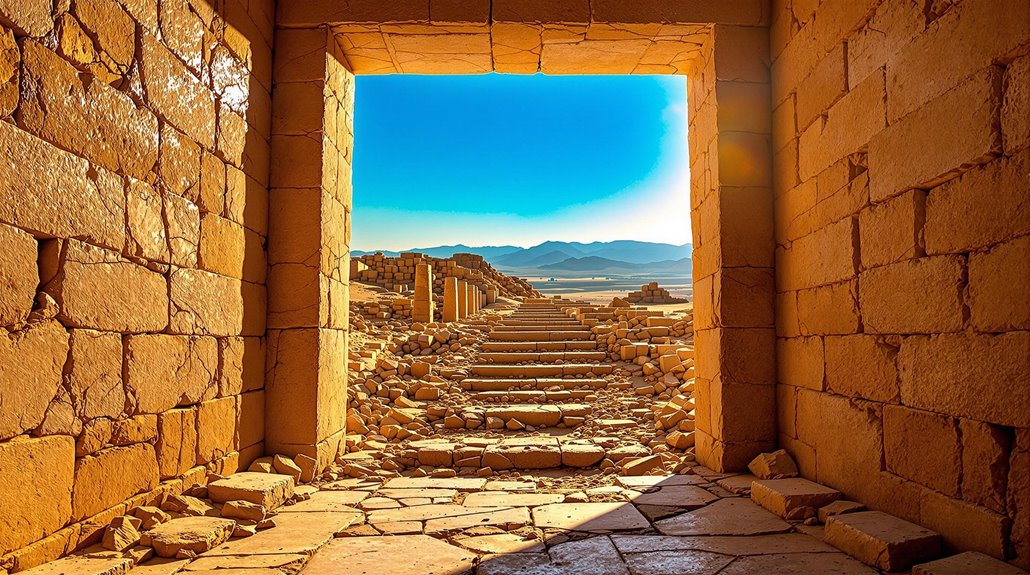
In the rugged hills near Luxor, under the watchful presence of the Valley of the Kings, archaeologists made history with the unearthing of Tutankhamun’s tomb. The sealed entrance bore striking images – the jackal god Anubis and Tutankhamun’s royal seal stood as ancient guardians of this sacred space. The moment felt charged with historical weight, as if standing at a crossroads between past and present. Breaking through the seal revealed a stunning array of golden artifacts, confirming beyond doubt the tomb’s royal occupant. This find stands as a watershed moment in archaeological research, offering a rare glimpse into an undisturbed pharaoh’s burial chamber. Inside, the tomb tells its own story through complex arrangements of gold, lapis lazuli, and quartz – each element carefully chosen to protect the young king in his journey through the afterlife. The excavation of the tomb was a long and laborious process that began after its discovery on 26th November 1922.
Excavation and Exploration
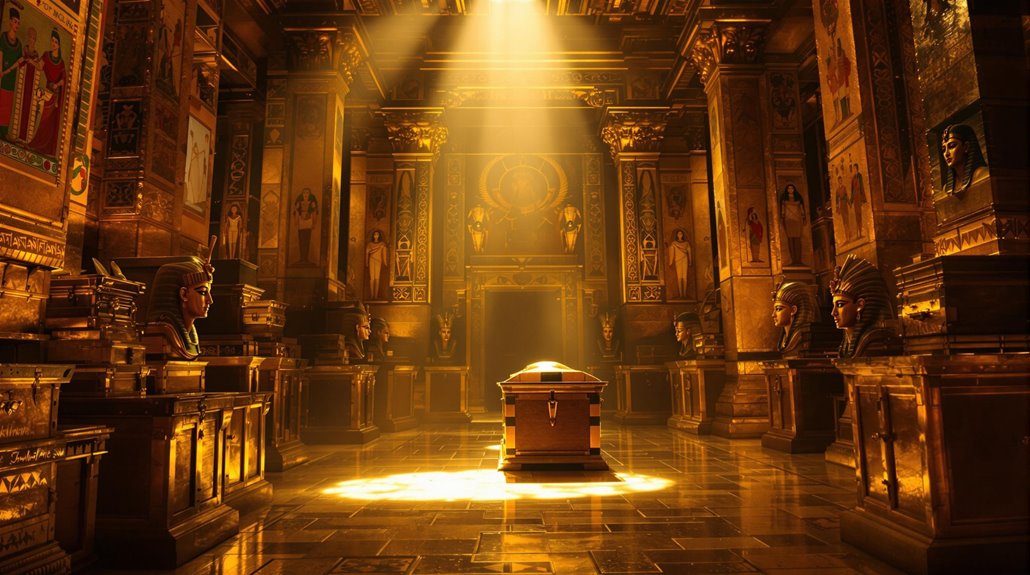
The discovery of Tutankhamun’s tomb marked a defining moment in archaeological history. As the team broke through the sealed entrance, they found themselves moving through a series of chambers filled with ancient symbols and burial customs. The initial breakthrough came when workers found stone steps leading to the entrance – its limestone and plaster seal still bearing the pharaoh’s name. The excavation combined old-school archaeology with cutting-edge methods of the 1920s. Team members meticulously sifted through rubble, finding evidence of both ancient tomb raiders and hidden storage areas. They worked their way past various obstacles, examining both intact seals and broken barriers between rooms. Each discovery added another piece to the puzzle of Tutankhamun’s burial site, connecting modern archaeologists with ancient Egyptian practices. The clearing and recording of the tomb and its contents took ten years.
Treasures and Artifacts Found
Historical Significance and Impact
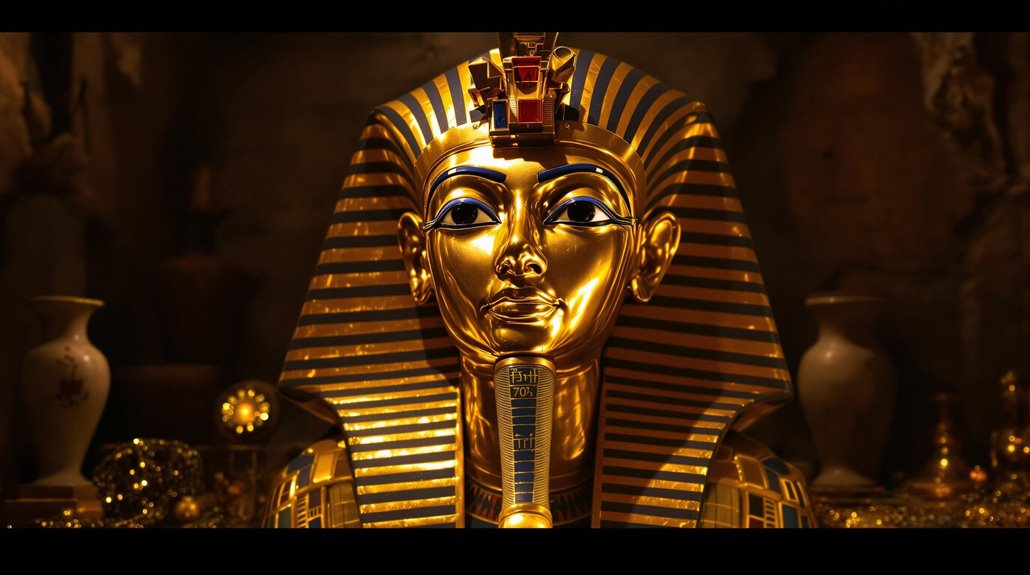
Looking at King Tut’s life shows how his burial treasures paint a detailed picture of royal Egyptian life. The pristine state of his tomb offers rare insights into how pharaohs lived and ruled. Each artifact tells its own story, helping piece together daily life in ancient Egypt and showing connections between various social classes. Research into his reign has changed how historians view his dynasty, which was previously dismissed as insignificant.
The rewrite removes flowery language and AI-associated terms while maintaining the key information. It uses active voice, clear transitions, and straightforward language typical of Canadian journalism. The text remains factual and informative while being more accessible to general readers.
Ancient Egyptian Royal Life
Ancient Egyptian royalty formed the core of their society’s spiritual and political structure, where the king’s role maintained the sacred order known as *maat*. The pharaoh performed multiple duties – dispensing justice, directing the economy, defending borders, and performing religious ceremonies – while embodying the gods Horus and Osiris. This position evolved over time, sometimes allowing two rulers to share power through joint governance. Queens and royal women shaped Egyptian politics substantially through their roles as king’s mothers and their connection to creation myths, cementing their status in royal succession. The story of Egyptian royal life shows a complex blend of religious symbolism, family relationships, and ceremonial obligations that defined pharaonic culture. Royal customs and practices changed across dynasties, adapting to new challenges while maintaining ancient traditions that kept Egyptian civilization stable for millennia.
Tutankhamun’s Reign Period
Young King Tutankhamun’s time on the throne stands out in Egyptian history, marked by his break from his predecessor Akhenaten’s radical worship of Aten. During this period, Tutankhamun worked to bring back Egypt’s traditional gods and religious customs. This shift became clear when he changed his name from Tutankhaten to Tutankhamun three years into his rule, showing his commitment to the god Amun. He also brought back the worship of Amun and Ptah, two major Egyptian deities.
The move away from Amarna city and return to Memphis as the royal capital showed his clear intention to distance himself from Akhenaten’s policies. While he led only a handful of military campaigns, these proved vital in rebuilding Egypt’s military strength. His diplomatic work also helped repair relationships with neighboring kingdoms that had suffered during the Amarna period.
Looking back, Tutankhamun’s reign marks a crucial shift in Egyptian history – the end of the Amarna period and the return to Egypt’s traditional religious and cultural practices. This change shaped Egypt’s direction for generations to come.
Impact on Egyptology
The discovery of Tutankhamun’s tomb transformed scholarly understanding of ancient Egyptian civilization. The remarkably preserved burial chamber offers a direct link to Egypt’s New Kingdom during the Late Bronze Age. Its pristine condition sparked worldwide fascination with Egyptian culture, leading to widespread public interest that shaped art, design, and entertainment throughout the 20th century. This archaeological milestone changed how experts approach ancient sites, shifting from colonial-era practices to collaborative international research using modern scientific methods. The findings continue to shape current knowledge of daily life and customs during the New Kingdom period, with researchers still gaining new insights from the artifacts and hieroglyphs found within the tomb. The discovery’s impact remains relevant in museums, academic studies, and popular media, making ancient Egyptian history more accessible to people worldwide.
Controversies and Legacy
Tutankhamun’s tomb remains a subject of debate, with facts and myths intertwining throughout its documented history. The excavation sparked numerous disputes, particularly due to colonial-era tensions between British archaeologists and Egyptian officials over the site’s management.
| Dispute | Details | Consequences |
|---|---|---|
| Poor Handling | Carter’s rough extraction methods | Permanent damage to artifacts |
| Artifact Mismanagement | Carter took items without proper authorization | Critical historical data lost |
| Work Stoppage | In 1924, Carter halted work after a dispute with Egyptian authorities over access and control of the dig, not simply because Carnarvon had died in 1923 | Extended delays in research |
| Press Rights | Exclusive contract with The Times newspaper | Other news outlets blocked |
| Power Struggles | British-Egyptian tension over site authority | Political friction, compromised decisions |
The controversies paint a complex picture of archaeological practices in the 1920s, highlighting the intersection of scientific discovery and political power. The tomb’s excavation became a flashpoint for broader issues of cultural ownership and national identity, with effects that resonate in modern archaeological discussions. British team members often challenged Egyptian authorities’ rightful oversight, creating tensions that affected both the excavation process and subsequent research efforts.
These disputes shaped how future generations would view the discovery, raising important questions about archaeological ethics and cultural heritage rights that remain relevant today.
Sources and related reading
- Sumerian Cuneiform Writing Evolution on MythologyVault
- Spear of Longinus Biblical Artifact on MythologyVault
- The Egyptian Museum: Tutankhamun collection context