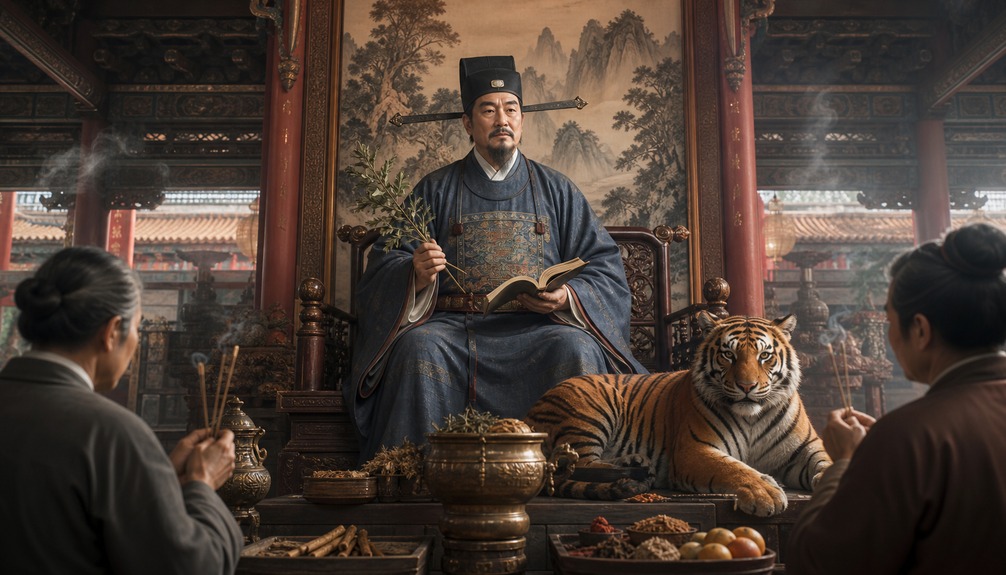
Baosheng Dadi (保生大帝), the “Great Emperor Who Protects Life,” is one of the most important healing deities in the folk religious traditions of Fujian and Taiwan. Devotees identify him with Wu Ben (also rendered Wu Tao in some English sources), a physician associated with Tong’an in Fujian during the Song period. Historical memory, temple tradition, and miracle legend have accumulated around this figure; they should be distinguished rather than presented as equally documented biography.
From Wu Ben to the Protector of Life
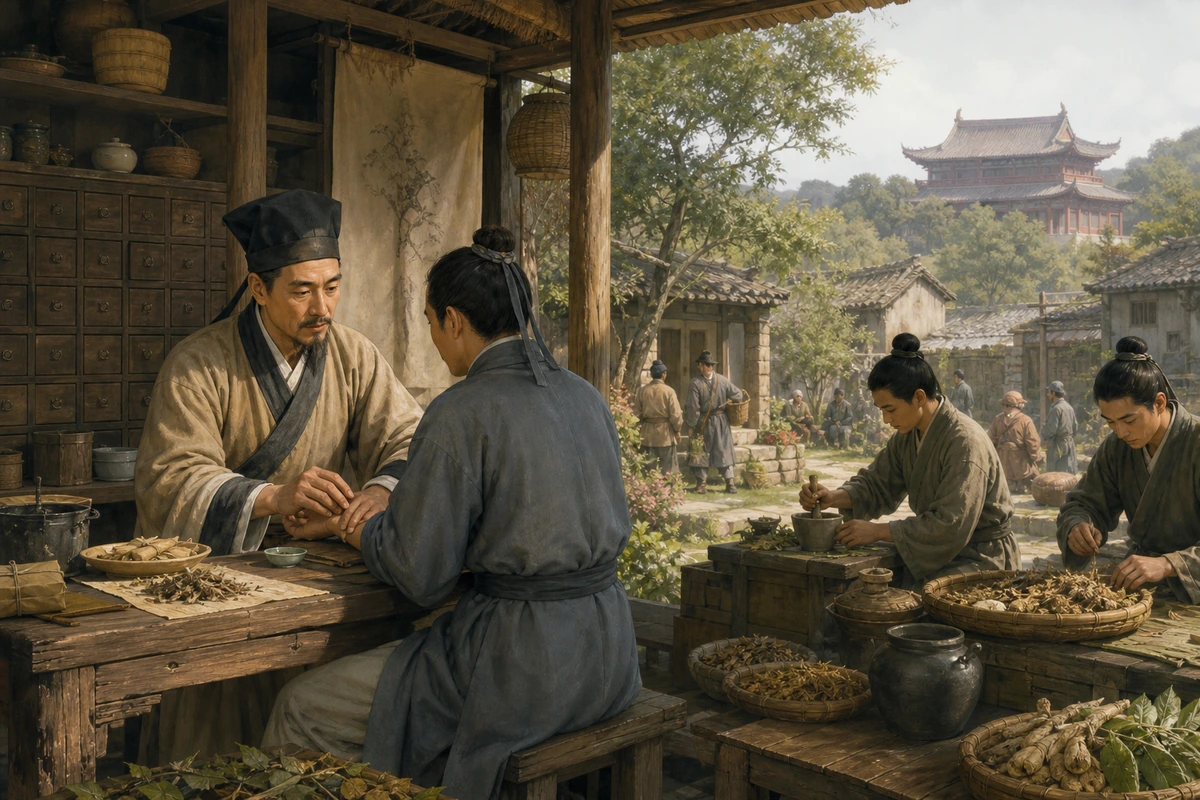
Traditional accounts describe Wu Ben as a gifted healer who treated patients regardless of wealth and became skilled in medicinal substances and diagnosis. Dates commonly given for his life are 979–1036, although the fullest biographies were written later and include supernatural elements. After his death, communities honored him as a local protector and healer. Song and later rulers granted increasingly elevated titles, helping transform a regional cult into the worship of Baosheng Dadi.
The title “Great Emperor” is a religious honorific, not evidence that Wu ruled an earthly empire. Chinese deities often received court-style ranks that expressed sacred authority. In Baosheng Dadi’s case, that authority centers on preserving life, dispelling illness, and protecting communities.
Medicine and miracle stories
Legends expand Wu’s medical skill into miraculous healing. One celebrated story has him treat a tiger by removing an obstruction from its throat; the grateful animal then becomes a guardian. Other tales credit him with healing dragons, rulers, or patients whose conditions defeated ordinary physicians. These narratives communicate compassion and mastery, but they are hagiography—sacred biography—not clinical case records.
That distinction matters today. Temple prayer, divination, and ritual can be meaningful religious practices, but they do not replace evidence-based diagnosis or urgent medical care. Describing a living tradition respectfully does not require making unsupported health claims.
Fujian, migration, and Taiwan
Baosheng Dadi’s cult is closely tied to coastal Fujian. Migration carried the deity’s worship across the Taiwan Strait and onward into Southeast Asian Chinese communities. Temples did more than house an image: they helped newcomers maintain place-based identities, organize festivals, sponsor charity, and build networks of mutual aid.
Taipei’s Dalongdong Bao’an Temple is a prominent example. Taiwan’s Ministry of Culture describes it as the religious center of a community formed in part by migrants from Tong’an. The temple’s main altar is dedicated to Baosheng Dadi, and its annual cultural festival combines ritual, opera, music, visual arts, scholarship, and public service. This continuing activity shows that Baosheng Dadi is not merely a figure in an old mythology handbook; he remains part of lived religious culture.
How Baosheng Dadi differs from other healing figures
Baosheng Dadi can be compared with Shennong, whose mythology is linked to agriculture, medicinal plants, and the origins of materia medica. The two are not interchangeable. Baosheng Dadi’s identity grows from the memory of a later physician and from regional temple networks. Likewise, Guanyin may be petitioned for relief from suffering, but her Buddhist history, iconography, and devotional meanings are distinct.