japanese deity creates world

Okuninushi Land Creation Myths

Accuracy note: Ōkuninushi's land-making story includes partnerships, trials, and the transfer of rule to the heavenly kami. Early sources differ, and the episode should not be reduced to a modern creation story in which he acts alone.

Origins of Okuninushi

Youtube video

Okuninushi’s tale, etched in Japanese mythology, narrates his arduous yet triumphant journey from divine roots. This central figure faced obstacles crafted by the cunning storm god Susanoo, trials that tested Okuninushi‘s wit and resilience. Yet, he emerged victorious, transforming the wild lands of Izumo.

Susanoo’s challenges were complex snares, but Okuninushi’s intelligence and bravery allowed him to overcome. These weren’t mere personal conquests; they signified the pacification of Izumo’s untamed regions. The myths resonate with themes of struggle and success, a hero’s path to establish a sacred homeland.

Okuninushi’s origins depict more than just folklore. They symbolize the molding of the world, where divine forces shaped the land through a courageous figure’s trials. His legacy endures, a example to the sanctification of Izumo through adversity overcome.

The White Hare of Inaba

folklore of a hare

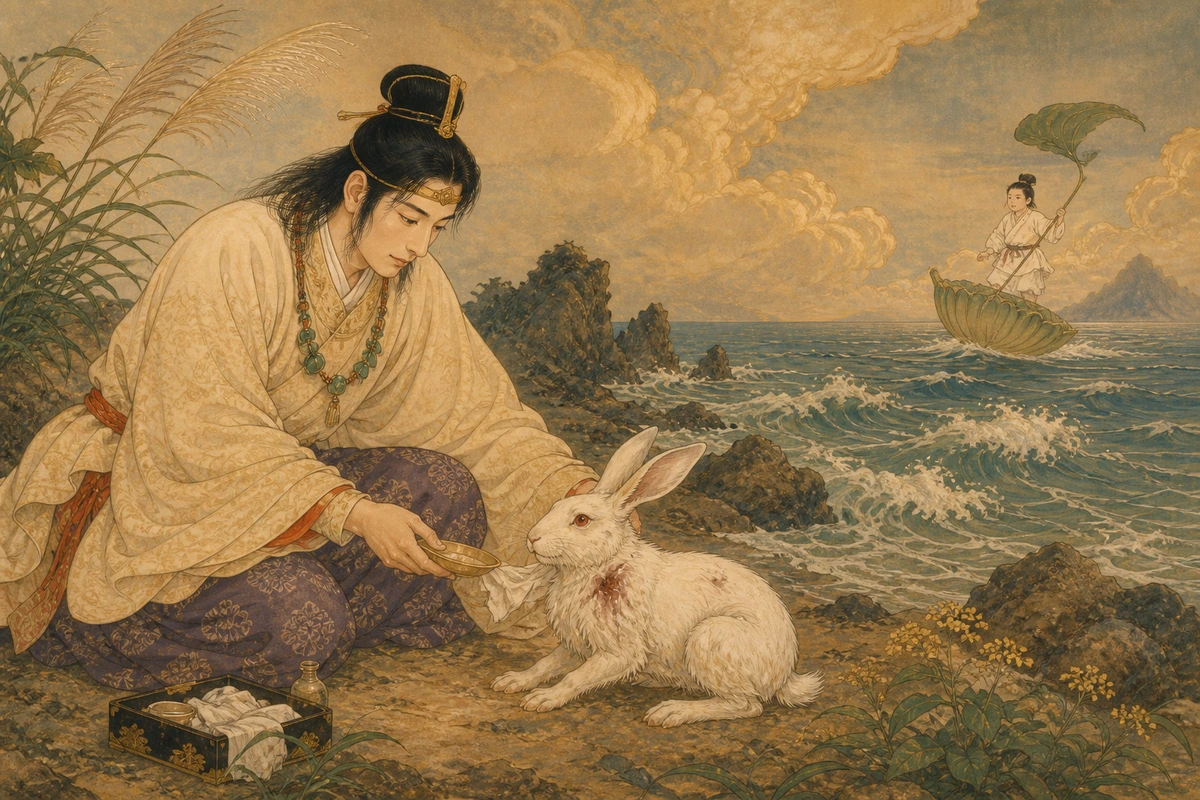
The fabled White Hare of Inaba embodies clever thinking and perseverance rooted in Japan’s storytelling heritage. In the rugged hills of Shimane Prefecture, a stranded hare devised a cunning plan to cross the sea separating it from the mainland. Tricking nearby sharks into lining up, the hare hopped across their backs, reaching Inaba.

This beloved folklore shows the hare’s resourcefulness, a celebrated trait in Japanese tales. Upon arriving in Inaba, the hare’s story interwove with celestial deities, bridging earthly and divine worlds. Passed down over generations, this narrative celebrates the power of wit to overcome obstacles. The White Hare’s journey mirrors the enduring resilience embedded within Japan’s land creation legends.

Trials in the Underworld

navigating the afterlife challenges

In the murky underworld’s depths, Okuninushi confronted hazardous trials devised by the tempestuous god Susanoo. Menacing serpents slithered, venom-filled centipedes crawled, and angry wasp swarms attacked. Susanoo meant to test Okuninushi’s worthiness to rule Izumo.

Yet Okuninushi wasn’t alone. Susanoo’s compassionate daughter Suserihime provided magical shawls, shielding him. Wrapped in enchantment, Okuninushi navigated each challenge, outsmarting underworld perils through resilience and wit. His strategic mind conquered Susanoo’s ultimate trial. With Suserihime, he escaped to establish a new world – proof of his mythic Izumo victory.

These underworld ordeals symbolized more than physical tests. They represented the hero overcoming adversity, transforming into a worthy ruler. Okuninushi’s journey exemplified perseverance against overwhelming odds.

Ruler of Izumo

ancient japanese deity worshiped

Divine Ancestry

Okuninushi traces his ancestry back to Susanoo, the turbulent storm god of Japanese myth. As Susanoo’s descendant, Okuninushi inherits the authority to shape the Izumo region and establish divine order. His lineage empowers him with the might and wisdom to forge harmony across the land.

In Izumo City stands Izumo Taisha, an ancient Shinto shrine representing Okuninushi’s lasting legacy. Worshippers flock here to honor the deity’s pivotal cultural role. Tales of his heroic deeds and benevolent rule continue inspiring generations.

Okuninushi’s connection to Izumo extends beyond mere governance; he maintains the delicate equilibrium between spiritual and natural worlds. As ruler, his duty ensures both worlds coexist harmoniously.

Sacred Responsibilities

Okuninushi, the divine ruler, shaped and pacified the land of Izumo, establishing balance and harmony across its domains. As the mythological sovereign, he navigated countless trials, demonstrating his worthiness to govern Ashihara no Nakatsukuni. His responsibilities encompassed creating and stabilizing new lands that had once been chaotic.

The trials Okuninushi faced were more than mere obstacles; they were divine interactions that tested his resolve and ingenuity. Each encounter with other deities, whether allies or adversaries, honed his skills and reinforced his commitment to Izumo’s well-being. These mythological challenges were pivotal in his journey, shaping his destiny as a central figure in Izumo’s rich tradition of myths.

Through the judicious use of his divine power, Okuninushi established a domain where harmony prevailed. His divine lineage granted him the authority and wisdom to oversee the land and its inhabitants. The creation of Izumo was not just a physical act but a spiritual endeavor, symbolizing the restoration of balance and the fulfillment of his role as a divine ruler. His legacy endures, enshrined in the sacred myths of Izumo.

Divine Land Creation

land shaped by gods

Deity Collaboration Process

In the mythical world of divine creation, Okuninushi’s journey intertwines with forging alliances among the gods to shape the Earth. His partnership with Susanoo, the storm deity, drives this cooperative effort, despite facing numerous obstacles – a example to the resilience and divine qualities needed for land formation.

Okuninushi’s collaboration extends beyond mere alliances; it’s a heroic odyssey of overcoming immense hurdles. He exemplifies the significance of unity and cooperation among deities in this divine process. His journey isn’t solitary but a collaborative endeavor where each deity contributes their unique strengths.

Deity Role in Land Creation
Okuninushi Primary architect, leader
Susanoo Bringer of trials, mentor
Suserihime Supporter, divine consort
Amaterasu Overseer, sun goddess
Tsukuyomi Night guardian, balance

Through these partnerships, Okuninushi proves his worth and exhibits the vital qualities of resilience and unity. The divine creation symbolizes a complex interplay of trials, divine attributes, and collaborative efforts, highlighting the power of collective strength in nurturing a prosperous land.

Sacred Artifact Utilization

The gods wield immense power through sacred artifacts, transforming chaos into divine order across the land. According to the myths of Okuninushi, these artifacts – majestic weapons or divine tools – are instruments for manifesting the gods’ will. Each one, imbued with celestial might, symbolizes the authority of the deities involved in creating the world.

Take Susanoo’s legendary sword, for example. With a single strike, this weapon could cleave mountains or redirect rivers, showcasing the extraordinary power and divine intervention required to shape the world. But these divine tools weren’t just for combat; they were pathways to establishing order in worlds verging on chaos.

Through strategic artifact use, the gods overcame monumental challenges, proving their dominion and right to rule. Wielding such objects wasn’t merely an act of creation but a confirmation of their ability to protect their worlds, maintain balance, and foster a harmonious environment. In the grand tradition of myth, these sacred artifacts weave the very essence of divine authority and might.

Cultural Impact and Legacy

cultural impact and lasting legacy

Sources and related reading

Scroll to Top