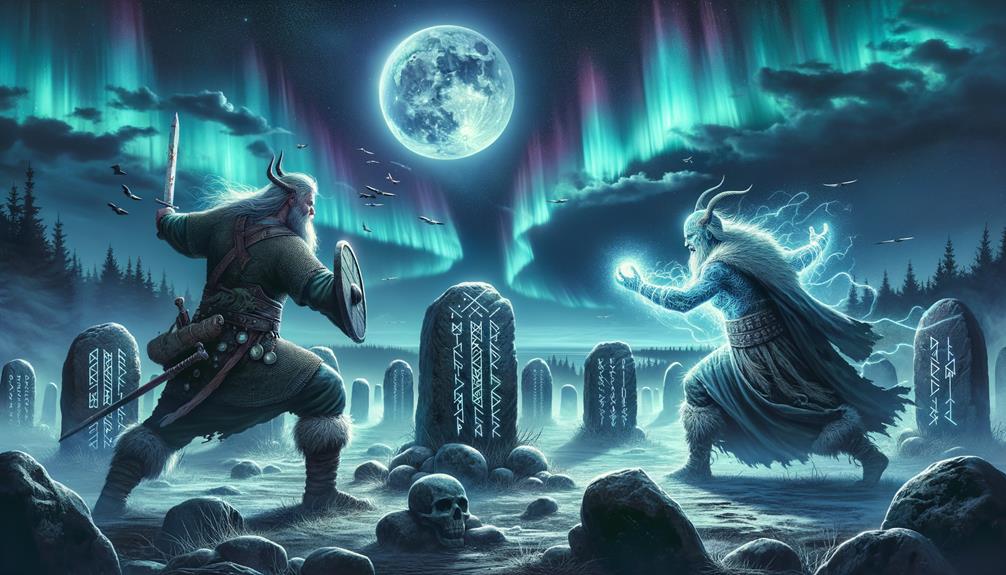
The story of Höðr and Baldr from Norse mythology is a heartbreaking one indeed. Höðr, who was blind, was tricked by Loki into accidentally killing his brother Baldr, using a mistletoe arrow. This event, which was a clear display of Loki's cunning and the inevitability of fate, had a vast ripple effect, setting off a chain of revenge that involved the furious god Váli. The saga gives us an intriguing look into the relationships between gods, the concept of destiny, and the repercussions of betrayal in the Norse universe. Dig deeper into the saga to reveal its captivating secrets.
The Tragic Tale of Höðr-Baldr Duel
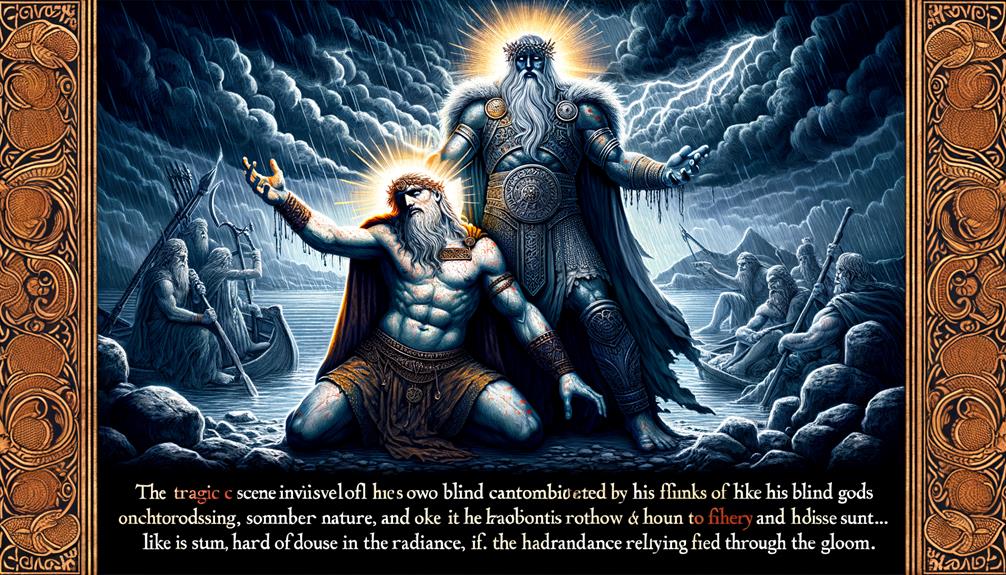
Let's chat about the tragic tale of the duel between Höðr and Baldr, a key event in Norse mythology. Here's the heartbreaking story: Höðr, a blind god, accidentally kills his brother Baldr with an arrow made from mistletoe. This event, full of betrayal and manipulation, showcases the complex relationships among the gods and the darker side of their eternal lives.
In a dramatic turn of events, this incident triggers a series of divine happenings, highlighting the unshakeable grip of destiny. The duel serves as a harsh warning about the repercussions of deceit. The story starkly illustrates the concept of destiny, which is a recurring theme in Norse myths. The blind Höðr, handling a deadly mistletoe, unknowingly plays a role in his own brother's tragic end.
Höðr: The Unwitting Killer
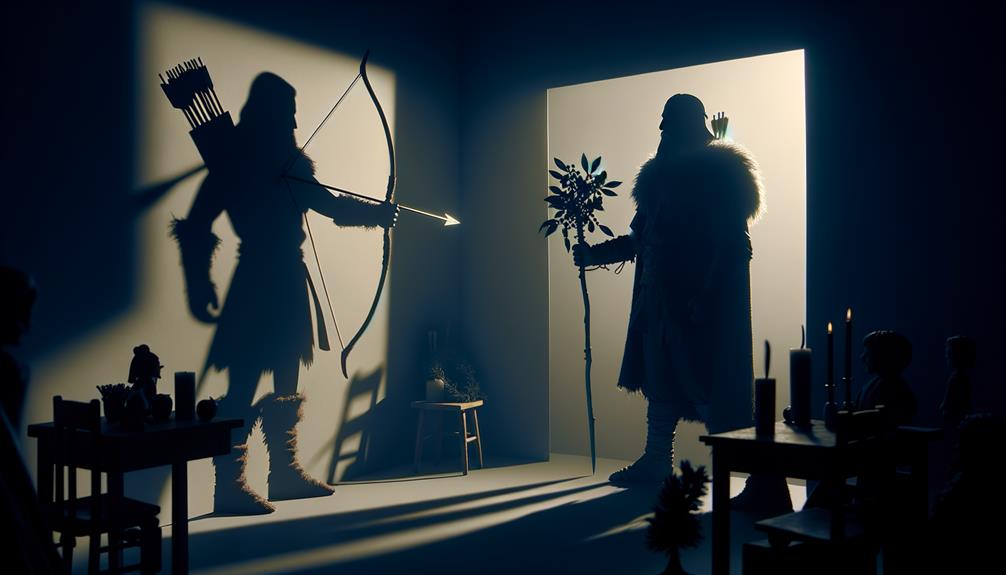
Höðr's story in Norse mythology is quite an emotional roller coaster. Imagine, he's a blind god who, without meaning to, killed his own brother, Baldr. This happened because he was tricked into shooting an arrow made of mistletoe, not knowing it would lead to Baldr's tragic death.
The cunning Loki, knowing full well of Höðr's blindness, orchestrated this whole sad affair. His actions had enormous repercussions among the other gods, shining a harsh light on the damage caused by his trickery.
Baldr's Unexpected Death
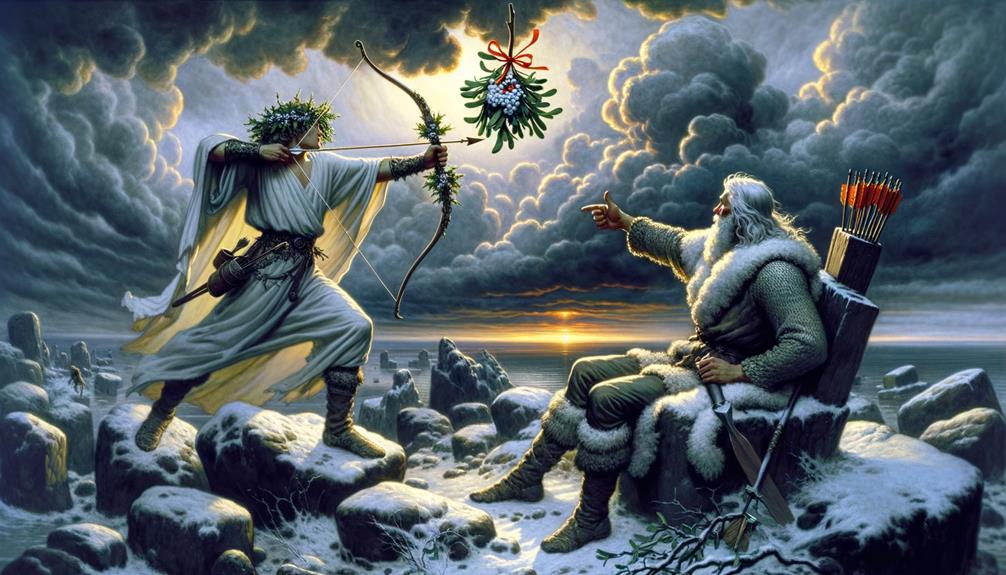
It's a tale as old as time – or at least as old as Norse mythology. Baldr, beloved by all, meets an untimely demise in a shocking and unfortunate turn of events. His own brother, Höðr, who is blind, is the one who ends up taking his life. This event shook the foundations of the Norse divine world, kickstarting the infamous Ragnarök, their version of the apocalypse.
What's more, this fatal encounter wasn't just a random act of violence. It was a tragic accident sparked by a deception involving an arrow made of mistletoe. This seemingly insignificant plant was the only thing capable of harming Baldr. The event, quite literally, changed the course of history for the Norse cosmos.
To help you get a better grasp of the situation, let's break it down:
- Höðr's act of betrayal leads to Baldr's death.
- A mistletoe arrow, the only thing that can hurt Baldr, is used.
- Baldr's death becomes the catalyst for Ragnarök.
- The prophecy is fulfilled, showing that fate cannot be avoided.
Váli's Revenge and Consequences
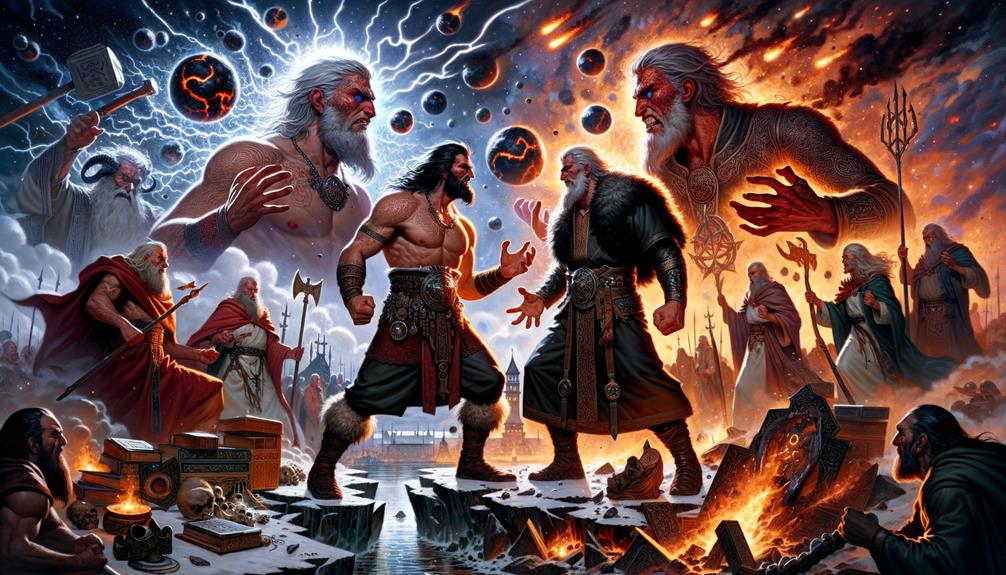
The story of Baldr's death doesn't just stop with his passing. It continues with Váli, Baldr's defender, who was brought into existence for the sole purpose of seeking vengeance for his brother's death. According to Norse mythology, Váli's birth had one goal only: to avenge the death of Baldr by punishing Höðr, the blind god who unknowingly took Baldr's life. Váli did just what he was destined to do–he killed Höðr, bringing the cycle of revenge to a close and highlighting the recurring theme of justice in these ancient stories. The death of Höðr at the hands of Váli serves as a stark lesson of the serious repercussions that can follow our actions, even those done unknowingly or innocently. Váli's act of revenge echoes through the records of Norse mythology, leaving a strong mark of justice and consequence.
Höðr's Role in Norse Mythology
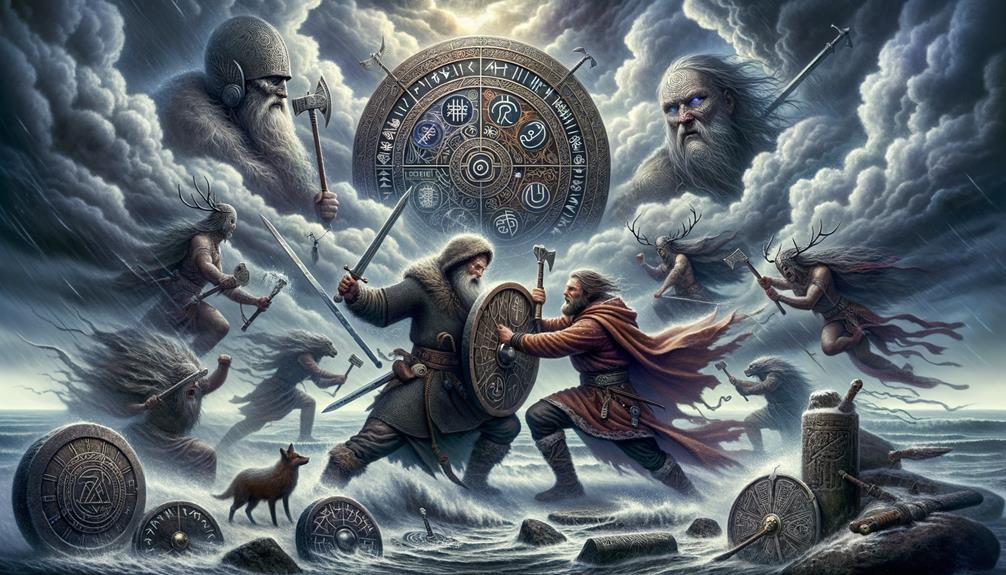
Höðr, the blind god, is a character you might not pay much attention to in Norse mythology. Yet, he's pretty important. This blind son of Odin and Frigg was tricked into killing his brother, Baldr. Loki, the trickster god, played a dirty game and misused Höðr's trust which resulted in him throwing a spear made from mistletoe, and guess what? That ended Baldr's life.
This heartbreaking incident is a key part of Höðr's story and is often used in references about him. It paints a pretty intense picture of fate, betrayal, and revenge in these old tales. Even though Höðr is shown as a warrior, his story is more of a warning. It teaches us about the risks of trusting the wrong people and how important it is to own up to our actions.
Frequently Asked Questions
Who Was the Blind God Who Killed Baldur?
In the twisting tales of Norse mythology, Loki's cunning plays a key role in the demise of Balder. This story shows the severe implications of blind faith, represented by the blind god, Höðr, who becomes the unwitting pawn in this divine deception.
Who Was the Blind Norse God?
As I've been getting to know Norse mythology, I've come across a pretty interesting character – the blind god, Höðr. His lack of sight symbolizes darkness, which brings a whole new layer of meaning to the tales and gods of the Norse world.
Who Was the Blind God?
In Norse mythology, I'm known as Hoder, the Blind God. My lack of sight represents innocence, but it also hints at mysterious prophetic abilities. Even in my blindness, I unintentionally reveal the hidden weakness of Baldr. This gives us a chance to delve deeper into how blindness is portrayed in mythology.
What Is the Moral of the Death of Balder?
The story of Balder's death in Norse mythology teaches us a dramatic lesson about the harsh outcomes of dishonesty, the delicate nature of life, and the inescapability of fate. It's a powerful reminder that truthfulness is key in relationships.