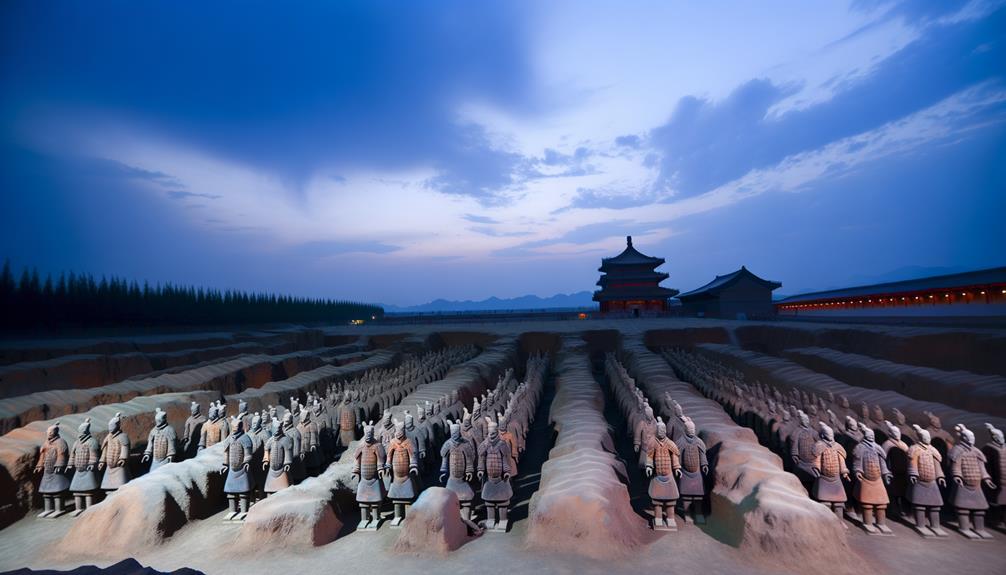
The Terracotta Army is part of the vast mausoleum complex built for Qin Shi Huang, the first emperor of a unified China. Thousands of clay soldiers, horses, and chariots were placed in pits near the central burial mound to represent an imperial force in the world of the dead.
Discovery and construction
Local farmers encountered fragments near Xi’an in 1974, leading to large archaeological excavations. The figures were produced through organized workshops that combined repeated components with hand finishing. Faces, hair, armor, rank, and posture vary, but claims that every figure is a portrait of a specific soldier go beyond the evidence.
The sculptures were originally brightly painted. Much of that color was lost after excavation because exposed lacquer and pigment deteriorated rapidly. Conservation research now shapes how newly found material is uncovered.
The unopened tomb
The army pits are only one part of the mausoleum landscape. The central burial chamber beneath the mound has not been excavated. Ancient written descriptions mention palaces and rivers of mercury, while modern soil studies have detected elevated mercury levels, but the chamber’s contents cannot be confirmed without excavation.
The site reflects imperial authority, military organization, ritual protection, and beliefs about continued rule after death. It is not simply a collection of independent warrior statues.