

Accuracy note: Kusanagi is one of Japan's imperial regalia and is linked in early chronicles to Susanoo and Yamato Takeru. Because the sacred object is not publicly inspected, statements about its present physical form cannot be verified.
The Kusanagi Sword‘s legendary status extends beyond its physical form, representing Japan’s mythological ideals of valor and perseverance. This ancient blade, once retrieved from a serpent’s tail by a mythical hero, weaves into the nation’s cultural fabric as part of the Imperial Regalia. Its symbolic significance remains relevant through generations, inspiring modern interpretations of courage and heroism. Exploring the sword’s enduring influence offers insights into how historic artifacts shape contemporary narratives.
Historical Origins
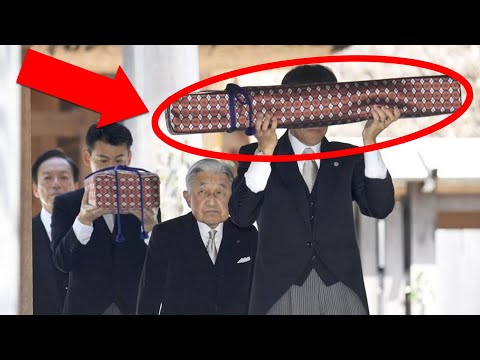
The legendary Kusanagi Sword has captivated Japan’s collective imagination for centuries. Its origins intertwine with the ancient tale of Yamata-no-Orochi, the eight-headed serpent, and the heroic exploits of Susanoo-no-Mikoto, the storm god. Susanoo bravely confronted the serpent, rescuing a maiden and discovering the Ama-no-Murakumo Sword, later christened Kusanagi, nestled within its tail.
More than a mere weapon, the Kusanagi Sword embodies divine intervention and heroic triumph. Presented to Amaterasu, the sun goddess, then passed to her grandson Ninigi-no-Mikoto, the sword cemented its place among the Imperial Regalia of Japan, symbolizing spiritual and political authority. This divine lineage solidified the emperor’s legitimacy, directly linking the ruling dynasty to the gods.
After Prince Yamato Takeru’s death, the sword found sanctuary at Atsuta-Jingu Shrine, further elevating its spiritual significance. However, tragedy struck during the battle of Dannoura when the Kusanagi Sword mysteriously vanished into the sea. This uncertaintytic loss forever etched itself into Japan’s cultural and historical consciousness, imbuing the sword with an aura of uncertainty and loss.
Mythological Significance

The Kusanagi Sword‘s mythical roots trace back to the storm god Susanoo’s battle against the eight-headed serpent Yamata-no-Orochi. Discovering the sword within the beast’s tail represented divine intervention and triumph over chaos, its significance went beyond a mere ancient relic.
As Prince Yamato Takeru wielded the sword, controlling fire and navigating danger, it transformed into a heroic symbol of courage. Cutting through grass to escape a trap earned it the name Kusanagi-no-Tsurugi, or "Grass-Cutting Sword," exemplifying its protective power.
After Yamato Takeru’s passing, the sword’s enshrinement at Atsuta-Jingu Shrine solidified its spiritual status. The shrouded sinking during the Battle of Dannoura only fueled the intrigue surrounding this sacred blade. Woven into Japan’s Imperial Regalia, the Kusanagi Sword personifies divine favor and legendary heroism.
Symbolism in Imperial Japan

Imperial Japan’s historical lore enshrines the Kusanagi Sword as a important symbol of national valor and divine favor. As one of Japan’s three Imperial Regalia, it carried immense symbolic weight, intertwining the worlds of mythology and monarchy. The Emperor, personifying divine will, wielded the Kusanagi not merely as a weapon but as a declaration of divine protection and the nation’s indomitable spirit.
The sword’s origins stem from Susanoo’s triumph over the eight-headed serpent Yamata-no-Orochi, symbolizing order’s ascendancy over chaos – a theme deeply rooted in Japanese culture. The grasscutter blade embodies the samurai code’s core tenets: loyalty, simplicity, and perseverance.
Forged with advanced techniques, the sword is believed to house a deity, reflecting its spiritual significance. It represents courage and righteousness, embodying Susanoo’s heroic journey and that of historical samurai. Through this symbolism, the Kusanagi Sword remains an enduring icon of Imperial Japan’s legacy.
Current Location and Preservation
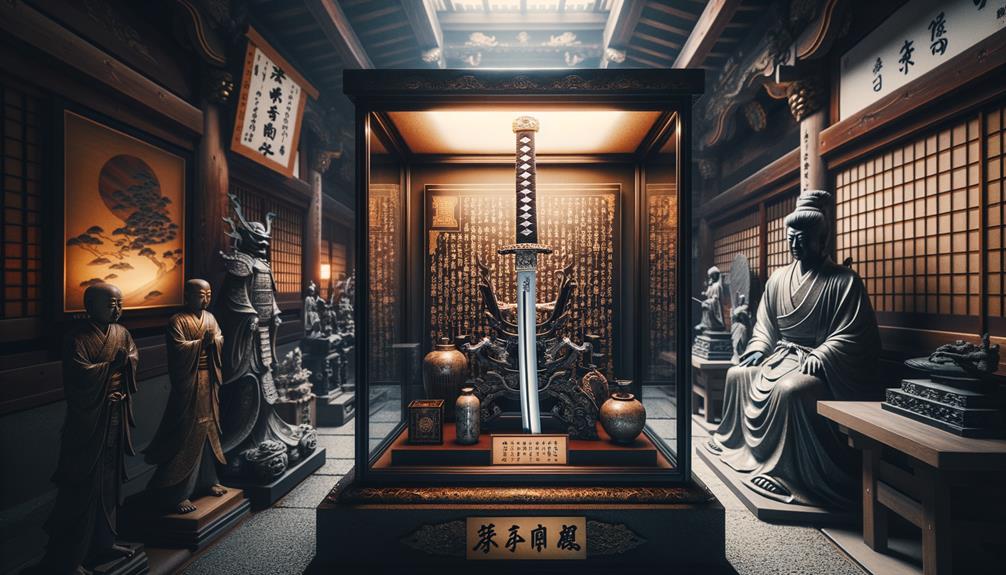
At Atsuta Jingu Shrine in Aichi Prefecture, the legendary Kusanagi Sword remains hidden from public view, a sacred artifact preserved within the innermost sanctum. More than just a physical object, the sword symbolizes Japan’s mythological origins and the imperial family’s divine roots.
To safeguard this invaluable treasure, specific measures are in place:
- Secrecy and Protection: The original Kusanagi Sword is not displayed publicly, enhancing its mystical allure and preserving its sanctity.
- Ceremonial Replicas: During important rituals, replicas stand in for the actual sword, allowing its symbolism to endure while protecting the original.
- Atsuta Shrine’s Role: The shrine, alongside the Kusanagi-kan Museum, educates visitors on the sword’s important historical and spiritual significance.
This meticulous preservation reflects the important reverence for the Kusanagi Sword as an emblem of divine authority and cultural continuity. From myth to reality, the sword’s journey epitomizes the endurance of Japan’s iconic heritage.
Cultural Impact and References

The Kusanagi Sword, known as the "Grass-Cutting Blade," carries immense cultural significance in Japan. Its legends intertwine gods, heroes, and extraordinary feats, making it a powerful symbol of courage triumphing over adversity. This mythical sword remains relevant deeply, inspiring awe and pride in the nation’s heritage.
The blade’s presence pervades art, literature, and modern pop culture, reflecting its enduring influence. Its depictions remind people of their spiritual roots and historical continuity. Housed in a revered shrine, the Kusanagi Sword represents a important connection to ancestral identity for many Japanese.
Sources and related reading
- Sampo Finnish Mythical Mill on MythologyVault
- Honjo Masamune Sword Legends on MythologyVault
- Kokugakuin University: Encyclopedia of Shinto