
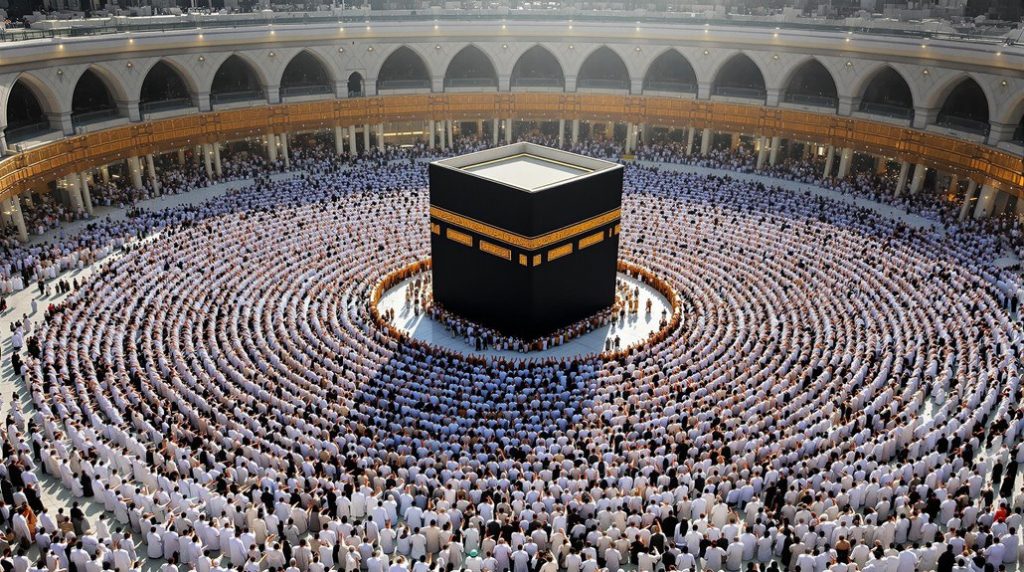
Accuracy note: The Black Stone is set into the eastern corner of the Kaaba in Mecca and is important in Islamic pilgrimage, not Hindu mythology. Pilgrims may touch or kiss it when possible, while worship is directed to God; miraculous origin stories belong to tradition rather than empirical history.
This celestial artifact, said to have fallen from the heavens pure as morning frost, now stands as a midnight sentinel collecting humanity’s burdens. It’s a story that extends beyond mere religious symbolism, echoing ancient myths of sacred stones from cultures around the globe.
As pilgrims circle the Kaaba and reach towards this divine touchstone, they’re participating in a ritual that’s both deeply personal and universally connecting. This remarkable stone transforms strangers into spiritual kin.
Origins of the Sacred Stone

The Stone’s Physical Journey
Pilgrimage Rituals and Practices
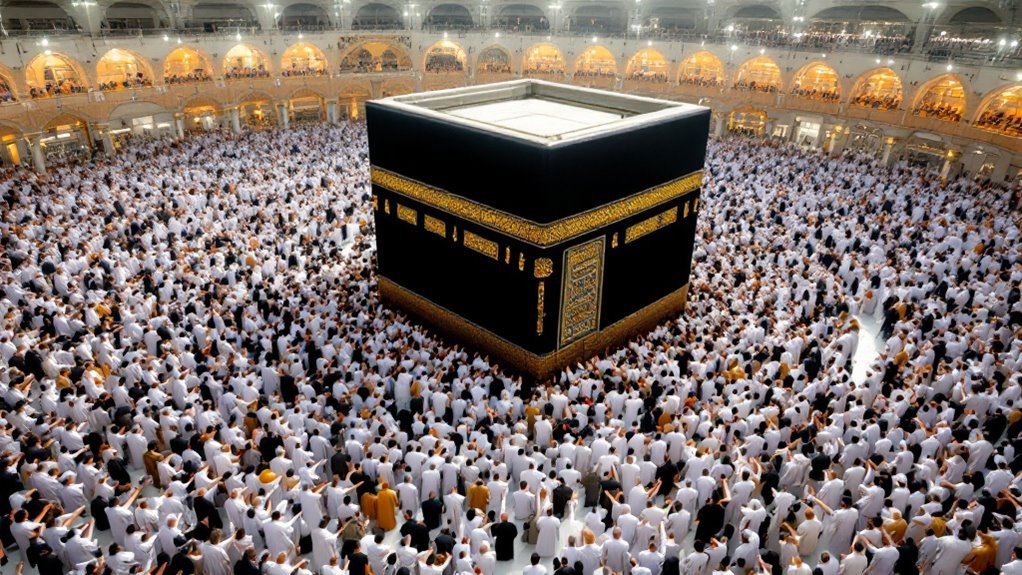
Symbol of Muslim Unity
Preservation Through the Ages
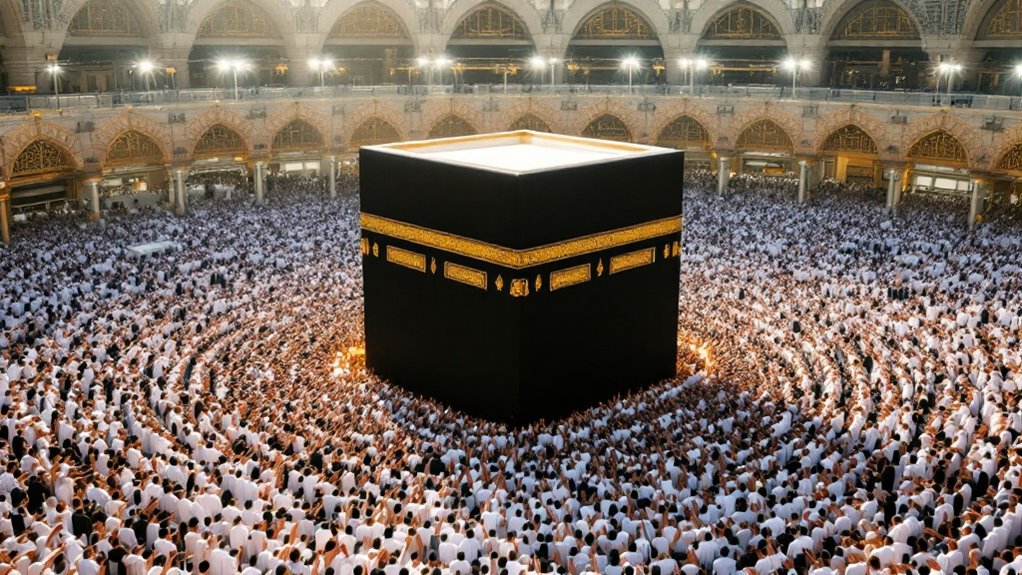
Throughout thousands of years of turbulent history, this celestial fragment has endured countless trials – from its re-placement during the pre-Islamic rebuilding of the Kaaba in 605 CE (when Muhammad, who had not yet received his first revelations, arbitrated the dispute) to its dramatic kidnapping by the Qarmatians and subsequent ransom.
Sources and related reading
- Cloak of Prophet Muhammad on MythologyVault
- Holy Grail Arthurian Legend on MythologyVault
- Encyclopaedia Britannica: Kaaba