Loki is one of the most changeable figures in Old Norse myth. He helps the gods in some stories, causes crises in others, and becomes their enemy at Ragnarök. “God of mischief” is a useful modern label, but the medieval texts do not give him a neat official title or a single moral role.
Loki’s family and place among the gods
Snorri names Loki’s father as Fárbauti and his mother as Laufey or Nál. His brothers are Býleistr and Helblindi. Loki is not Odin’s son. In the Eddic poem Lokasenna, Loki reminds Odin that the two once mixed blood, a bond that helps explain Loki’s presence among the Æsir without making him an adopted child.
Loki is married to Sigyn. Snorri also names the jötunn Angrboða as the mother of three of Loki’s children: Fenrir, Jörmungandr, and Hel. Loki is the mother of Odin’s eight-legged horse Sleipnir after taking the form of a mare.
Shape-changing and problem solving
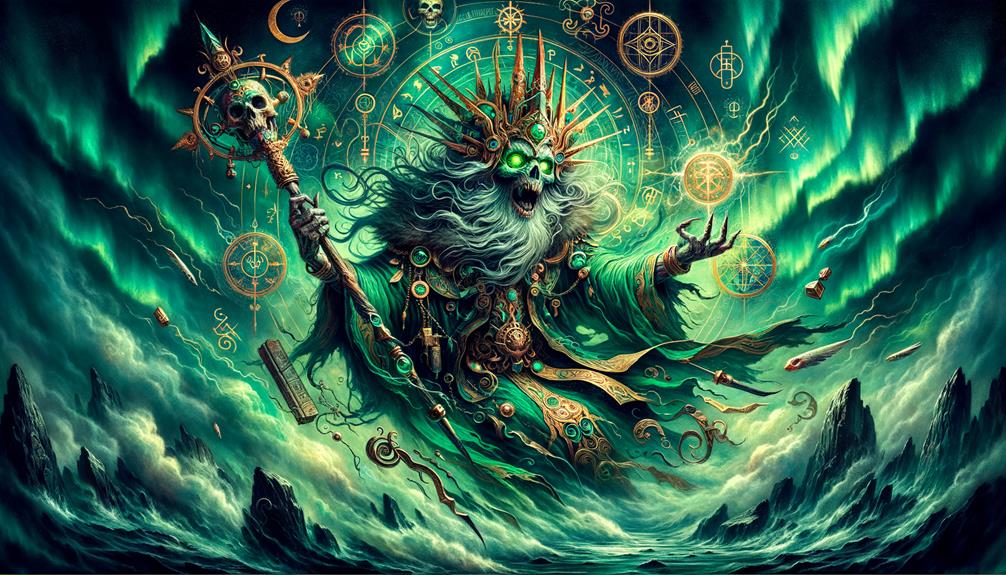
Loki changes form and sex in several stories. He becomes a mare, a salmon, a fly, and other forms. The texts do not present this as a fixed set of superhero powers. Shape-changing is part of particular plots, often allowing Loki to escape danger, create a problem, or repair one he caused.
When Loki cuts Sif’s hair, Thor threatens him. Loki responds by obtaining replacement hair and other treasures from dwarfs. His wager with Brokkr leads to the creation of Mjölnir, Draupnir, and Gullinbursti. A harmful act therefore produces objects that benefit the gods, but only after Loki is forced to make amends.
Loki as helper and adversary
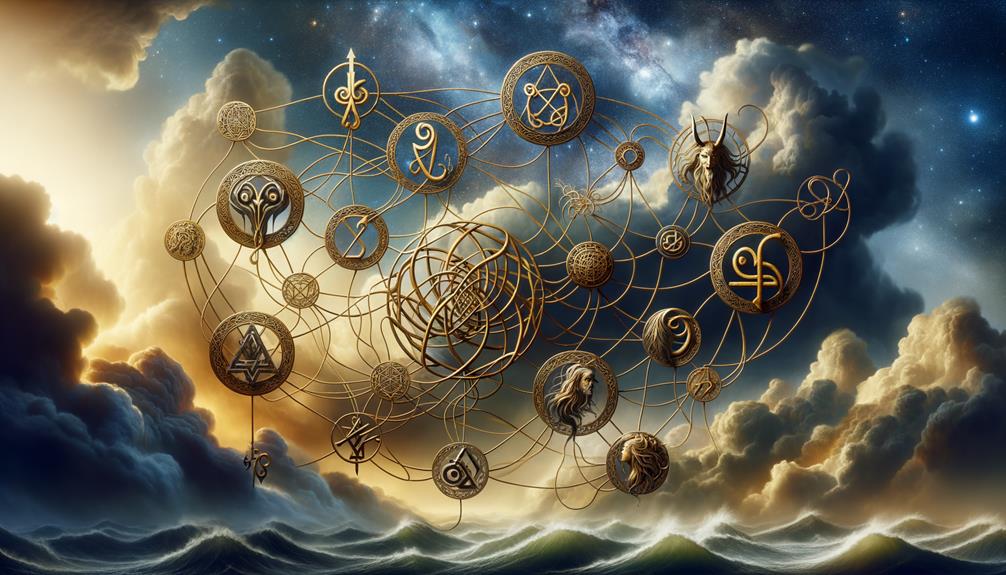
Loki helps recover Thor’s stolen hammer in Þrymskviða. He also assists Thor during the visit to Útgarða-Loki. In other stories, his choices endanger the gods. He helps Þjazi seize Iðunn and her apples, then must help rescue her. This repeated pattern makes him an unstable companion rather than a consistent defender of either side.
The sources also preserve sharp hostility. In Lokasenna, Loki insults gods and goddesses at a feast, exposing scandals and accusing them of sexual and moral misconduct. The poem does not reduce him to comic relief.
Loki and the death of Baldr
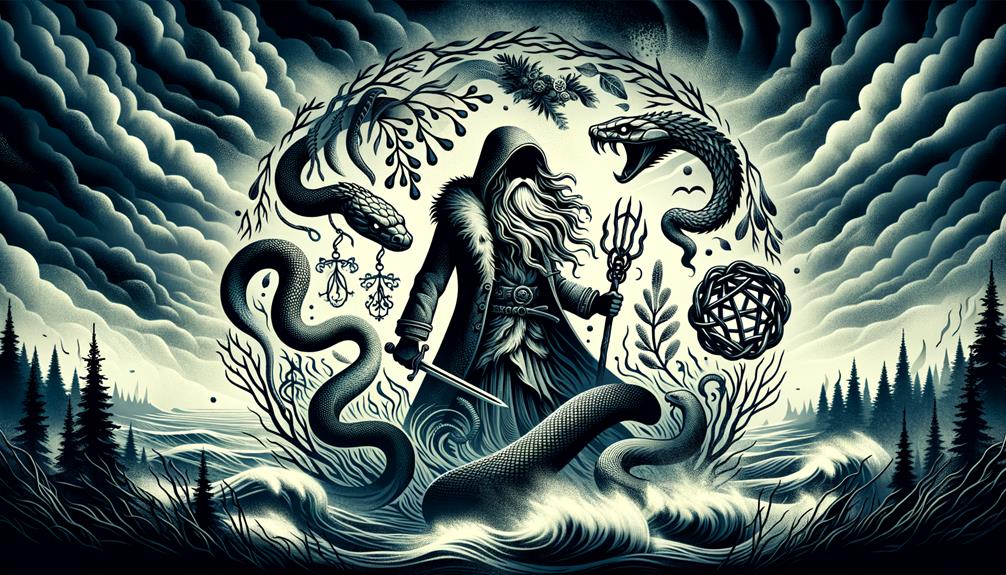
Snorri’s Gylfaginning gives Loki a direct role in Baldr’s death. After Frigg obtains promises from nearly everything not to harm Baldr, Loki learns that mistletoe was overlooked. He fashions a missile and guides the blind god Höðr in throwing it at Baldr.
Other sources do not tell the episode in exactly the same way. Völuspá names Höðr as Baldr’s killer but does not describe Loki’s trick. Saxo Grammaticus offers a different, rationalized story. Snorri’s version is influential, but it should not be presented as the only ancient account.
Loki’s punishment
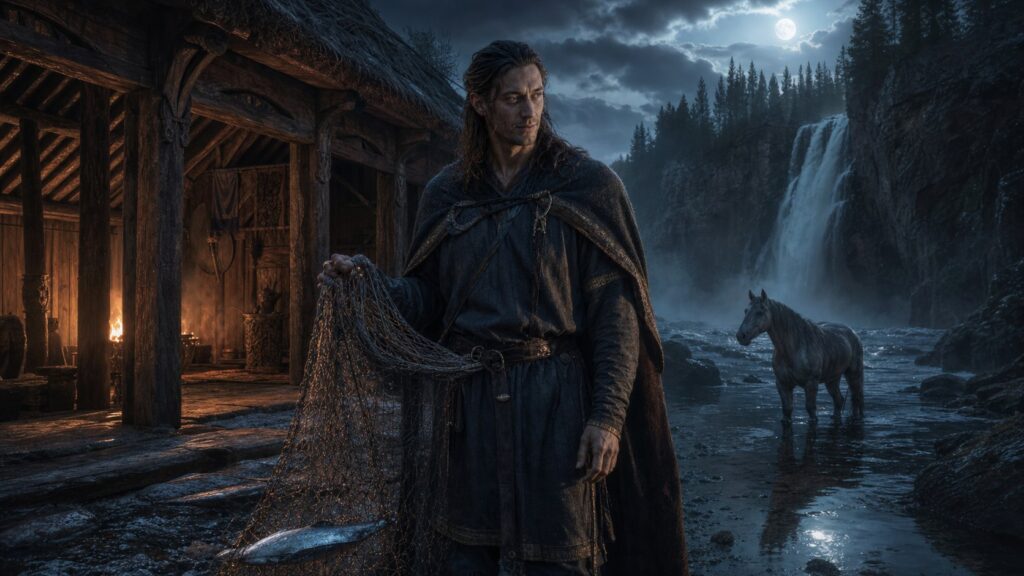
After Baldr’s death, Loki flees and hides near a waterfall in the form of a salmon. The gods capture him with a net. Snorri says they bind him with the entrails of his son Nari or Narfi, after another son, Váli, is transformed into a wolf.
Skadi fastens a venomous snake above Loki’s face. Sigyn remains beside him and catches the venom in a bowl. When she leaves to empty it, drops strike Loki and his convulsions cause earthquakes. This is the source-based context for Loki’s binding. It is not the result of losing a casual bet.
Loki at Ragnarök
At Ragnarök, Loki breaks free and joins the forces opposing the gods. He and Heimdall kill each other. His children Fenrir and Jörmungandr also confront Odin and Thor. The final conflict completes Loki’s movement from dangerous member of the gods’ circle to open enemy.
Modern images versus medieval sources
Red hair, horned helmets, green clothing, and the identity of Odin’s adopted son are familiar from modern art and Marvel. They are not reliable identifying features from the Eddas. Medieval texts describe Loki through kinship, speech, actions, and transformations rather than a standard costume.
Modern adaptations can make Loki a villain, antihero, outsider, or sympathetic sibling. Those versions should be identified as adaptations instead of being merged with Old Norse myth.
Frequently asked questions
Was Loki Odin’s son?
No. Snorri names Fárbauti and Laufey as Loki’s parents. Lokasenna refers to a blood bond between Loki and Odin.
Was Loki a god or a jötunn?
His father is a jötunn, and Loki lives among and interacts with the Æsir. Old Norse categories are not always clean biological species, so either label alone can be misleading.
Did Loki kill Baldr?
In Snorri’s account, Loki arranges the killing by placing mistletoe in Höðr’s hands and guiding his throw. Other sources preserve different levels of detail.
Why is Loki bound?
Snorri connects his capture and binding with the aftermath of Baldr’s death. Sigyn protects him from the snake’s venom until Ragnarök.