
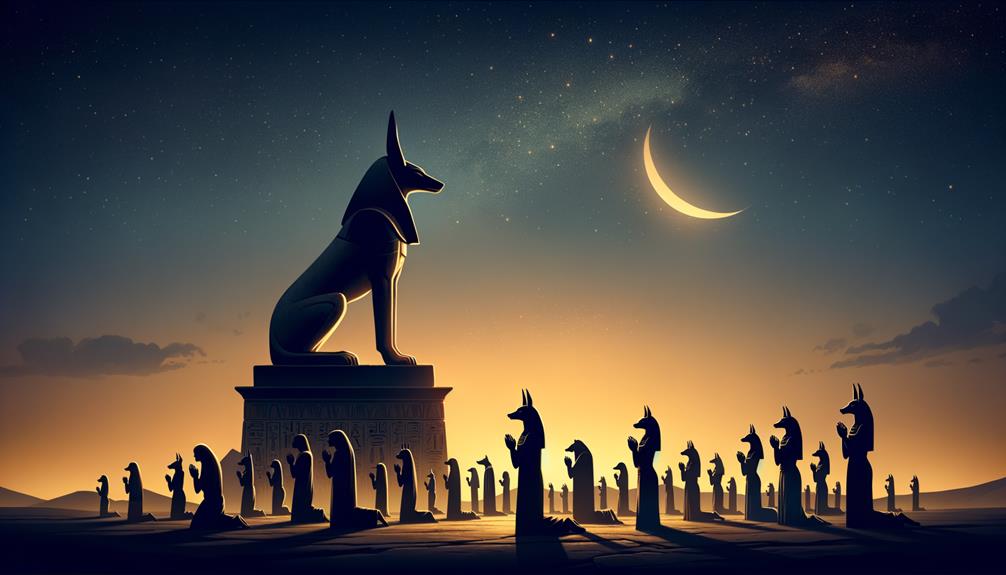
Anubis was an ancient Egyptian funerary deity associated with cemeteries, embalming, and the safe passage of the dead. He was not simply a god of death, and Egyptian sources do not present him as an evil figure. His functions centered on protection, ritual preparation, and judgment.
Anubis in the surviving tradition
Egyptian art usually gives Anubis a human body with the head of a black canine, or shows him as a reclining canine. The animal is often called a jackal in modern writing, although the exact species behind the image is debated. Black linked the god with both the color of embalmed flesh and the fertile soil of the Nile valley. Priests could wear canine masks while performing funerary rites, visually taking the role of Anubis.
Texts, objects, and evidence
Anubis appears in funerary texts from the Old Kingdom onward. Early Pyramid Texts connect him with royal burial, while later Coffin Texts and the Book of the Dead extend his protective role to a wider group of people. In the judgment scene commonly called the Weighing of the Heart, Anubis tends the balance while Thoth records the result. Osiris presides over the tribunal. This distinction matters because modern summaries often make Anubis the ruler of the underworld.
Key points
- Funerary care: Anubis oversees embalming and guards burial places.
- Judgment: He handles the balance in judgment scenes but does not pronounce the final verdict.
- Names and cult: The Egyptian name is commonly rendered Inpu or Anpu. Greek writers called him Anoubis, and his worship was especially important at sites the Greeks called Cynopolis.
- Changing relationships: Texts give him different parents in different periods and places. Associations with Osiris, Nephthys, Ra, and other deities should not be forced into one fixed family tree.
How to read the material
Ancient Egyptian religion changed across more than three millennia, so no single description covers every place and period. Modern devotional practice is separate from the historical evidence. Claims about keeping a statue at home, biblical identity, or guaranteed spiritual effects belong to personal belief, not Egyptology.