Accuracy note: Mictlantecuhtli ruled Mictlan with Mictecacihuatl in many Nahua accounts. Mictlan was one destination among several afterlife destinations, not a moral hell for all dead people.
Origins and Etymology

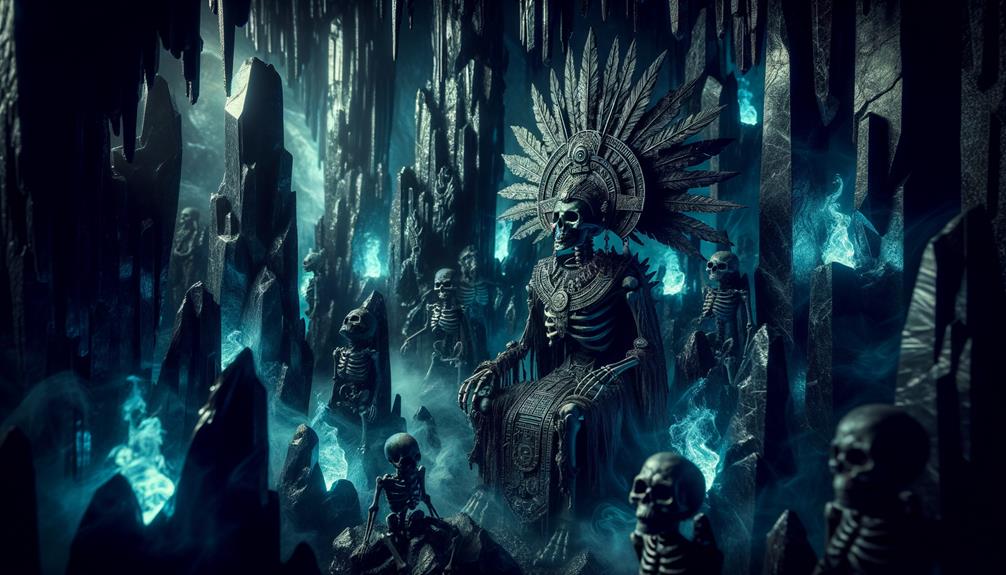
Mictlantecuhtli’s name, ‘Lord of the Land of the Dead,’ captures his pivotal role in Aztec beliefs. As the underworld’s ruler, he embodied death and the journey beyond life. Crafted by the four Tezcatlipocas, Mictlantecuhtli represented the cold, dark north, the deceased’s domain.
In Aztec mythology, Mictlantecuhtli’s skeletal figure with skull features and hollow eye sockets symbolized death’s inevitability. His open mouth, ready to receive setting stars, portrayed existence’s cyclical nature and souls’ passage into the underworld. This imagery reminded viewers of the natural order and each soul’s ultimate journey.
While other myths featured underworld rulers, Mictlantecuhtli’s skeletal depiction stood out. His connection to stars and earth highlighted his dominance over life’s important transition, anchoring him in the Aztecs’ spiritual and cosmic narratives.
Attributes and Depictions
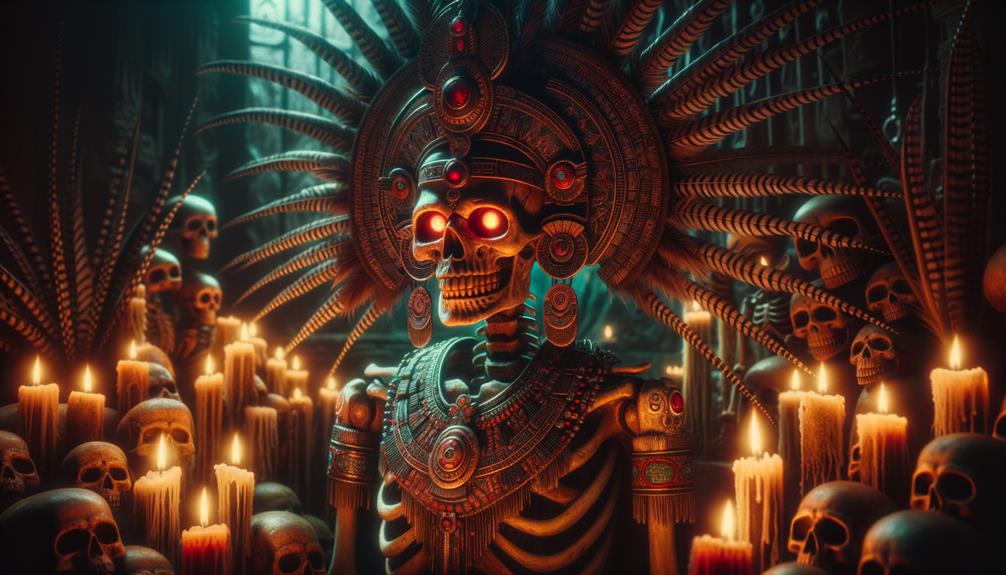
Mictlantecuhtli’s striking depictions encapsulate his role as the formidable Aztec death deity. Towering at six feet, he manifests as a skeletal figure, blood-splattered with piercing eye sockets – a harrowing embodiment of mortality and the underworld. His headdress, adorned with owl feathers, and jewelry crafted from human bones accentuate his chilling presence.
Mictlantecuhtli’s iconography holds important symbolism, reflecting Aztec beliefs regarding life’s impermanence. Three key elements define his representation:
- Skeletal Features: His bony frame and necklace of human eyes symbolize life’s transience and the inescapable journey to the afterlife.
- Macabre Adornments: The owl feathers and bone jewelry connect him to the natural and supernatural worlds.
- Staff with Skulls: This accessory shows his dominion over life and death’s cycle.
Through these motifs, Mictlantecuhtli personifies the Aztec creation myth’s themes of death and regeneration, illustrating existence’s delicate equilibrium.
Myths and Legends
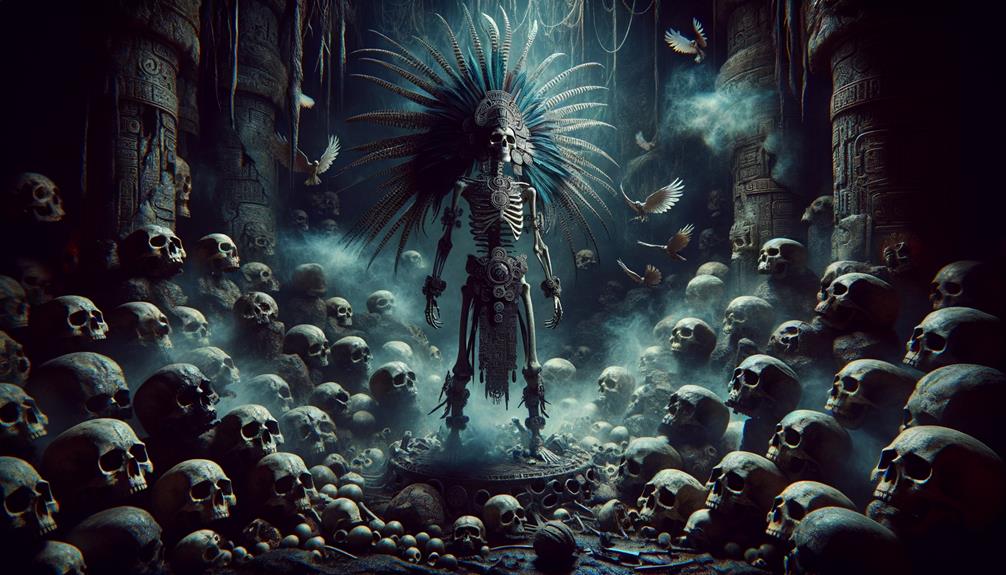
In Aztec folklore, Mictlantecuhtli stood as the mighty gatekeeper to the underworld, holding the scales between existence and the afterlife. As lord over Mictlan’s shadowy world, his role proved pivotal in the creation tale of humanity. The cunning Quetzalcoatl descended into Mictlan’s depths, outwitting Mictlantecuhtli through guile and bravery to retrieve bones crucial for birthing mortals – a symbolic dance between life, death, and rebirth.
Mictlantecuhtli’s dominion reached beyond myth into everyday Aztec customs. Rituals and offerings honored him, ensuring safe passage for departed souls navigating Mictlan’s trials. Depicted as a skeletal figure in art and codices, his imagery remained an ever-present reminder of death’s inevitability and the afterlife’s mysteries.
Today, Mictlantecuhtli’s legacy echoes during Día de Muertos celebrations. This deep-rooted tradition bridges past beliefs with modern Mexican culture, paying homage to the death deity through rituals steeped in ancient reverence. Mictlantecuhtli endures as a poignant symbol tying generations to their ancestral roots.
Worship and Rituals
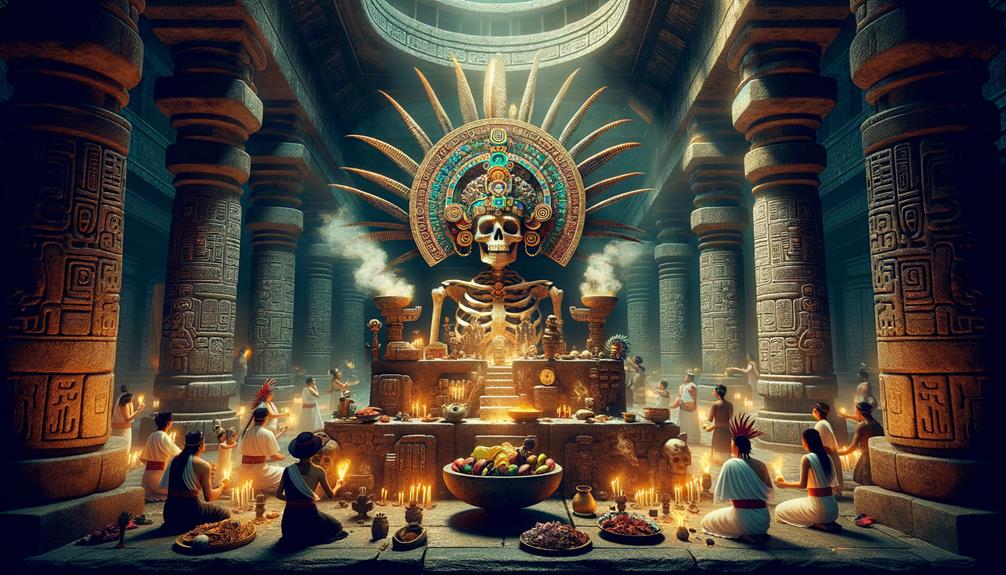
The Aztecs placed immense importance on appeasing Mictlantecuhtli, the underworld’s ruler and god of death, through complex rituals and sacrificial offerings. Nahua afterlife destinations were determined primarily by the manner of death, with most souls making a four-year journey through Mictlan’s nine trials regardless of personal conduct.
Temples dedicated to this deity served as centers for ceremonies aimed at seeking Mictlantecuhtli’s favor. Priests conducted ritualistic acts like human sacrifices, the highest form of tribute deemed necessary to placate the death god. Prayers, chants, and symbolic gestures accompanied offerings of food and valuables intended to sustain Mictlantecuhtli in the underworld.
Aztec sacrificial practices were tied to public cosmic and political ritual, intended to sustain the sun’s movement and reinforce the legitimacy of the state. However, Spanish colonization and the spread of Catholicism ultimately led to the decline of Mictlantecuhtli worship, bringing an end to these intense ceremonies. While the rituals faded, the legacy of this powerful Aztec deity endures as a significant part of their rich religious heritage.
Influence on Modern Culture
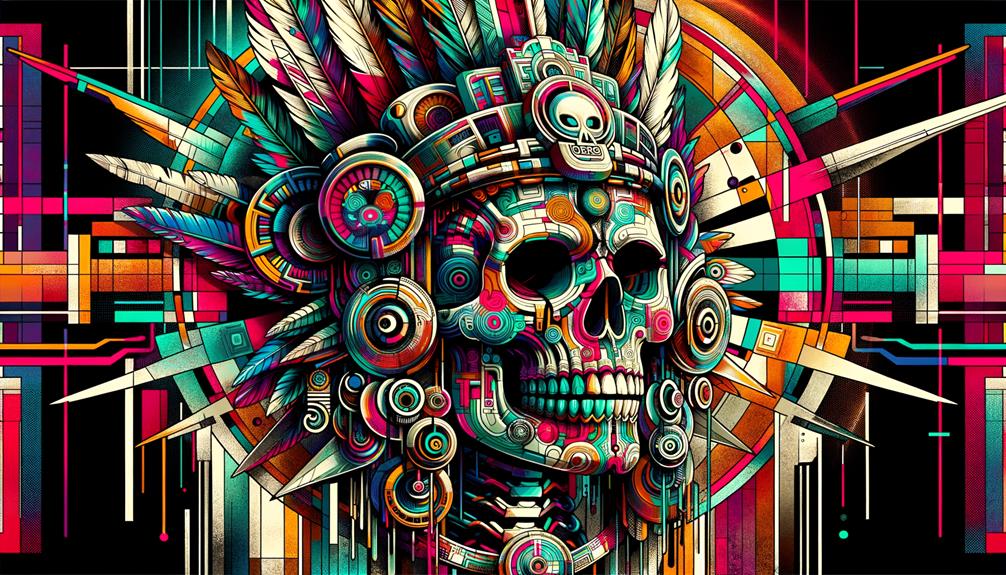
This Aztec deity’s significance extends beyond entertainment too. Scholarly works and art consistently examine his role as the lord of the dead. The animated film ‘La leyenda de las Momias’ further cements his contemporary relevance.
Sources and related reading
- Xipe Totec Flayed God on MythologyVault
- Tlaloc Rain Agriculture God on MythologyVault
- The Metropolitan Museum of Art: Aztec stone sculpture