
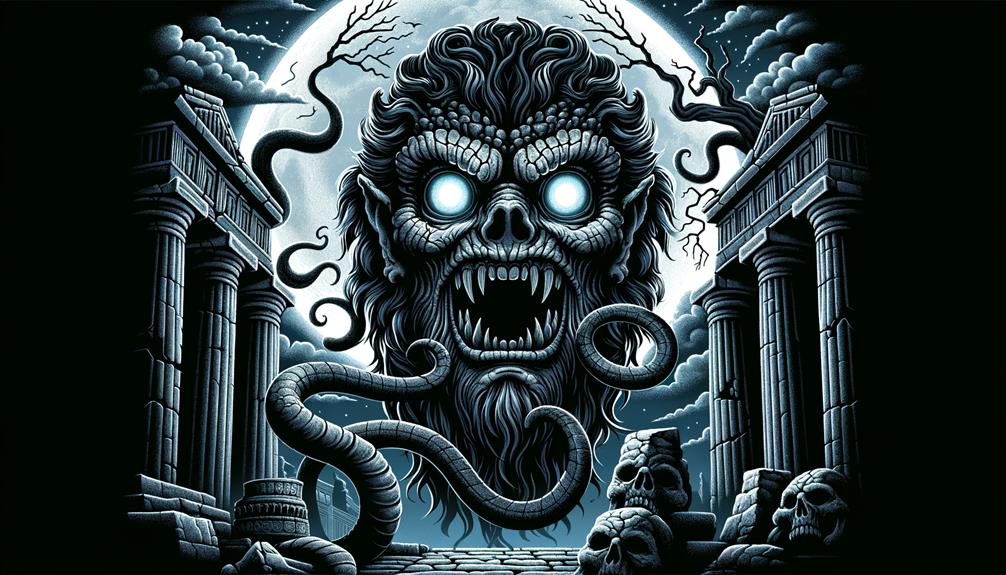
The Gorgons are female figures in Greek myth whose gaze or severed head can turn viewers to stone. Hesiod names three sisters: Stheno, Euryale, and Medusa. Only Medusa is mortal.
The Gorgons in the surviving tradition
In the standard quest narrative, King Polydectes sends Perseus to obtain Medusa’s head. Athena and Hermes help him, and divine objects allow him to approach without meeting her gaze directly. Perseus cuts off the head while Medusa sleeps. Pegasus and Chrysaor spring from her neck because she is pregnant by Poseidon in this tradition.
Texts, objects, and evidence
Archaic Greek art often shows a frontal gorgoneion with round eyes, tusks, tongue, snakes, and a broad face. It served an apotropaic role, turning danger away from temples, shields, armor, and household objects. Later art increasingly makes Medusa beautiful, especially in versions shaped by Ovid’s Roman poem.
Key points
- Petrification: The deadly gaze belongs to narrative versions, while the displayed head functions as a protective image.
- Perseus: He avoids direct sight through strategy and divine aid, not because the Gorgons are harmless.
- Athena: Perseus gives the head to Athena, who places it on her aegis or shield.
- Demon label: Ancient Greek categories differ from later demonology. Monster or mythic being is usually clearer.
How to read the material
Medusa’s origin and appearance change between Greek and Roman authors. Ovid’s story of her transformation after Poseidon’s assault is influential but not the only ancient account.